Clinical
Highly pathogenic H5N9 influenza detected on commercial duck farm in California
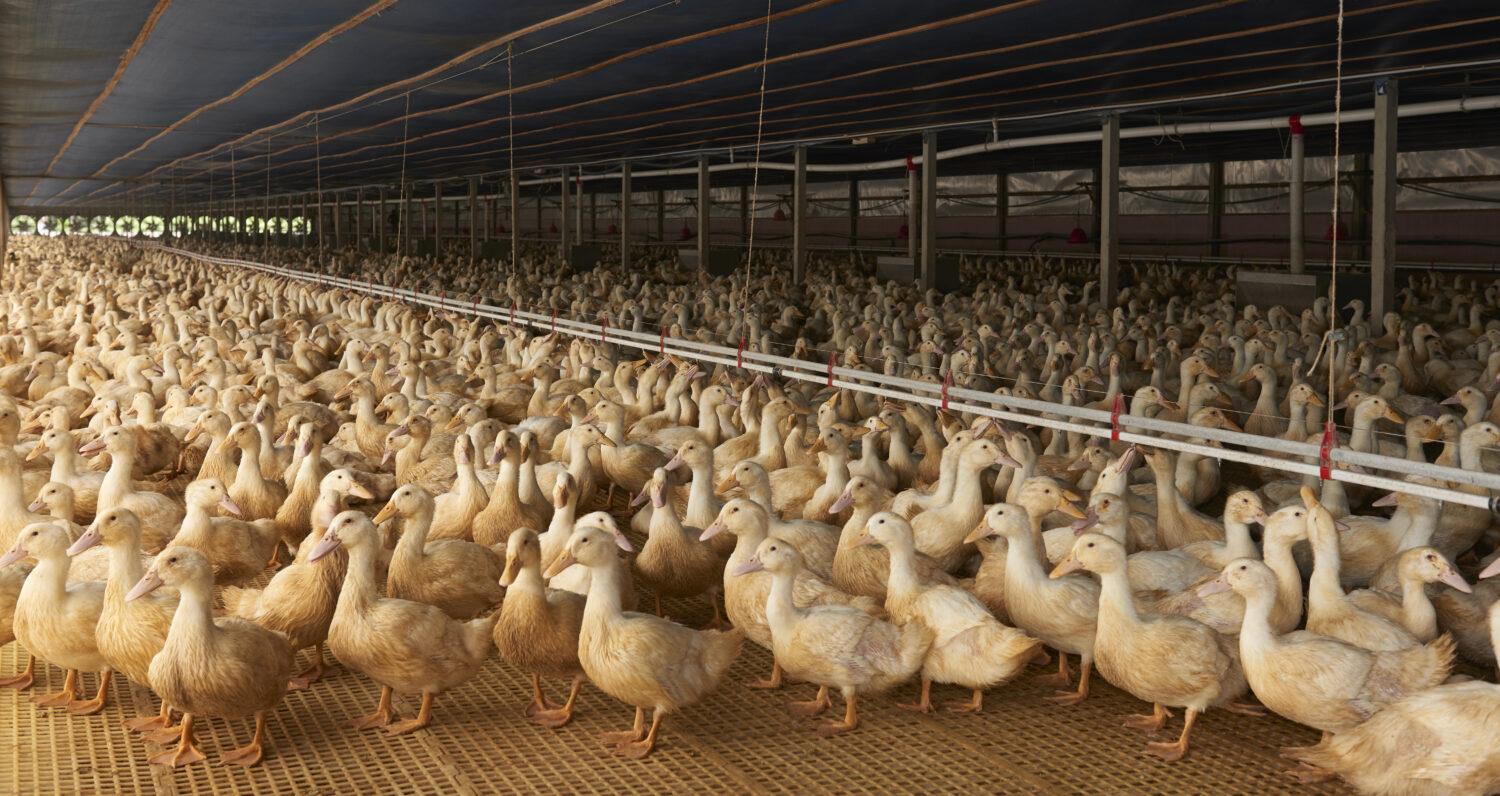
Ducks on a meat farm in California were recently diagnosed with two different subtypes of highly pathogenic influenza. While H5N1 has been widely detected in bird populations throughout the country and the world, H5N9 influenza is making its first appearance as a high-pathogenicity subtype in the U.S.
Advertisement
The World Organisation for Animal Health World Animal Health Information System (WAHIS) announced on Monday that a new subtype of highly pathogenic avian influenza had been detected in the U.S. for the first time. Samples were taken from a commercial duck farm in Merced County, California, in November 2024, and confirmed to contain both the H5N1 and H5N9 influenza subtypes on Jan. 13, 2025, by the National Veterinary Services Laboratories (NVSL) in Ames, Iowa.
According to official reports, the 118,954 birds on the premises have all been culled. Strict control measures including surveillance, quarantine, and movement control have also been applied. To learn more about this strain and how it may have entered the duck farm, WAHIS reports that “the USDA Animal and Plant Health Inspection Service (APHIS), in conjunction with State Animal Health and Wildlife Officials, are conducting comprehensive epidemiological investigations.”
The H5N1 subtype has been more widely detected throughout the US and the world in poultry, wild birds, dairy cattle, domestic cats, and numerous other species. But the H5N9 subtype has not previously been detected in the US in any species as a high-pathogenicity virus, according to the WAHIS report.
This development comes during a pause in external communications enacted on Jan. 21 by the U.S. Department of Human Health Services involving federal agencies including Centers for Disease Control and Prevention, Food and Drug Administration, and National Institutes of Health. This pause is set to continue through February 1, 2025.
A history of H5N9
H5N9 is not an entirely new subtype. Low-pathogenicity H5N9 viruses have been detected previously in avian species throughout the world, including the US, as long ago as 1966. Researchers identified a highly pathogenic H5N9 virus in live bird markets in China in 2013, where it is thought to have evolved from a reassortment of H5N1, H7N9, and H9N2 subtypes (as opposed to having mutated from the low-pathogenicity virus).
Silvia Carnaccini, DVM, PhD, DACPV, DACVP, Assistant Professor at the Veterinary Diagnostic Laboratory at Iowa State University, explained that reassortment is not uncommon among avian influenza viruses because their genome is segmented. “During coinfections of the same cell by two different AI viruses,” she said, the viruses can “mix and match” their genes to create a new subtype of influenza virus.
Going forward
Information about this new high-pathogenicity H5N9 subtype and its potential to affect the health of animals, humans, and the world’s food supply is still developing. This includes how easily the virus can infect other species, how readily it could mutate to spread laterally in new species, and whether infection will result in similar morbidity and mortality rates in the species it infects when compared to H5N1. As additional data is gathered from epidemiological investigations, it will be more important than ever to share information in a comprehensive and timely manner.
At AAHA, we remain committed to helping you stay up to date on the latest developments on this topic and others that affect animal and human health and the important work you do every day.
Further reading:
WAHIS High pathogenicity avian influenza viruses notification for H5N9
Taxonomy database of the H5N9 influenza subtype
Newly Emergent Highly Pathogenic H5N9 Subtype Avian Influenza A Virus (2015)
Photo credit: zzcapture/iStock via Getty Images
Disclaimer: Trends™ content is meant to inform, educate, and inspire by providing an array of diverse viewpoints. Any content published should not be viewed as an official stance, position, or endorsement by the American Animal Hospital Association (AAHA) or its Board of Directors.
