Clinical
Child-resistant packaging: Is your practice compliant?
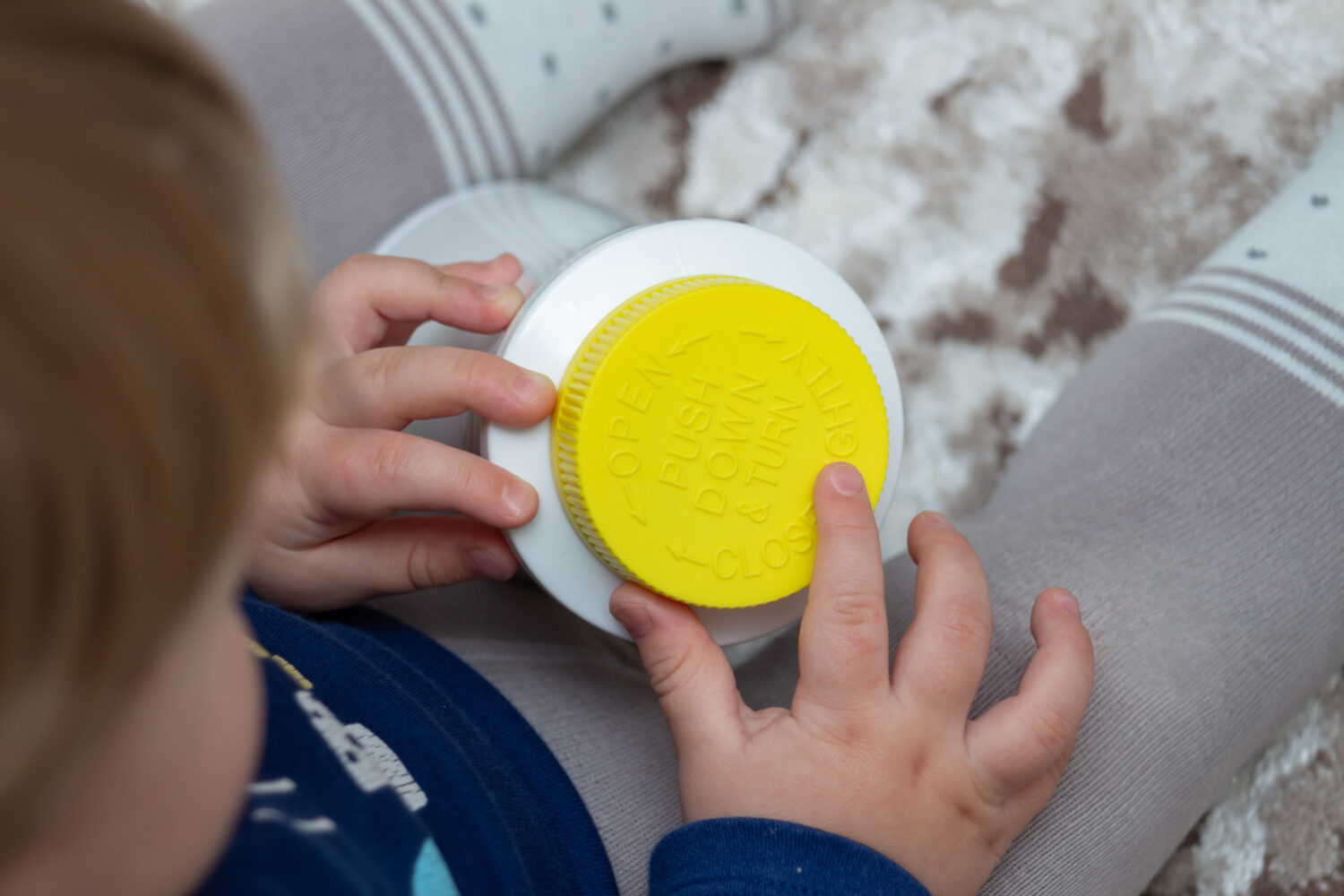
There can be a lot of confusion in veterinary practices about how to safely dispense prescription medication that doesn’t easily fit in standard child-resistant packaging. One of AAHA’s practice consultants explains that there are ways to safely package these products that are compliant with state and federal laws.
Advertisement
Have you ever dispensed antibiotics to a patient in an envelope? Or maybe you’ve placed pre-drawn syringes of medication in a plastic resealable bag for a client to take home? If so, there’s a good chance that your packaging was not consistent with state and federal laws regarding child-resistant packaging (CRP) meant to keep young children safe from harm.
There can be a lot of confusion in veterinary practices about how to safely dispense prescription medication that doesn’t easily fit in standard CRP. It can be made even more complicated when drug manufacturers provide branded containers that appear to be designed to dispense products like single doses of heartworm or flea and tick prevention for clients who choose not to purchase a three, six, or twelve-month supply.
Learning the law
Sarah Magoon, LVT, CVPM, Practice Consultant Manager for AAHA, spends time discussing this topic with veterinary professionals during every accreditation evaluation. She acknowledges that there are no true child-proof containers. However, she also explains that federal and state laws require that oral prescription drugs be dispensed in containers that are child-resistant.
According to the Consumer Product Safety Commission (CPSC), the Poison Prevention Packaging Act (PPPA) is one such federal-level law. The PPPA requires that any prescription drug (and certain over-the-counter drugs) in oral dosage form be dispensed in “special packaging.” Special packaging means that the packaging is “designed or constructed to be significantly difficult for children under 5 years of age to open within a reasonable time and not difficult for adults to use properly.”
According to Philip J. Seibert, Jr., CVT, founder of Safety Vet and former AAHA practice consultant, liability often shifts from manufacturer to the veterinary practice. “If the practice removes or alters any of the manufacturer’s original packaging prior to dispensing,” he said, “then the practice now assumes all responsibility for ensuring compliance with the child-proof packaging rules.”
Common challenges
Magoon said she most commonly sees improperly packaged medications in these three scenarios:
- When the practice sends home pre-drawn syringes of liquid medication in a plastic resealable bag
- When antibiotic tablets packed in foil are dispensed in the envelopes or bags provided by the drug manufacturer
- When parasite prevention (heartworm/flea/tick prevention) boxes are opened to dispense individual doses in manufacturer envelopes or resealable plastic bags
None of these solutions meet the criteria for child-resistant or special packaging. Even pouches and envelopes provided by a drug manufacturer to dispense medication are typically considered to be informational only. They do not meet the standards set forth by the PPPA for special packaging.
Container compliance
The American Society for Testing and Materials (ASTM) classifies packaging materials intended to comply with the PPPA by their type of closure and the action needed to open each container. Examples include vials or bottles and lids of various closure types that require actions such as “push down and turn”, “squeeze and turn”, or pressing on a tab while turning to open.
While the most commonly used sizes of these containers accommodate loose pills and oral suspensions, their dimensions don’t always make them a suitable option for sleeves of tablets, pre-drawn syringes, or single parasite prevention doses in their foil packaging. However, there are ways to safely package these prescription products in a way that is PPPA-compliant. For instance, larger pill vials (60-dram or larger per Magoon) can be used in many cases to dispense pre-dose syringes, strips of blister-packed tablets, and single doses of parasite prevention.
Child-resistant dispensing bags can also work well for these scenarios. They require a sequence of steps to open the bag that would be difficult for most young children. Some bags are constructed to be single use only, which would be appropriate for a single dose of parasite prevention. Others are meant to be opened and closed repeatedly.
Magoon said that these bags are used for both animal and human medications and for dispensing marijuana. Make sure if you are ordering them from a non-veterinary distributor that you are not purchasing bags with marijuana warnings on them.
Solutions for seniors
The very attributes that make CRP hard for children to open can create challenges for some senior pet owners and others with limited dexterity. However, Magoon said that the two are not necessarily mutually exclusive. Some child-resistant options are still senior-friendly. These include pop-top lids that can be released with the heel of the hand even with limited dexterity that are still challenging enough for children under the age of 5 to open. Clients can also purchase a tool to aid in the opening of CRP vials at their local pharmacy or online.
Furthermore, with informed consent, clients can choose to decline CRP in favor of packaging that is easier for them to open. This paves the way for practices to dispense medication in containers like the manufacturer envelope or bag, resealable plastic bag, or a pill vial with an easy-open lid. Confirming that the client understands the risks of not using CRP frees the practice of liability they would otherwise assume to protect children from accidental poisoning.
Documenting declines
If your client declines to have their medication sent home in CRP, you must document it in the medical record. State laws vary in terms of what is required, Magoon said. For example, some states require that the client sign a form acknowledging that they are declining CRP. In other states, it is sufficient to make a note in the medical record. Magoon recommends creating an invoice code for a line item that indicates that CRP was declined. “That way the client always sees it on the invoice,” she said, “and it’s a reminder of the team to re-verify.”
One important point to remember is that a client must decline CRP each time a medication is dispensed unless the client requests a “blanket waiver” to CRP for all prescription medication. The CPSC still recommends that when a blanket waiver is in effect that the practice “periodically” check with clients to confirm that they still wish to have CRP for all prescription medication.
Practice leaders who have questions about the safe dispensing of prescription medications in accordance with the PPPA can consult the CPSC’s Guide for Healthcare Professionals for helpful information. AAHA-accredited practices and practices pursuing AAHA accreditation can also receive valuable guidance from their practice consultant. Learn more about accreditation and how AAHA can help you elevate your practice with plenty of support and resources along the way!
As a member of the AAHA Community, you can also learn more from your colleagues on this topic on these threads:
Child-resistant bags for prescriptions
Dispending monthly preventatives
Further reading:
Poison Prevention Packaging: A Guide for Healthcare Professionals
Poison Prevention Packaging Act webinar
Photo credit: Ivan Halkin/iStock via Getty Images
Disclaimer: Trends™ content is meant to inform, educate, and inspire by providing an array of diverse viewpoints. Any content published should not be viewed as an official stance, position, or endorsement by the American Animal Hospital Association (AAHA) or its Board of Directors.
