Emergency & Critical Care
Safe haven: Housing displaced pets during a disaster
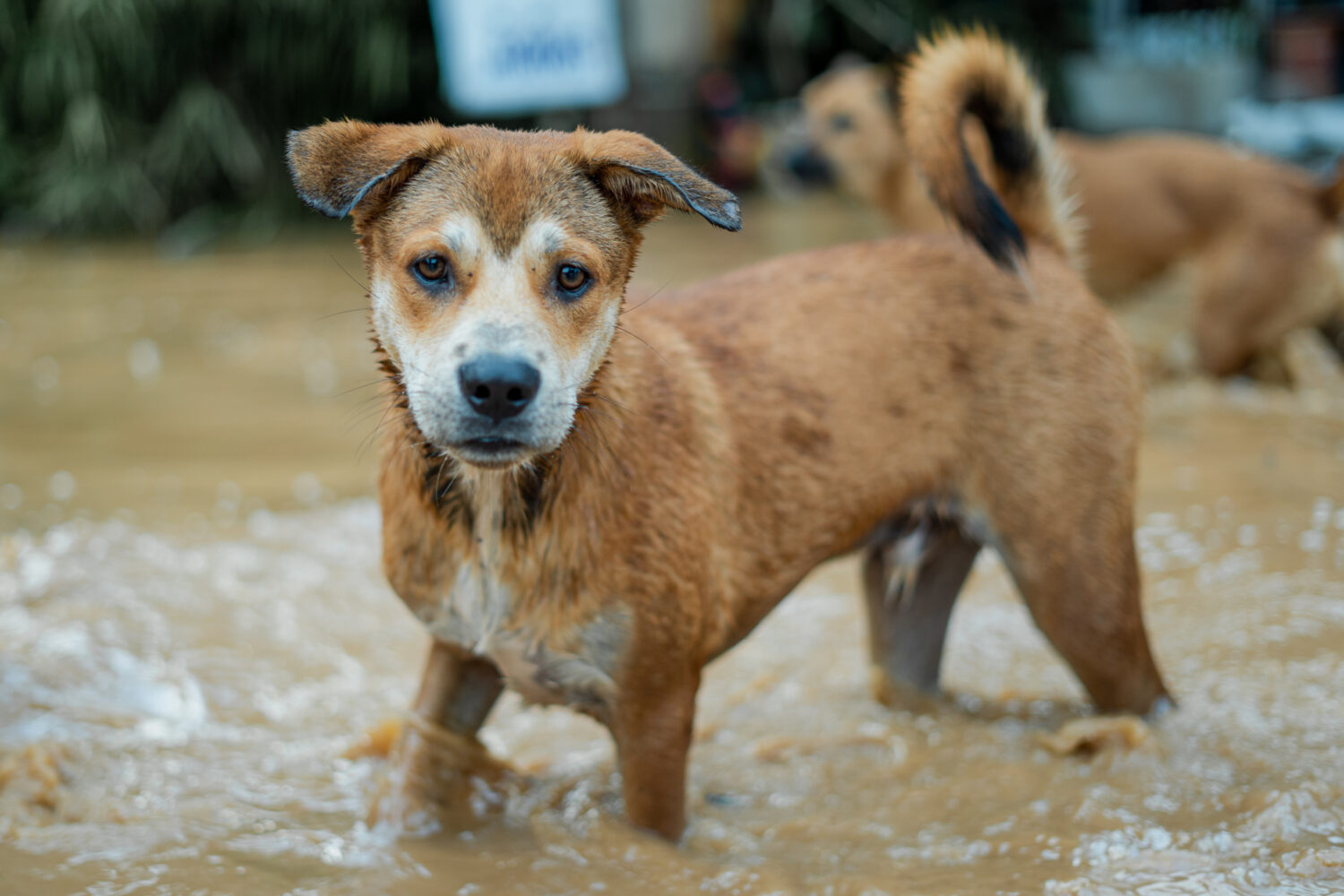
When disaster strikes a community, veterinary practices are in a unique position to help by housing displaced animals. With some practical training and preparation, you can be ready to assist your community’s people and pets when they need it the most.
Advertisement
Natural disasters present intense challenges, ranging from mass displacements to disruptions in infrastructure and services. Animals are equally affected. In recent disasters, reports of companion animals being left behind or out of reach of rescue teams are common. And if given the choice, individuals will often risk their own lives to remain with their pets. In addition to the physical devastation caused by climate-change-induced natural disasters, disruptions to the human-animal bond results in suffering and distress in both people and animals.
Veterinary teams work at the intersection of public and animal health. This means they are uniquely positioned to assist their communities during disasters. There is often a great need for safe and reliable shelter for displaced pets. This is particularly true for families who have multiple pets. Taking steps now can prepare you to jump into action when your community needs it the most.
Advertisement
Identify goals and create a plan
Maggie Joel, DVM, is a shelter veterinarian specializing in large-scale cruelty and disaster response at the ASPCA Cruelty Recovery Center in Columbus, Ohio.
“The most important consideration when supporting animal rescue and disaster response is understanding the vital ways in which you can make a difference,” Joel said. Key to this understanding is determining what your individual practice’s capacity is, developing a plan of action, and implementing training for your team.
Start with a risk assessment
What natural disasters have occurred in your area? What are the future trends in weather patterns, temperature fluctuations, etc.? While it’s not possible to predict everything that may happen, what do you most likely need to be prepared for? For example, if wildfires are a risk in your area, you may need to be prepared to treat animals with burns and smoke inhalation.
Determine your practice’s capacity and goals
Do you have the space and infrastructure to shelter displaced pets? Can you increase walk-in and emergency appointments? Or would it make more sense to train staff members to volunteer with other community partners, like shelters, during a disaster response?
Involve team members
Invite team members like credentialed technicians, veterinary assistants, and customer care representatives to participate early on in these discussions. Doing so can build team support and assist with assigning roles.
Develop a written plan
A written plan ensures your team’s response will be efficient and organized. This plan should include protocols for intake, triage, and ongoing care for displaced pets. It should also include infection control and hygiene procedures. Checklists and flowcharts are useful to avoid missed steps and maintain consistent practices.
Your plan should also clearly define roles and responsibilities for team members. For example, Joel suggests assigning a point person to manage calls about lost pets and update the list of pets daily.
“Having premade contracts for animal surrender, strays, and boarding will help make the intake process run smoothly,” Joel said. “It is important to check your local regulations during the planning process, as the specifics regarding animal care can vary between states.”
Prepare your facility
“The first step is to determine the number of animals your clinic can humanely care for while considering all factors, such as space, staffing, finances, and other resources,” said Joel. She notes that the Capacity For Care (C4C) concept, which originated in the sheltering world, can be useful here. This resource provides simple equations to calculate housing and staff capacity that can be applied to taking in displaced pets.
In addition to your Capacity for Care numbers, it’s also important to consider what medical and basic care supplies you already have on hand. Also be sure to make note of what supplies you may need to increase to meet changing needs. Since it can be difficult to predict this, Joel suggests having a partner facility or close contact outside of the disaster zone.
“This pre-established partnership can provide last-minute supplies and help with ordering, since this can be a significant challenge when you’re in a zone affected by disaster,” she said.
Finally, having separate spaces within your facility for displaced pets is recommended. This measure decreases the risk of infectious disease spread. Using personal protective equipment (PPE) and clearly defined hygiene protocols is also strongly recommended.
Prepare your team
Conduct team training on established protocols and checklists to ensure all staff members are comfortable with the steps and expectations. Assign roles and provide team members opportunities to take on leadership responsibilities. This can involve liaising with local shelters to coordinate reunification efforts.
Provide education opportunities to prepare team members for disaster situations. Joel recommends adding disaster response or sheltering courses to your continuing education.
“These courses and continuing education are an accessible way to learn more about rescue, response, and the many ways your team can help,” she says.
While not an exhaustive list, here are some available education and training resources:
FEMA Incident Command System (ICS) online courses
ASPCAPro disaster management resources
AVMA First Responder Certificate Program
Collaborate with community partners
It’s crucial to build your community network before a disaster occurs. Having well-established relationships with local shelters and other community aid organizations will help to streamline communications and maintain connections during stressful and often chaotic circumstances. Importantly, being part of a network and understanding your community’s needs will ensure that you are helping, and not hindering, rescue efforts.
“One of the biggest challenges disaster response operations can face is community members self-deploying without a plan or proper training, as this can create confusion and potentially dangerous situations,” Joel said.
The 2024 AAHA Community Care Guidelines for Small Animal Practice provides suggestions for creating a community network with shelters, community practices, and animal welfare organizations. This can begin as simply as reaching out to meet and have a conversation with a given organization’s leadership to identify opportunities for mutual support.
Conduct post-disaster recovery and review
Facilitate reunification of pets and families
Joel suggests working closely with your local animal shelter to understand how they are reuniting lost pets with their families. “If your clinic is taking in strays, during your initial exam be sure to document size, colors, breed, and microchip information, as well as collars, location found, and any other information that could help reunite a family with their pet,” Joel said. During a disaster, it is recommended that practices increase stray holds to 30 days.
For animals that are not reclaimed, Joel says that relocating them to the local shelter may provide the best long-term chance for them to be reunited with their families or adopted.
Perform an after-action analysis
After all is said and done, it can be very helpful to solicit feedback from your team. Find out what worked well and what could be even better to refine your processes and preparations as needed.
Every emergency is different. Looking back at what went right and what could have been done differently will help you respond even more effectively when the next disaster strikes.
Further Reading and Resources:
ASPCAPro Capacity for Care in Animal Shelters and Rescues
AAHA Community Care Guidelines for Small Animal Practice
Protopopova A, Ly LH, Eagan BH, Brown KM. Climate change and companion animals: Identifying links and opportunities for mitigation and adaptation strategies. Integrative and Comparative Biology. 2021; 61(1): 166–81.
Photo credit: © Will Langston + via Getty Images Plus
Disclaimer: Trends content is meant to inform, educate, and inspire by providing an array of diverse viewpoints. Any content published should not be viewed as an official stance, position, or endorsement by the American Animal Hospital Association (AAHA) or its Board of Directors.
