Clinical
Reconsidering fluid bag use in veterinary medicine
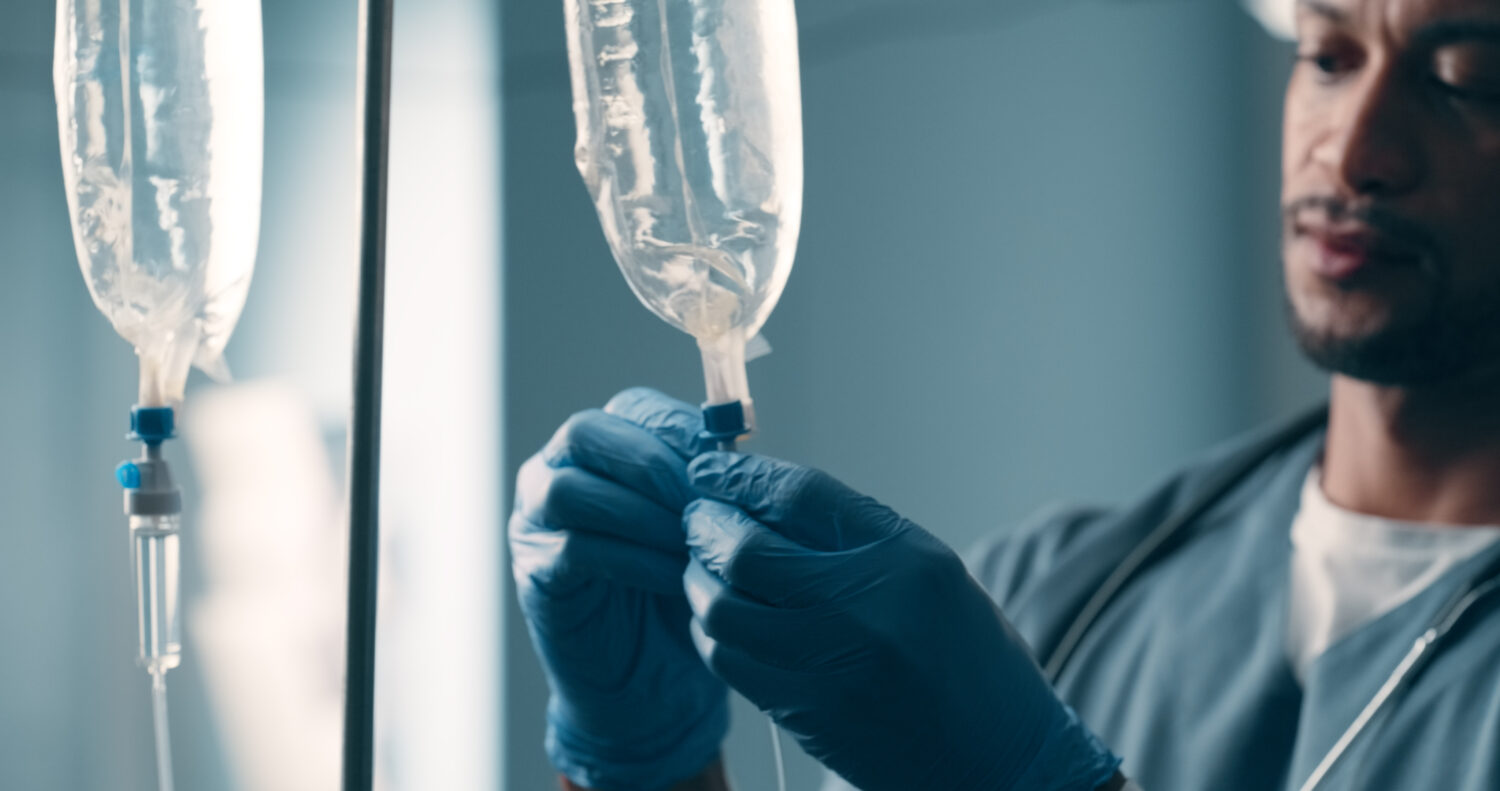
Do you make your own saline flush syringes in your practice? What about reusing fluid bags for multiple patients? If you are looking for the latest guidance on these practices, look no further. Read on to see what AAHA’s guidelines and standards have to say and get insight from an expert in the field.
Advertisement
A few months ago, Amy Newfield, MS, CVT, VTS (ECC) posted a video on social media of herself in a veterinary practice drawing up saline into syringes to be used as flush for IV catheters, calling it the “biggest waste of time for vet techs/assistants.” Her video got over 300 likes and over 400 comments, which she was not expecting. They ranged from, “Yes I hate doing this,” to “I love being able to sit down and do this,” to “You’re doing it wrong,” to “No one should do this anymore.”
In the AAHA Community, questions have also been raised about the use and storage of IV fluid bags, whether they should be used for multiple patients, and for what period of time they can be used once they are opened. With little scientific evidence to pull from, answers from community members varied as to whether a fluid bag could be used for multiple patients and for what period of time an opened bag could continue to be used (anywhere from 24 hours to 30 days).
When sterility, and therefore patient safety, are at risk, it can be frustrating to see such variability in answers in terms of what is considered best practice. Here, we review relevant AAHA standards and pearls from the 2024 AAHA Fluid Therapy Guidelines for Dogs and Cats, along with some expert advice from Newfield.
Syringe flush
While it was previously common practice in veterinary medicine to prepare syringes of saline flush for IV catheters using 3cc syringes to draw saline up from a bag, AAHA’s standards recommend against this:
PC41 .1 Individual prepackaged sterile flush is used for IV catheter maintenance.
There are multiple reasons to avoid drawing up saline into syringes in-house, Newfield said. In addition to concerns about needlestick injury with repeated uncapping and recapping of needles, she said that performing this task is not a good use of trained professionals’ time and expertise. “You have better things to do with your brain,” she added.
There are multiple potential safety risks for the patient with this type of flush preparation as well.
Repeatedly accessing a saline bag and changing needles can increase the risk of contamination, both in the bag and in the individual syringe. Newfield explained that flush syringes prepared in this way must be used very quickly because sodium chloride will crystallize within the needle.
The syringes typically kept in veterinary practices can also create problems as they were not meant for pushing flush into a vein. “Saline flushes that are manufactured for this purpose can regulate the pressure that is being pushed into a vessel,” Newfield said, noting that this is a capability not present in vaccine syringes.
Use of heparin
Apart from the recommendation not to prepare flush syringes in-house, there is also mounting evidence against the inclusion of heparin in syringes of saline flush. Newfield calls the use of heparin in saline flushes a big “no-no” due to documented cases of humans developing coagulation disturbances and dying from receiving an overdose of the drug.
“It’s an absolute tragedy to use,” she explained, adding that common practices for the preparation of heparinized saline flushes often did not involve any kind of standard heparin dose that would prevent toxicity and secondary bleeding disorders.
Furthermore, researchers have reported that saline alone provides adequate patency of IV catheters, obviating the need for heparin inclusion.
Fluid bags
Both the AAHA Fluid Therapy Guidelines and AAHA standards of accreditation offer clear guidance on the reuse bags of IV fluids for more than one patient. The guidelines recommend, “Use a new IV line and bag for each patient,” regardless of the intended fluid administration route.
The standards provide similar guidance:
PC40.1: Fluid preparations are discarded following use and may not be transferred to another patient.
For continuous use with a single patient, there is not one clear rule as to how long a fluid bag and line can be used before they should be discarded and replaced.
The CDC has no recommendation in terms of hang time for fluid bags (unless they contain parenteral nutrition or blood products) that will be administered through peripheral IV catheters. However, one study in which the injection port of a fluid bag was repeatedly accessed found evidence of contamination at the port as soon as two days after opening it. Another literature review found risk of contamination between 72 and 96 hours after a fluid bag was opened. In any case, strict aseptic technique must be used when opening the fluid bag to reduce the likelihood of contamination.
Other considerations
While using a new bag and line for each patient and not using fluid bags to prepare saline flush can go a long way toward improving sterility and decreasing the risk of cross contamination, there are additional factors veterinary professionals should carefully consider to reduce the risk of infection and toxicity to their patients, Newfield said.
Any time a port is accessed, either on the fluid bag itself or in the administration line, the port should be swabbed with alcohol first, a practice that Newfield admits is rarely done in veterinary medicine. One study compared the efficacy of various disinfectants and found the use of 70% ethanol on ports reduced the presence of microorganisms by more than 99%.
Along with swabbing ports, Newfield said, veterinary professionals should make a more concerted effort to wear gloves, as is routine among human healthcare professionals, especially when touching ports on fluid bags and lines, changing extension sets or needles, or placing IV catheters.
We also need to use caution when labeling fluid bags, Newfield cautioned. If a marker is used to write directly on the fluid bag, the ink may leak through the bag and into the fluids within 24 hours. “Now you’re injecting ink into a vein,” Newfield explained. Thankfully, the solution is straightforward: instead of writing on the bag, write on tape (or use a label) that is placed on the bag.
Location within the hospital is also an important factor to consider with the use of fluid bags. One study found that fluid bags hung near sinks were more likely to have contamination of their ports than bags not hung near a sink.
Educating pet owners
Since pet owners are sometimes sent home with a bag of fluids to administer to their pet on their own, it’s worth reviewing with them how to reduce the risk of contamination at home. This should include aseptic technique, using gloves, and proper storage time and location for fluid bags and lines.
As a member of the AAHA Community, you can also learn more from your colleagues and AAHA accreditation specialists on this topic on this thread:
Further reading:
Use of disinfectants to reduce microbial contamination of hubs of vascular catheters
Photo credit: Sean Anthony Eddy/E+ via Getty Images
Disclaimer: Trends™ content is meant to inform, educate, and inspire by providing an array of diverse viewpoints. Any content published should not be viewed as an official stance, position, or endorsement by the American Animal Hospital Association (AAHA) or its Board of Directors.
