Culture and People
Lonely, “crazy”, childless cat ladies? The data suggest otherwise
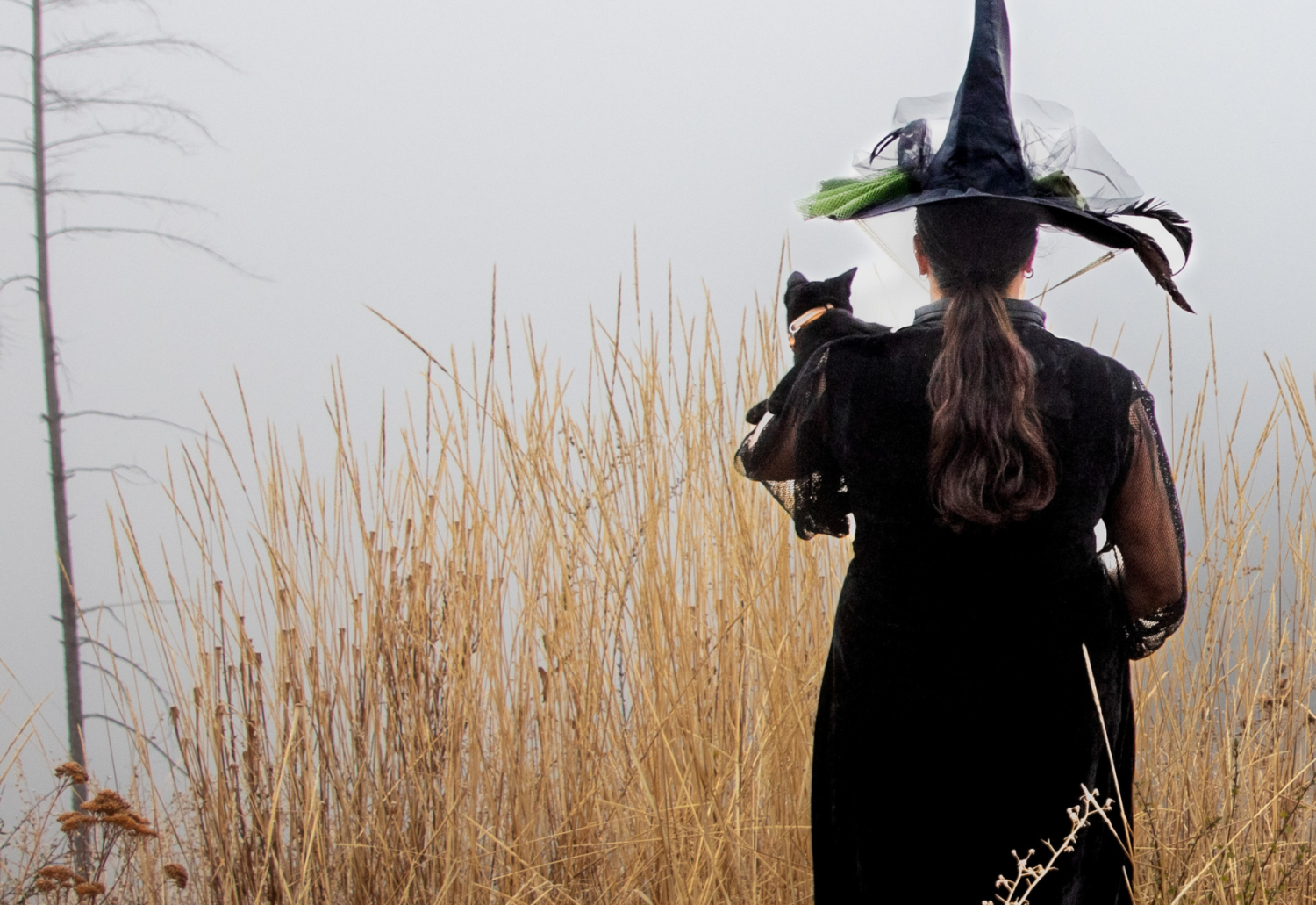
National Cat Lady Day is April 19th. So let’s look at the harmful origins of negative “cat lady” stereotypes and why the data suggests that cat owners are far from lonely, childless, or “crazy.”
Editor’s note: We recognize that the term “crazy” can be stigmatizing, especially in reference to mental health. In this article, it is used only to reflect the common stereotype of the “crazy cat lady,” not to endorse or perpetuate harmful language.
Advertisement
It’s a trope as old as time: The enduring image of the lonely “cat lady”—a solitary woman surrounded by feline companions late in life, with no children or partner to keep her company.
This image has also recently been utilized in political rhetoric. In a 2021 interview that resurfaced prior to the 2024 presidential election, Vice President JD Vance remarked that the U.S. is “effectively run… by a bunch of childless cat ladies who are miserable at their own lives,” targeting Democratic leaders like Kamala Harris, Alexandria Ocasio-Cortez, and even Pete Buttigieg.
Perhaps messaging like this is why April 19th is National Cat Lady Day, a holiday designated to “honor the special bond between cats and their human companions” amid harmful rhetoric aimed at (predominately female) cat lovers, that is seeing a recent resurgence.
But what if I told you that the negative “cat lady” stereotype is not only rooted in harmful imagery, but it’s patently false? And there’s data to prove it.
The origin of the cat lady
The cat lady trope is currently in its reclamation era (thanks to proud cat owners like Taylor Swift, who posed for the cover of Time Magazine with her ragdoll cat, Benjamin Button, when she won Time’s Person of the Year Award in 2023), and for good reason. Its roots are much more harmful than the common stereotype initially suggests.
Cat lady stereotypes originated in medieval Europe, a time in which any women’s behavior that went against social norms was considered witchcraft. And what pet goes better with standard witch imagery than a (black) cat?
“Witches are actually ‘crazy cat ladies’ in the sense that one of the things that happens during the period of the witch trials is that people start looking at the animals around them and the owners of those animals and they looked on them suspiciously,” explained Diane Purkiss, an Oxford University professor of English literature, whose interests include the supernatural and witchcraft. “They were looking for something abnormal, some kind of behavior that they see as excessive or that they see as strange.”
Although today, nobody would bat an eye at a pet owner throwing a birthday party for their beloved furry companion, Purkiss notes that behavior like this was a red flag during the witch trials, when women were often scrutinized over any behavior that deviated from social norms.
Misplaced maternity?
“They particularly kept an eye on women who have a number of animals or who are very close to their animals, or who behave particularly lovingly towards their animals,” she noted. “And we know this because it crops up in the trials of these women that these women are reported as having a very close and loving relationship with animals and then the interpretation that’s put on that is that the animal is a devil and not really an animal at all, and that it’s through the powers of that devil that the woman is able to do magic. And this is kind of a handy double whammy really, because it means that the woman doesn’t have any power. She’s just drawing on the power of the animal.”
At the time, cats were considered to be demonic, and even satanic. The fact that cats could climb, and demons were commonly believed to enter houses through chimneys, only bolstered this stereotype. Not only that, but affection toward animals, particularly cats and dogs that were commonly thought to be diseased, was abnormal, and, as Purkiss notes, seen as a misguided outlet for maternity.
“In witch trial records it crops up again and again that the witches treat their animals the way you might expect to treat a child,” explained Purkiss. “They gave them the kind of food that children are normally given, typically a mash up of bread and milk or just milk on its own. And these are kind of luxe foods—they’re not just like giving the animal scraps, they’re giving the animal a food that you would normally give to a small human, and so that then suggests that women’s relationship with pet animals is being read as a sort of perverse or even perverted form of maternity.”
Cat gentlemen
This dynamic is one of the reasons Purkiss notes that Vance included Buttigieg in his list of “childless cat ladies,” even though Buttigieg is male—the emphasis on the trope is on misplaced maternity, and Buttigieg, being a gay man, doesn’t fit Vance’s traditional notions of parenthood. Purkiss adds that this implies an unfortunate sense of discrimination into the trope—that only select groups of people (namely heterosexual white couples) should be procreating for the good of the country.
Although Vance’s comments came the month before Buttigieg and his husband, Chasten, announced the adoption of their two children, Purkiss notes that Buttigieg is still considered a childless cat “lady” because his children (or potential children at the time) are “not a child of his body… all Vance is doing is announcing something that nowadays sounds pretty strange to most sane people, but that in 1600s would have sounded perfectly normal and would hardly even have needed saying: Of course, you don’t want people wasting their fertility—you want lots of people like ‘us’ having lots and lots of children to make the country strong and even just to improve the lot of things in your particular town or village.”
Controlling the cat lady
Although such beliefs are outdated, discriminatory, and even laughable today, the consequences for women who forwent motherhood in favor of pet ownership were no laughing matter for women at the time of the witch trials. Witches, or women who were believed to be witches, were often burned at the stake or otherwise executed for their “crimes.” Modern women don’t have to deal with such dangers associated with cat ownership but instead face scrutiny from pundits like Vance and others—particularly if they are childless or childfree. Purkiss notes that such messaging is often a form of control that demands women submit to social norms or face social ridicule.
“My feeling is that what really threatens the patriarchy is actually women having a choice about their lives at all,” she said. “A woman who can survive on her own without needing some sturdy bloke is a real problem for the patriarchy.”
Thus, the enduring social criticism of today’s cat ladies is likely an aftereffect of beliefs that began in the early 18th century, when cat ladies transformed from fearsome spellcasters to singletons worthy of pity in the arena of public opinion. One publication lamented that unmarried women, “having failed in the prime object of existence,” (aka marriage and children,) would instead settle for feline or feathered companionship, as “tradition associates her with cats and parrots, on which she is supposed to lavish all that is left of affection in her withered heart.”
From powerful to pathetic
One particularly salient—and startling—element of the cat lady stereotype is the element of control imbedded within it. Whether cat ladies are characterized as childless, lonely, or crazy, the underlying message underneath the stereotype and how it conveys what marks a successful vs an unsuccessful woman, do not go unnoticed by Purkiss.
“One of the things that characterizes all three kinds of cat ladies is that they’re all seen [by those using this stereotype] as failures,” she notes. “If you’re lonely, you’re a failure. If you’re not in a marriage by the age of 30-35, you’re a failure. If you don’t have children by the age of 30-35, you’re a failure. So all those sorts of categorizations are about failure. Having a cat, therefore, is not meant to be a positive choice that you made. It’s your desperate scrabbling after something that you failed to acquire.”
Subtle messaging
This stereotype isn’t just present in political messaging. Purkiss notes that it is a constant media troupe, featured in mediums ranging from The Simpsons to Lady and the Tramp, a Disney movie Purkiss recently reviewed for a work project.
“[Lady] is presented as a kind of trial run for having a baby,” she explains of the movie’s plot. “And all interest in her kind of expires when Darling, the female character actually gets pregnant. And then they stop being Lady’s parents and in fact, literally abandoned her to the not-too-tender care of a really awful relative who is in fact a crazy cat lady. This is where I’m going with this: Aunt Sarah is a crazy cat lady, and therefore a very poor mother, both to Lady and to [Darling’s] baby…. We then see that the only way that Lady can be re-incorporated into the household is by becoming a mother herself [at the end of the movie].”
Purkiss notes that the impact of such tropes speak volumes about the societal value placed on motherhood, fertility, and feminine control, whether the messaging is blatant or subtle, or even intended at all.
“This is the situation that’s being invited: the idea that [admonishing the cat lady] is going to lead back to some sort of American pastoral whereby lawnmowers are out every Sunday,” she said. “But it’s not. That’s not how any of this works, or how it ever worked and so I think it is why the stereotype is being invoked…It’s there to tell us something that has nothing at all to do with cats, or even with ladies, but that has to do with what our life goals are meant to be.”
Purkiss, who is a mother, has nothing against motherhood in and of itself. She takes issue, however, with cats and negative cat lady stereotypes being invoked as a means to reduce choice and imply that one way of living is right for everyone.
“I’m a mother myself and it made me very happy,” she said. “But that’s not to say that I think everyone should have to do it.”
Today’s cat ladies (and gentlemen)
It’s also worth noting that, despite enduring stereotypes, today’s cat ownership statistics paint an entirely different picture of “lonely cat ladies” on a variety of fronts.
First, recent data suggest that cat ownership is much more egalitarian. More recently, the tables have turned. The 2024 Mars Global Pet Parent Study indicates that 52% of cat owners are men, while 48% are women.
As far as marital status goes, another study indicated that cat ownership is more strongly related to marriage or cohabitation. Out of over 1,200 participants in the study, over 60% of cat owners were either married or living with a partner.
Finally, when it comes to the idea that cat ladies are childless, data suggest otherwise. The AVMA’s 2022 Pet Ownership and Demographic Sourcebook found that pet owners described as “low-key and child free” were less likely to own cats.
The bottom (fe)line?
The “cat lady” stereotype is more myth than reality. Not only is this outdated trope due for retirement, but the data tells a different story—one where gender, marital status, and even happiness aren’t defining factors in cat ownership. At the end of the day, loving cats isn’t about fitting into a stereotype; it’s about the joy, companionship, and comfort these furry friends bring to our lives.
That’s a mindset shift that Purkiss notes is worth striving for: one that sees cat ladies as loving, successful, and worthy instead of objects of ridicule.
“One of the kinds of changes that we need politically to think with is: How can we encourage people to think of, for example, pet-oriented people as lovely and companionable and living lives of their own choosing rather than people who failed at life in some sense?”
It’s a change that won’t happen overnight. But maybe celebrating National Cat Lady Day as a happy holiday is one small step in that direction.
Photo credit: © Christina Arnando via Getty Images Plus
Disclaimer: Trends content is meant to inform, educate, and inspire by providing an array of diverse viewpoints. Any content published should not be viewed as an official stance, position, or endorsement by the American Animal Hospital Association (AAHA) or its Board of Directors.
