Clinical
Post-obstruction care of hospitalized blocked cats: A family-centered approach
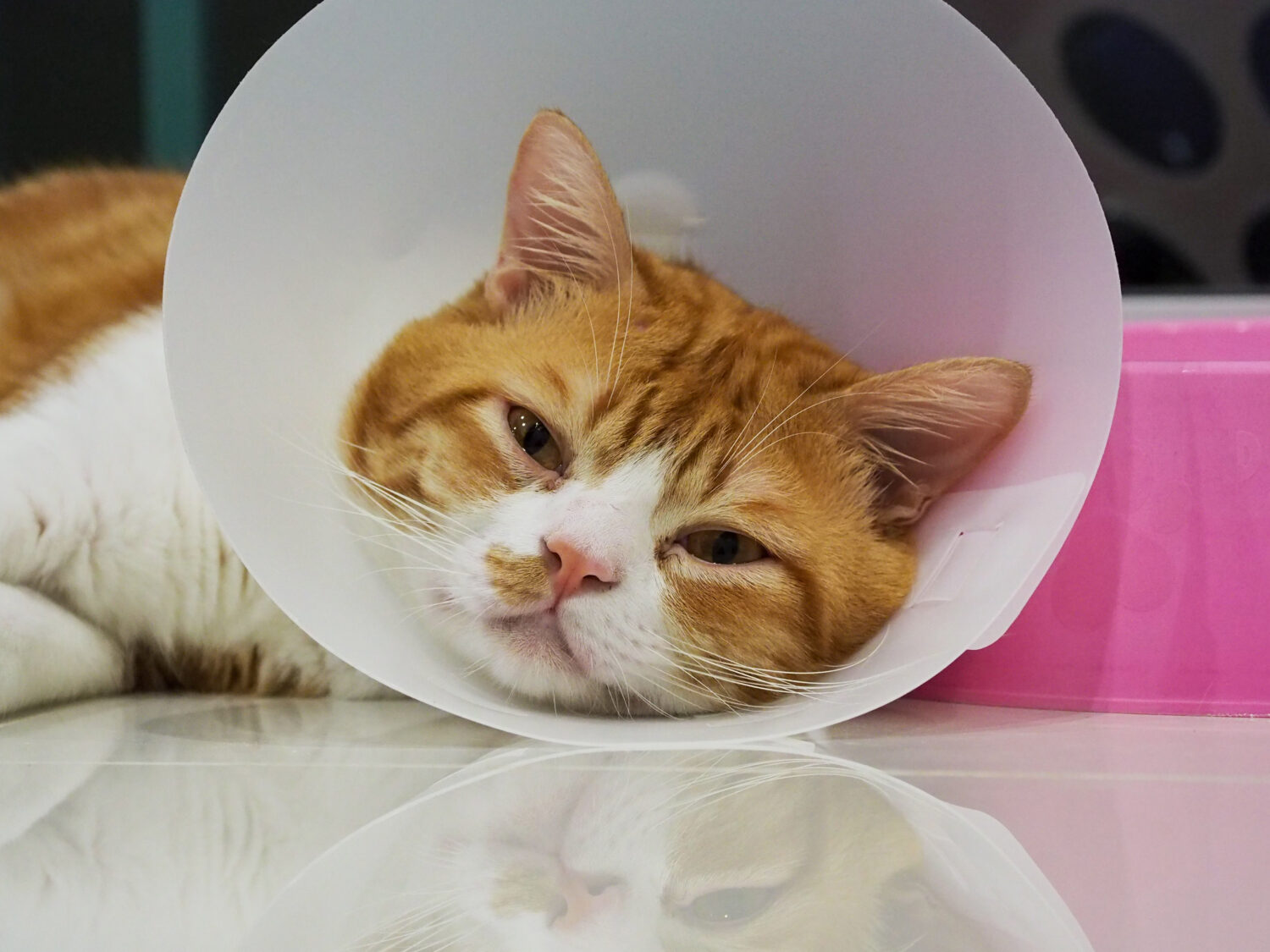
You’ve unblocked the cat…now what? Do you keep them overnight? Transfer them to another facility? Send them home? We discuss ways to decrease the likelihood that your patient will experience complications while taking into consideration the unique variables of each cat’s (and each family’s) situation.
Advertisement
In the AAHA Community, a recent question asked for tips and tricks for caring for cats hospitalized post-urethral obstruction to prevent them from removing their own urinary catheters. Other community members chimed in with helpful advice about post-obstruction care, including fluid lines, e-collars, and preferred urinary catheter type.
Other comments arose about whether to keep patients in the hospital unattended overnight, which types of analgesics were preferred, and how to tape urine collection system lines to avoid tension. To learn more about this topic, we asked Ashley Love, BVMS, DABVP (Feline Practice), veterinarian at Las Vegas Cat Hospital, to discuss some of the most important considerations when deciding how to manage a hospitalized cat post-obstruction. She shared some helpful pearls, through a spectrum of care lens.
The risks
“Cats recovering from urethral obstruction while hospitalized with a urethral catheter in place remain at risk for a range of complications,” she said. These can include everything from secondary effects from urethral obstructions such as hyperkalemia, azotemia, arrhythmias, and bladder rupture, cats can experience additional complications even after the obstruction has been cleared.
Love said post-obstruction complications can include dehydration and electrolyte imbalances from post-obstructive diuresis, kinking or clogging of the urethral catheter, urethral trauma, self-removal of the urethral catheter (possibly necessitating a second procedure to re-catheterize), and acquired bacterial infection.
Part of the goal of hospitalization of these patients is to be able to monitor them for any signs of complications and try to prevent or at least respond to them quickly.
“Without continuous observation,” Love said, “early signs of trouble can go unnoticed, potentially leading to serious outcomes.” Patients who are not monitored and who re-obstruct without prompt intervention are at risk for recurrence or worsening of the complications associated with the initial obstruction, which can also include detrusor atony.
Where to provide post-obstruction care
Transfer or referral
Love said that ideally, every cat with a urethral catheter in place would be monitored continuously at least until the catheter is removed.
“Close monitoring is critical to ensure catheter patency, manage post-obstructive diuresis, and quickly address any complications,” she explained.
For many practices that are not open 24 hours a day, this can require the transfer of the patient to an emergency clinic or other facility that offers overnight coverage and that is set up to manage hospitalized patients. In some cases, the patient may need to be transferred back to the general practice the following day for continued care.
While this setup may provide the best chance of monitoring the patient’s medical needs as related to the treatment of their obstruction, it can create a whole other set of challenges for the patient and their family. As a feline only veterinarian, Love recognizes that transferring a cat from one facility to another can be very stressful for the patient.
“We know that stress is a component of this condition for many patients,” she said. “I believe the clinician should take into account the stress to the patient from multiple transfers, especially if the cat is already anxious.”
Unattended in the hospital
In cases where referral or transfer to an overnight facility is not possible, Love acknowledges veterinary teams may decide to keep cats who still have a urethral catheter in place unattended overnight in the hospital. This may be due to a lack of availability of a suitable facility to accept the patient, difficulty on the client’s part in transferring the patient between facilities, or concerns about the cost of care at the overnight practice. Whatever the reason, Love said, “the decision should be based on a balance of ideal medical standards, patient stability, and practical limitations, with client education and risk management at the forefront.”
In these cases, she said, clear and proactive communication between the clinician and the client is essential. Veterinary teams should thoroughly review the risks of leaving the patient unattended overnight (dehydration, obstruction or removal of the urethral catheter, inability to respond to changes in the patient’s condition quickly, etc.) with the pet owner prior making a final decision. Additionally, Love added, “the clinician must take proactive steps to stabilize the patient as thoroughly as possible before leaving them unmonitored.”
Sending the cat home
“In certain situations,” Love explained, “sending a cat home may be the most appropriate decision—particularly if the patient is stable, not obstructed, and experiencing significant stress in the hospital environment.”
In addition to these criteria, Love stipulated that this course of action would ideally be chosen when an owner is “reliable, observant, and closely able to monitor” their cat’s progress.
Likewise, Love stipulated certain conditions under which she would not discharge a recently unblocked cat to go home: if the cat had a urethral or IV catheter still in place, when azotemia or hyperkalemia are still present, or when post-obstructive diuresis has not yet been stabilized. These patients, she said, require more monitoring— and in many cases more fluid management— than can be provided at home.
Top tips for hospitalization
According to Love, the most important elements of post-obstruction care for cats include fluid therapy, pain management, and stress reduction. In addition to rehydration, fluid therapy allows for the correction of electrolyte disturbances and perfusion of the kidneys.
Pain management is needed both because both the obstruction and associated inflammation cause pain, and because the presence of the urethral catheter can cause significant discomfort. Love added that controlling pain also reduces patients’ stress, which can contribute to urinary tract complications.
She described stress management as a “critical, and often underemphasized, component of care” for cats post-obstruction. Since stress plays a role in the etiology of feline lower urinary tract disease, she said, efforts should be made to reduce stress during hospitalization and going forward. In the hospital setting, this can include reducing auditory and visual stressors, maximizing comfort in the cat’s enclosure, and using anxiolytic medication when needed.
Urethral catheter selection
Clinicians have multiple options when deciding which indwelling urinary catheter to use for their patients. For the most part, the choice of catheter will largely depend on practitioner preference, the specific needs of each patient, and availability.
According to Love, no studies exist that compare clinical outcomes with urinary catheter type.
“In general,” she said, “the qualities I prioritize in an indwelling urinary catheter include a low-friction material with a smooth surface, a low-profile, lightweight hub for connection to a closed collection system and the presence of suture holes on the hub to allow secure attachment to the prepuce.”
Urinary catheter attributes
Love reviewed the attributes of various urethral catheters that clinicians may consider when choosing the type they wish to use for their patient.
- Polytetrafluroethylene: this catheter is smooth, low-friction, and relatively stiff. This can make it easier to pass during initial catheterization, but its stiffness may contribute to increased irritation and discomfort in the patient over time.
- Red rubber: red rubber catheters are less stiff and as a result tend to be more comfortable and better tolerated, but they can be more likely to slip out through suture finger traps over time, possibly requiring re-catheterization.
- MILA silicone: these catheters have a flushing stylet and suture wings, however Love commented that “the weight of the hub relative to the catheter itself tends to predispose the device to kinking at the hub-catheter junction, which can interfere with effective urine drainage.”
- Radiopaque silicone: this catheter is placed using a stylet that is then removed after the catheter is secured. This is Love’s urethral catheter of choice because it “offers a balance of flexibility, patient comfort, and structural integrity, with a design that minimizes friction while reducing the risk of kinking or dislodgement.”

The importance of communication
While acknowledging that there can be differences in opinion and a need for more peer-reviewed research to answer questions like how long a urethral catheter should be left in place after unblocking, Love feels that urethral obstruction can be a rewarding condition to treat. Clear communication, she said, and a family-centered approach, can help more cats survive this condition and have lower rates of complications and recurrence going forward.
As a member of the AAHA Community, you can also learn more from your colleagues and AAHA accreditation specialists on this topic on this thread:
Preventing blocked cats from pulling U Cath
Further reading:
2024 AAHA Fluid Therapy Guidelines for Dogs and Cats
2022 AAHA Pain Management Guidelines for Dogs and Cats
Photo credit: Marut Khobtakhob/iStock via Getty Images
Disclaimer: Trends™ content is meant to inform, educate, and inspire by providing an array of diverse viewpoints. Any content published should not be viewed as an official stance, position, or endorsement by the American Animal Hospital Association (AAHA) or its Board of Directors.
