Culture and People
Relief veterinary medicine: Opportunities and challenges
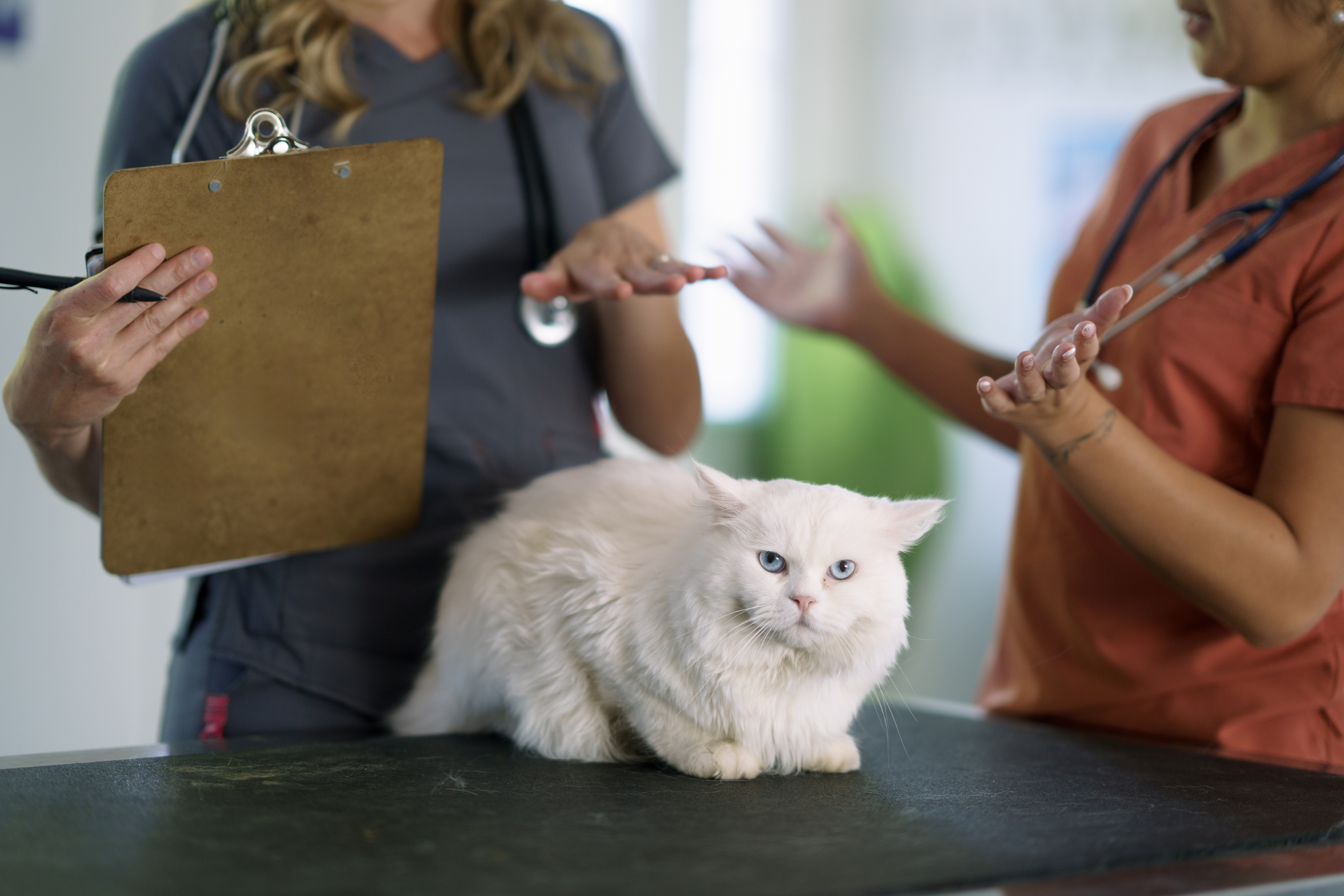
The rising trend of relief veterinary medicine presents a complex challenge for veterinary hospitals.
Advertisement
The rising trend of relief veterinary medicine—professionals who fill in on a temporary, on-call basis—presents a complex challenge for veterinary hospitals.
“It’s been both positive and negative for me,” said Elaine Myers, MS, RVT, CVPM. Myers is hospital administrator at Orange County Emergency Pet Clinics, Inc., in Fullerton and Garden Grove, California.
“The positive is that I have a large pool of doctors who can fill shifts, even last minute,” Myers said. “The negative is that it makes it more difficult to find full-time veterinarians because the supply interested in full-time employment is smaller. There is a shortage of qualified ER doctors and the more that settle into relief, the fewer are available to hire as staff doctors.”
Relief vs. full-time
Myers said she’s found several reasons why veterinarians prefer to work as relief doctors instead of full-time employees.
“It gives greater flexibility for those who want to travel, take whole months off at a time, and be flexible with their family time,” she said. “Others work relief as a supplement to their main job to earn extra money to pay off student loans or open their own practices.”
Relief doctors are a benefit in most cases, Myers said, but they do not always provide the same consistency in care that an associate veterinarian does. And negotiating relief pay for some shifts can be eye-opening.
For example, Myers said she ended up having to pay triple the fee for a single overnight shift on one long holiday weekend. In Orange County, the usual relief pay for a veterinary surgeon for overnight ER is $2,000-$3,500 for a 12- to 14-hour shift, she said.
“It was extremely expensive but a last resort to keep the ER open and functioning,” Myers said. “It is top priority for me to always be open when we say we are going to be open.”
Continuity and cost
Myers said she prefers staff doctors because of consistency. Staff veterinarians on a team learn how to work together efficiently. The quality of medicine offered to the patients is consistent. Clients, referral hospitals, and of course patients get to know and trust the staff doctors.
One hospital administrator says she avoids using relief doctors because of typically unaffordable costs—and the lack of continuity of care.
Leslie Boudreau, BASVT, RVTg, CVPM, SPHR, PHRca, hospital administrator at the AAHA-accredited Animal Hospital of Huntington Beach, California, said that hospitals faced with the ongoing veterinarian shortage get desperate to keep the doors open and staff busy and have paid very unreasonable fees to get a relief veterinarian.
“I’ve seen practices pay 10 times the amount we paid just a few years ago. It’s crazy. There is no way a practice can stay profitable on the days when they hire a relief veterinarian,” she said.
Boudreau, who is incoming president of the Veterinary Hospital Managers Association, said it’s a situation that hurts everyone from single-doctor practices who can’t have a day off without losing money to corporate practices that sometimes use relief vets almost exclusively for staff because they can’t hire or retain veterinarians.
“Veterinarians have to generate the revenue to help pay the staff, pay for the inventory, and more. With relief veterinarians costing 60% to 70% of what they generate, the practices don’t have the dollars left to pay the other things,” she said.
Continuity of care
For her, continuity of care is also an issue.
“Our regularly employed veterinarians do not like having to follow up on these cases, usually because the care may vary from what they are used to or comfortable with—sometimes it’s lack of documentation or they can’t follow the doctor’s thought process or treatment plan. This doesn’t happen every time but enough that I get pushback when having relief doctors.”
I think that the increase in relief work could prompt veterinary hospitals to evaluate their workplace cultures and perhaps begin offering more flexible scheduling options to attract/retain veterinarians.Lori Kogan, PhD
psychologist and professor of clinical sciences at Colorado State University
Relief work and culture
Dana Tashjian, VMD, associate at the AAHA-accredited Bay Road Animal Hospital, Sarasota, Florida, has experienced both sides. An associate for eight years in California, she moved to Sarasota and was a relief veterinarian for five years before becoming an associate again for the last five.
She found that the advantages of being a relief veterinarian were the flexibility in her schedule and the higher pay. It offered a chance to stay in the profession without the commitment of a full-time in-clinic job. She appreciated not being involved in staff meetings, staff issues, and other everyday problems. But there were disadvantages, too.
“The down sides were dealing with paying taxes as an LLC or S Corp, not having medical insurance offered, and constantly feeling like I couldn’t say no,” Tashjian said. “I ended up working six days a week because I wanted to help out when I could. And knowing that I got a check for every day I worked made it hard to turn down a shift.”
Changing culture
Lori Kogan, PhD, psychologist and professor of clinical sciences for the College of Veterinary Medicine and Biomedical Sciences at Colorado State University, Fort Collins, has a different take on the topic of relief veterinarians.
“I think that the increase in relief work could prompt veterinary hospitals to evaluate their workplace cultures and perhaps begin offering more flexible scheduling options to attract/retain veterinarians,” Kogan said.
She co-authored a November 2023 report in the Journal of the American Veterinary Medical Association that examined responses from 444 mobile and relief veterinarians about their views and why they chose a path away from traditional brick-and-mortar hospitals.
“Veterinary practices might explore hybrid staffing approaches that integrate both permanent and relief veterinarians, while working towards digital records systems that could help maintain continuity of care,” said Kogan. “I think successful practices will be the ones that work towards addressing the underlying issues driving veterinarians to choose relief work, including exploring innovative compensation structures and fostering collaborative work environments that offer the autonomy and work-life balance practitioners are seeking through relief positions.”
Benefits to both sides
According to Cindy Trice, DVM, the biggest advantage relief veterinarians bring to hospitals is allowing owners or associates to have a guilt-free break.
“I worked at a six-doctor hospital that did not use relief vets,” Trice said. “When one went on vacation, the rest picked up the slack and ended up seeing more patients making everyone burned out and tired. I felt guilty leaving because I knew I was making my colleagues work harder while I was gone. And, when I came back, it was like ‘tag, you’re it!’ and then they would go on vacation. It became a self-perpetuating cycle.”
Relief doctors also are “pollinators,” she said, bringing in fresh ideas about products, services, and communication from other practices where they have worked. They can expand services, like one relief veterinarian who only does dental procedures, which generates revenue and allows associates to see more patients. Some even can turn into associates using a “date-before-they-marry” approach to check out hospitals.
In return, relief doctors get flexibility and control of their schedules; make extra money to reach financial goals; and can avoid office politics. Some also may choose the path because they crave variety or want to travel, she said.
What draws vets to relief work
That’s what drew in Trice, a 2004 veterinary graduate whose experiences pushed her to create Relief Rover, a marketplace helping relief veterinarians and hospitals connect. Trice, who spent five years as an associate and the rest as a relief veterinarian, still works a relief shift or two a month. But her main focus now is as chief veterinary officer for Hound, a leading work platform in veterinary medicine, which bought her company in 2023.
Trice explained that relief practice has been around for a long time but there was a bubble when many were choosing it because they were burned out, the money was good, and they did not have to look hard to find work. An American Veterinary Medical Association article from 2019 noted, for example, that the number of relief veterinarians increased 30% from 2008 to 2018.
“But now the winds are shifting,” she said. “We as a cohort of veterinarians are subject to macroeconomic forces.”
Fewer hospitals are looking for relief help and there is a ceiling on what they will pay, she said. But there will always be a need for relief veterinarians because they are important to the health of the profession.
Photo credit: © FatCamera via Getty Images Plus
Disclaimer: Trends content is meant to inform, educate, and inspire by providing an array of diverse viewpoints. Any content published should not be viewed as an official stance, position, or endorsement by the American Animal Hospital Association (AAHA) or its Board of Directors.
