Science and the heart: Remembering Jane Goodall
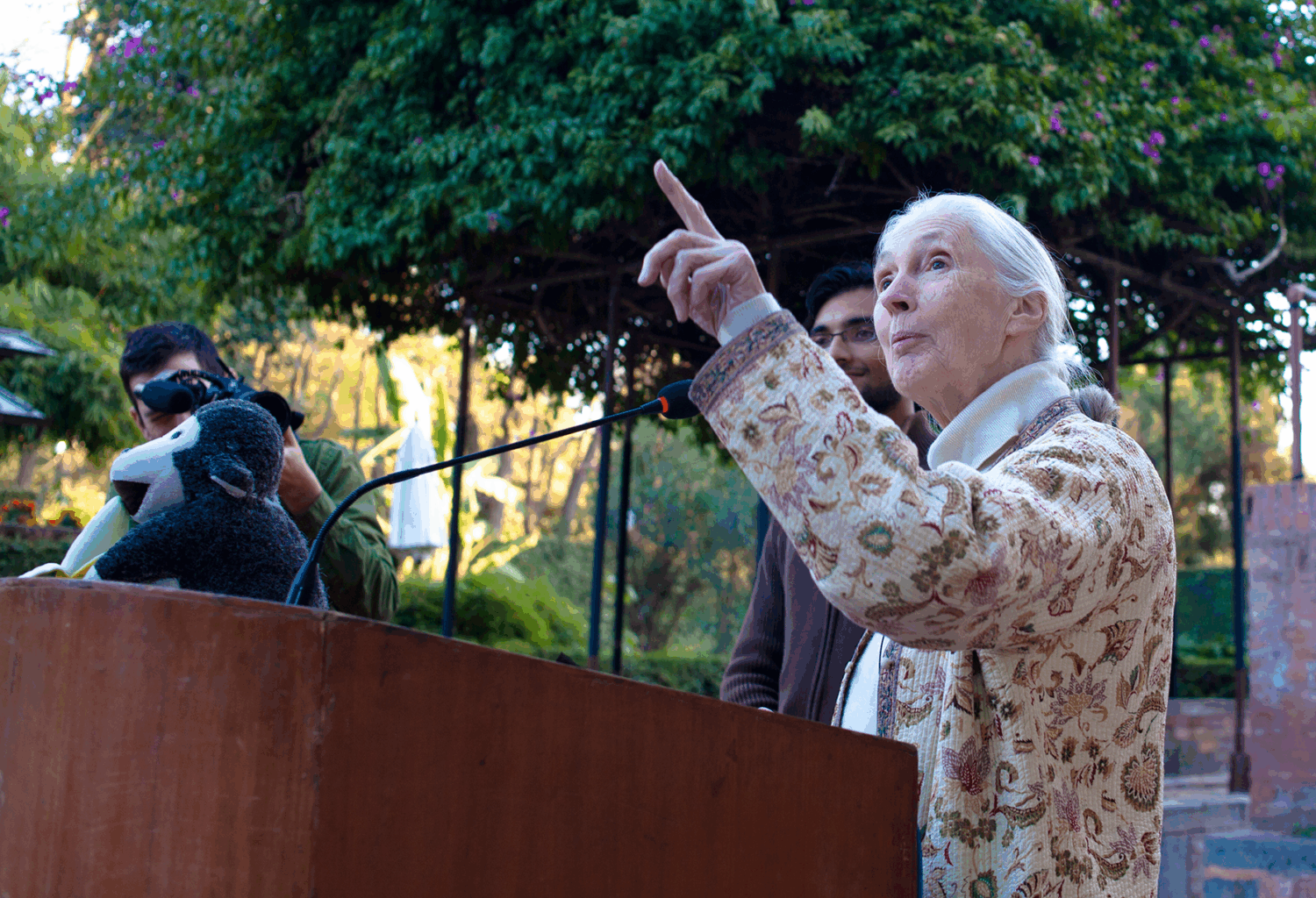
Dr. Jane Goodall, a groundbreaking primatologist and animal advocate, passed away on October 1, 2025. Following her passing, tributes from animal lovers across the globe poured in.
Advertisement
Goodall was well known for her studies of chimpanzees in Gombe National Park and subsequent conservation advocacy (including founding the Jane Goodall Institute and Roots and Shoots). Beyond her scientific studies and conservation work, Goodall inspired generations of young women, including veterinarians, to devote their lives to helping animals. By changing our understanding of animal emotions and capacities, she left an indelible impact on veterinary medicine.
A legacy of inspiration
“I wouldn’t be here today if it wasn’t for Jane Goodall,” said Jessica Vogelsang, DVM, chief medical officer of AAHA. “I spent many long afternoons in my living room curled up with our National Geographic magazines, enthralled at the work she was doing on the other side of the planet. She taught me that not all adventurers look like Indiana Jones, that pens and binoculars can be just as impactful as machetes and guns, and that no one else gets to determine the story of your life.”
Amy K. Fath, LVT, CVPM, practice manager at Gratiot Animal Hospital, echoed this sentiment, “I remember, as a young girl, watching Dr. Jane Goodall with the chimpanzees on Mutual of Omaha’s Wild Kingdom. That episode was the first time I saw her, and I was absolutely fascinated.”
Fath characterized Goodall as a trailblazer and mentor who truly loved animals, adding, “From that moment on, I was amazed by her—and I continue to be amazed to this day… [she was] a shining example of patience, love, and kindness.”
But Goodall’s contributions to the veterinary field went beyond inspiration, and one of her most significant achievements was to change our understanding of animals’ emotional lives.
Impact on veterinary medicine
Goodall began her career with no academic credentials, fueled by a desire to learn without judgement and a deep respect for all forms of life. Though she completed her PhD in 1965 after beginning her studies of chimps in Gombe, these traits of empathy and respect, along with rigorous scientific methods of observation, became defining aspects of her long career. They led her to reshape prevailing views on animals’ internal lives.
Although debates about the nature of animal minds occurred for hundreds of years (for example, da Vinci, Erasmus, and others accepted that animals are sentient), in the early 20th century discussing the relevance, and even existence, of animal emotions was considered irrational. A strongly reductive view of animal motivations, called behaviorism, came to dominate scientific beliefs and methods. Behaviorism, initially popularized by American psychologist John Watson and later applied experimentally by B.F. Skinner as operant conditioning, purported that animals were not driven by internal thoughts and feelings but rather learned through conditioning via environmental stimuli. This approach permeated many fields of science, including veterinary medicine.
Recalling her early career, Goodall said, “I did not realize that it was unscientific to discuss behavior in terms of motivation or purpose. It was not respectable, in scientific circles, to talk about animal personality. That was something reserved for humans. Nor did animals have minds, so they were not capable of rational thought. And to talk about their emotions was to be guilty of the worst kind of anthropomorphism.”
Through her work with chimpanzees, Goodall showed that nonhuman animals, like humans, possessed complex emotions and rich cultures and did not operate on instinct alone. She documented individual personalities, lasting social bonds, expressions of care and grief, and passing on of intergenerational knowledge among the chimpanzees she studied. One of her seminal discoveries, chimpanzee tool use, was lauded as “redefining what it means to be human.”
Goodall also redefined what it means to be animal, as someone who saw and understood how we humans are inextricably connected to other animal species. Her work influenced veterinary medicine by contributing to a deeper knowledge of animal behavior and emotional capacity. Her data and insight brought animal sentience to the forefront of scientific discourse, with wide-ranging impacts on animal welfare.
Valuing science and the heart
Goodall advocated for all animals equally, from safeguarding wildlife populations to ending the suffering of animals in factory farms and laboratories. She believed that data alone was not enough to facilitate change, but connection through dialogue and listening was also crucial. Following her methods and building upon the ethos Goodall professed, veterinary teams can ask: What is the story of this animal in front of us? What is the story of this family?
“She showed us where listening happens best: where data changes minds and stories change behavior,” said Melissa Magnuson, DVM, The Conscious Vet, owner of three AAHA-accredited practices and a member of the AAHA Board of Directors.
Goodall characterized herself as “just a girl who loved animals and wanted to learn about them,” but in reality, she was a formidable scientist who stepped into a space where few scientists were willing to go—bringing together keen observation with openness and empathy to foster greater understanding. Her willingness to do so created new possibilities for veterinary medicine with broad implications for animal welfare and wellbeing. And that space is where veterinary medicine can thrive and grow as a calling and a practice.
Reflecting on Goodall’s legacy, Magnuson said, “Science made room for her heart. That’s the door we must keep open.”
Photo credit: ShikharBhattarai via iStock Editorial/Getty Images Plus
Disclaimer: Trends™ content is meant to inform, educate, and inspire by providing an array of diverse viewpoints. Any content published should not be viewed as an official stance, position, or endorsement by the American Animal Hospital Association (AAHA) or its Board of Directors.
