Culture and People
Accrediting the future of veterinary education: A student’s perspective
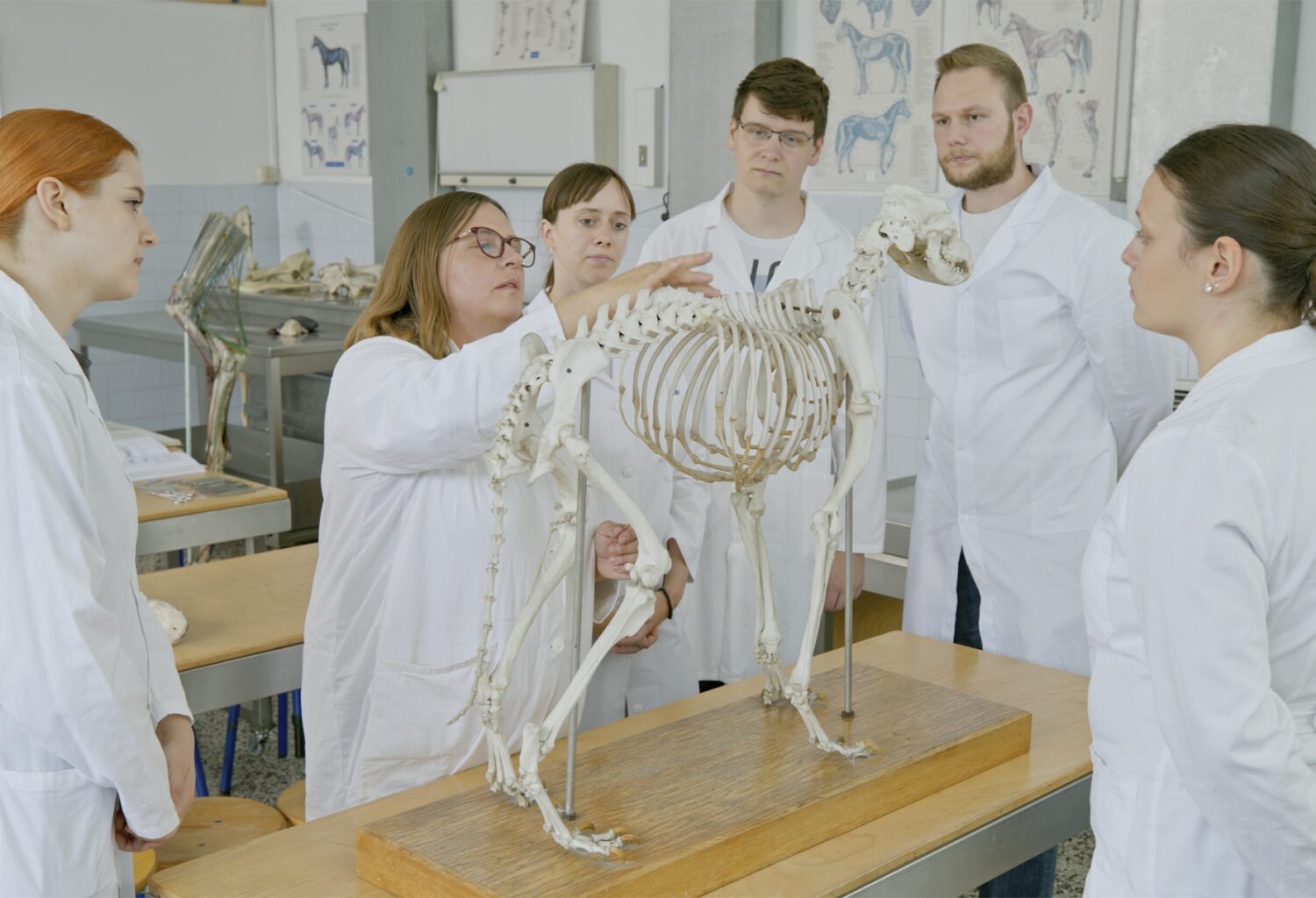
Taking a look at the veterinary school accreditation journey: Inside the process, the people, and our path forward.
Advertisement
When the Council on Education (COE) site visitors walked into Cornell’s College of Veterinary Medicine earlier this year, the atmosphere shifted. Our conversations throughout the college that tended to be casual were quickly turned intentional. Our faculty stood a little taller, we students whispered in the hallway about what might be asked, and behind closed doors, conversations began that would shape the college’s standing for years to come.
As one of the student leaders invited to participate in confidential discussions, I remember the quiet anticipation before the first meeting. It was a moment that reminded me how accreditation—though often seen as bureaucratic—has a heartbeat… and in that heartbeat lies the pulse of our profession. It affects every student, faculty member, and clinic patient who walks through those doors.
Advertisement
What is the accreditation process, and who does it impact?
Just like every other veterinary student—and even now veterinarians—we each have to search for our “perfect school.” With that, though, comes picking a school that not only fits our lifestyle, interests, and financial ability, but also is accredited.
Accreditation is the invisible backbone of veterinary education. It determines whether a college’s curriculum, facilities, and clinical training meet the standards necessary to prepare and develop competent veterinarians who can serve people, animals, and the environment holistically. In the world of veterinary education, the AVMA Council on Education (COE) serves as the sole accrediting body recognized by the U.S. Department of Education and the Council for Higher Education Accreditation. Its charge is straightforward yet profound: to ensure that each college of veterinary medicine provides a quality education that prepares graduates for professional competency and licensure.
Alongside it stands the Association of American Veterinary Medical Colleges (AAVMC), an entirely separate organization that represents veterinary institutions across the U.S. and abroad. The AAVMC focuses on admissions, collaboration, and advancing veterinary education—but not accreditation.
Historically, the close relationship between the AVMA (which houses the COE) and the AAVMC raised questions about potential overlap. In response, the AVMA Board of Directors created a robust firewall to protect the COE’s autonomy and transparency—actions modeled after medical education’s Liaison Committee on Medical Education (LCME).
That firewall now includes:
- Independent legal counsel for the COE
- Removal of the AVMA Board liaison role with the COE
- Elimination of Board approval for COE policy or standards changes
- A restructured COE Selection Committee that bars concurrent service on the AVMA Board or House of Delegates
- The end of Board member observation of site visits
Today, the relationship mirrors that of the LCME in human medicine—jointly sponsored but functionally autonomous. According to the AVMA’s update on changes to the AVMA COE accreditation standards, “The AVMA COE is functionally autonomous from the AVMA. Because it is recognized by the U.S. Department of Education as an accrediting body, the COE is required to maintain independence from the AVMA itself.”
This separation ensures that the COE can operate independently, free from external influence or conflict of interest—a structure that now rivals, and in some ways exceeds, the autonomy safeguards found in other professional accrediting bodies.
How does the accreditation journey unfold?
Now, as you can imagine, if you were in the leadership group of a veterinary school, this process would be integral to your success. It’s a process that affects the lives of hundreds of students, colleagues, and staff if due diligence isn’t done. Before the formal process ever occurs, schools undergo a rigorous self-study—hundreds of pages outlining every facet of operations, from admissions to clinical experience. Then, during the visit, evaluators confirm those claims through interviews, observation, and documentation. It’s as much about verifying standards as understanding a school’s culture.
So, based on performance, a school would be assigned one of the following designations:
| Status | Meaning | Typical duration |
|---|---|---|
| Reasonable Assurance | Granted to a developing program that has demonstrated the potential to meet all accreditation standards prior to enrolling students. | Prior to admission of the the first class |
| Provisional Accreditation | The school begins teaching students while continuing to demonstrate compliance and progress toward full standards. | Until the first class graduates |
| Full Accreditation | Awarded when all standards are met and the program is deemed sustainable. | Valid up to 7 years |
| Accredited with Minor Deficiencies | Indicates small gaps that must be addressed within a set timeframe. | 1 year |
| Probationary accreditation | Assigned for significant deficiencies impacting educational quality or safety. | Variable; under review |
| Terminal accreditation | Given when deficiencies remain uncorrected; accreditation is withdrawn. | — |
As I watched the evaluators move through Cornell’s hospital, study rooms, and lecture halls, it struck me that they were purposefully going beyond just checking boxes and ultimately measuring the environment itself. Were students supported? Were the cases diverse? Was the framework for learning consistent with the standards the COE has continued to evolve for decades? Those questions carried more weight than any single metric that could be tracked by mere numbers.
For some institutions, the process can carry an even heavier weight. A veterinary student from a school currently battling accreditation challenges explained that their program is “…at risk of probational and potentially terminal accreditation,” noting that students have felt the pressure through shifting curricula, staff turnover, and the heightened emphasis on passing the NAVLE on the first try. Despite those obstacles, the student emphasized that leadership “recognizes this and plans to make a positive shift for the school one step at a time.”
Barriers to accreditation – and how we overcome them
While accreditation upholds educational integrity, the path to achieving and maintaining it isn’t without hurdles. Faculty recruitment and retention remain major challenges, as academic salaries often can’t compete with private practice. To fill key roles, many schools share faculty across institutions, expand remote teaching, and explore loan repayment incentives to attract specialists. Caseload diversity is another concern, especially when it comes to the new(er) programs who are looking to use, or are using, distributed clinical models. These partnerships broaden access but require strong oversight to ensure consistent training quality.
Just like in any other organization, financial and infrastructure demands also pose a number of dynamic difficulties. Building hospitals and labs takes time and funding, so some colleges open core facilities first and expand gradually through public–private partnerships. Evaluators also look for tangible efforts—like mentorship—reflecting that true quality extends beyond facilities and into the people who make veterinary education possible.
A profession in transition
Diving into the future, Over the next five years, several veterinary programs are slated to open or seek accreditation. This growth means greater access for aspiring students but also new challenges in staffing and sustainability. As Ryen Greer, a third-year veterinary student at Tuskegee University, put it, “It’s amazing to see more schools opening up, giving students a chance to apply closer to home. But with that expansion comes real questions—who will teach, how will these schools build from the ground up, and will they have the right resources to succeed?”
[ The COE publishes an updated list of accredited colleges. American Veterinary Medical Association ]
These barriers come into sharper focus as a new generation of veterinary programs prepares to open, including only the second Historically Black College or University (the first being Tuskegee University) that will have a veterinary school: the University of Maryland Eastern Shore (UMES). Pending their accreditation process, UMES is slated to open in the fall of 2026.
This expansion is exciting—reflecting a demand for more veterinarians and an effort to close the workforce gap—but it also exposes systemic challenges. Many existing colleges already face difficulty hiring and retaining faculty, especially in clinical disciplines where private-sector salaries often outcompete academic ones. Without sufficient qualified instructors, new schools face uphill battles in meeting COE standards that require specific faculty-to-student ratios and depth of expertise.
Similarly, the clinical caseload requirement—a cornerstone of accreditation—poses logistical hurdles. New programs without established teaching hospitals must rely on distributed clinical models, partnering with external clinics to provide hands-on training. Ensuring consistent quality across those distributed sites requires rigorous oversight, communication, and documentation.
As schools innovate, the COE has begun emphasizing outcomes-based evaluation and accountability for distributed learning. It’s a recognition that excellence isn’t only about infrastructure.
The human side of it all
During Cornell’s site visit, I noticed something small but telling. I vividly remember watching the evaluators observe students in the teaching hospital—asking us questions and intently listening. There was no grand announcement, no dramatic exchange—just quiet moments of learning and interaction. And yet, those small observations carried weight. They told the story of who we are as a profession: careful, curious, compassionate.
As the veterinary field works to meet societal demand, the COE’s role will be tested. Balancing access and accountability will define the next decade of veterinary education.
What’s even more encouraging is that the system isn’t static. Recent COE updates emphasize outcomes-based evaluation, distributed education accountability, and student wellness, recognizing that quality is about more than infrastructure. To me, there seems to be more of a trend toward the “people” side of the equation.
Looking ahead
As more veterinary schools emerge, accreditation will continue to serve as both a gatekeeper and a guide. It ensures that growth doesn’t compromise excellence and that the title “Doctor of Veterinary Medicine” maintains its weight and trust.
And beyond all, as a veterinary student leader said in an interview, “If there is still an issue of the lack of veterinarians staying in the profession, how can we find ways to attract current and future veterinarians to potentially help teach the next generation of veterinarians with the new schools coming?”
The process may be complex, but at its core, it’s about accountability and aspiration: accountability to uphold the standards of the profession, and aspiration to continue improving how we train those who will eventually carry it forward.
Photo credit: © simonkr via Getty Images Plus
Disclaimer: Trends content is meant to inform, educate, and inspire by providing an array of diverse viewpoints. Any content published should not be viewed as an official stance, position, or endorsement by the American Animal Hospital Association (AAHA) or its Board of Directors.
