Practice Management
Safety signage in the veterinary workplace
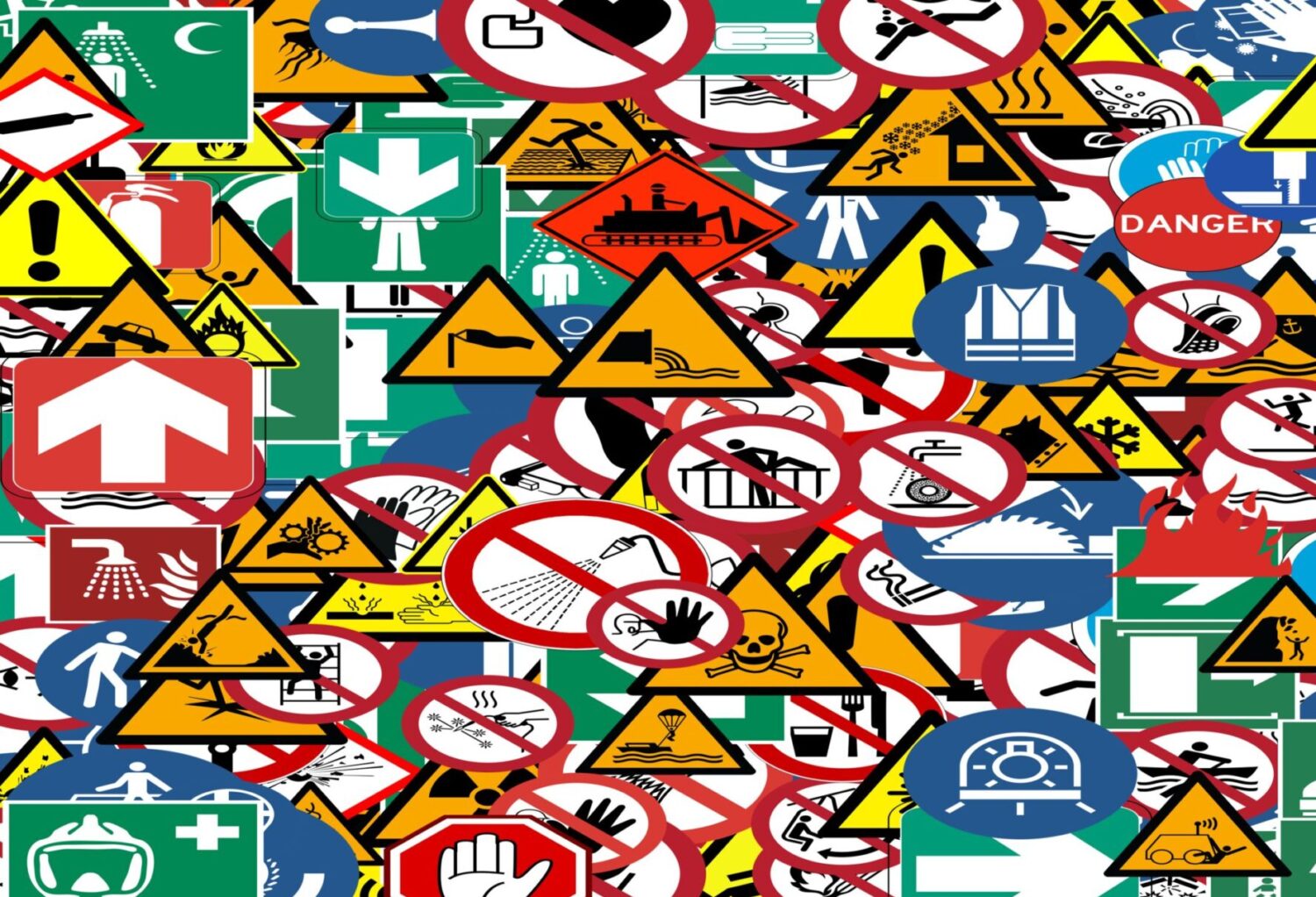
Part of every veterinary practice’s comprehensive safety program should include appropriate signage to communicate hazards effectively and ensure employee safety.
Advertisement
Compliance with safety signage in the veterinary workplace is important for both keeping your staff safe and aware of potential hazards, as well as keeping the practice out of trouble with federal and/or state regulators.
Workplace safety signage requirements for veterinary practices in 2026 are primarily governed by the Occupational Safety and Health Administration (OSHA) standards, and practices should refer to OSHA for the latest regulations. Some states also have specific requirements, so it is important to check those as well.
Advertisement
Jessica Molina, ARM, PHR, CVPM, is a senior risk consultant with insurance brokerage HUB International. (Disclosure: HUB is an AAHA preferred business provider). She said that while enforcement of signage in veterinary practices is not something that is aggressively pursued by OSHA regulators, it is still important to stay in compliance.
Fortunately this is fairly straightforward.
Focus for the new year
While there are no major changes expected this year, there are a few key areas that practices can prioritize in terms of signage for 2026, Molina said. These are:
- Mandatory OSHA Poster Compliance: Ensure the “Job Safety & Health: It’s the Law” poster (or state equivalent) is prominently displayed where all employees can easily see it.
- Biological and Hazard Signage: Given the unique nature of veterinary work, practices must properly mark known or suspected hazardous areas and equipment.
- Hazard-Specific Sign Updates: Conduct an annual workplace hazard assessment and ensure all danger, warning, and caution signs accurately reflect current hazards.
- Tag Management: Use temporary tags for equipment that’s out-of-order, undergoing maintenance, or presents unexpected hazards. These should be removed once the hazard is eliminated or the operation is completed.
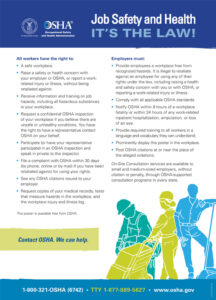 “The most common workplace posting violation citated was for missing OSHA ‘Job Safety and Health, It’s the Law’ poster, or state plan equivalent,” Molina said. “In 2024, 12 out of 61 OSHA- (or state equivalent-) assessed veterinary establishments received citations for not displaying this required poster, with penalties ranging from $150-$450.”
Molina pointed out that these penalties are entirely preventable by taking a few simple steps:
- Downloading the free poster from https://www.osha.gov/publications/poster
- Displaying the poster in a conspicuous, unobstructed location such as a break room or main staff area and ensuring the poster is at eye level and easily readable.
- Using the correct version for your jurisdiction (OSHA or state plan equivalent)
The focus for 2026 should be on maintaining compliance with existing requirements.Jessica Molina, ARM, PHR, CVPM
Senior Risk Consultant, HUB International
OSHA and ANSI
The main OSHA rule related to signage is 29 CFR 1910.145. This refers to a specific set of regulations from Title 29 of the Code of Federal Regulations (CFR). The rule establishes mandatory workplace safety and health rules for employers, covering areas like PPE, hazard communication, machine guarding, and fall protection.
In addition to OSHA’s own regulations, the agency also sometimes incorporates standards from the American National Standards Institute (ANSI)—a private nonprofit that develops voluntary health and safety standards—into its rules.
“There are no new federal OSHA signage requirements specifically taking effect in 2026 for veterinary practices,” Molina said. “The existing requirements under 29 CFR 1910.145 remain in effect with the incorporated reference to ANSI standards.”
However, Molina said practices should note the following:
- ANSI standards are voluntary, unless OSHA incorporates them through reference. Currently, OSHA references two ANSI standards that address safety color codes and guidelines for the colors, symbols, information, and other aspects used on safety signs.
- Both older ANSI Z35.1-1968 and newer ANSI Z535 sign formats remain compliant.
- State-specific OSHA plans may have additional requirements, so check with your state plan equivalent if applicable
“The focus for 2026 should be on maintaining compliance with existing requirements,” Molina said.
6 things to know about signage
Molina pointed out six things that practices should know about workplace signage. These will keep you in compliance and out of trouble with OSHA, should they come calling (or if someone calls them about you).
1. Sign design standards: All signs must have rounded or blunt corners and should incorporate both text and pictograms when possible for quick recognition, especially in emergency situations.
2. Color coding consistency: Maintain standard color schemes.
- Red = Danger (immediate hazard)
- Orange = Warning (serious potential hazard)
- Yellow = Caution (minor/moderate hazard)
- Blue = Notice (general information)
- Green = Safety instructions
- Fluorescent orange/orange-red = Biohazard
3. Tags vs. Signs: Tags are temporary warning devices used for unusual, unexpected, or non-apparent hazards. They should be attached as close to the hazard as safely possible and removed once the hazard is eliminated.
4. Staff Training: OSHA requires that all employees understand the meaning of various signs, tags, and colors used throughout the workplace. Include signage education in:
New employee onboarding
Annual safety training refreshers
After any workplace accidents or near-misses
5. Regular Audits: OSHA assessment data suggests potential for ongoing workplace hazard and safety posting scrutiny. Ensure signage reviews are included in your routine workplace safety self-assessment.
All required signs are present and legible
Signs accurately reflect current hazards
Temporary tags are current and removed when appropriate
The OSHA poster is displayed and unobstructed
6. Documentation: Keep records of your workplace assessments and staff training on safety signage. This documentation demonstrates your commitment to compliance during OSHA inspections.
Know your codes
The following are the specific regulations regarding safety signage in the workplace:
29 CFR 1910.145 OSHA specifications for accident prevention signs and tags for general industry, which includes veterinary practices.
ANSI Z535 ANSI standard related to the format of safety signs. This standard, while technically voluntary, was incorporated into OSHA’s regulations for signs, so must be followed.
Photo credit: © ChiccoDodiFC via iStock/Getty Images Plus
Disclaimer: Trends content is meant to inform, educate, and inspire by providing an array of diverse viewpoints. Any content published should not be viewed as an official stance, position, or endorsement by the American Animal Hospital Association (AAHA) or its Board of Directors.
