Culture and People
View from the Board: Psychological health is key
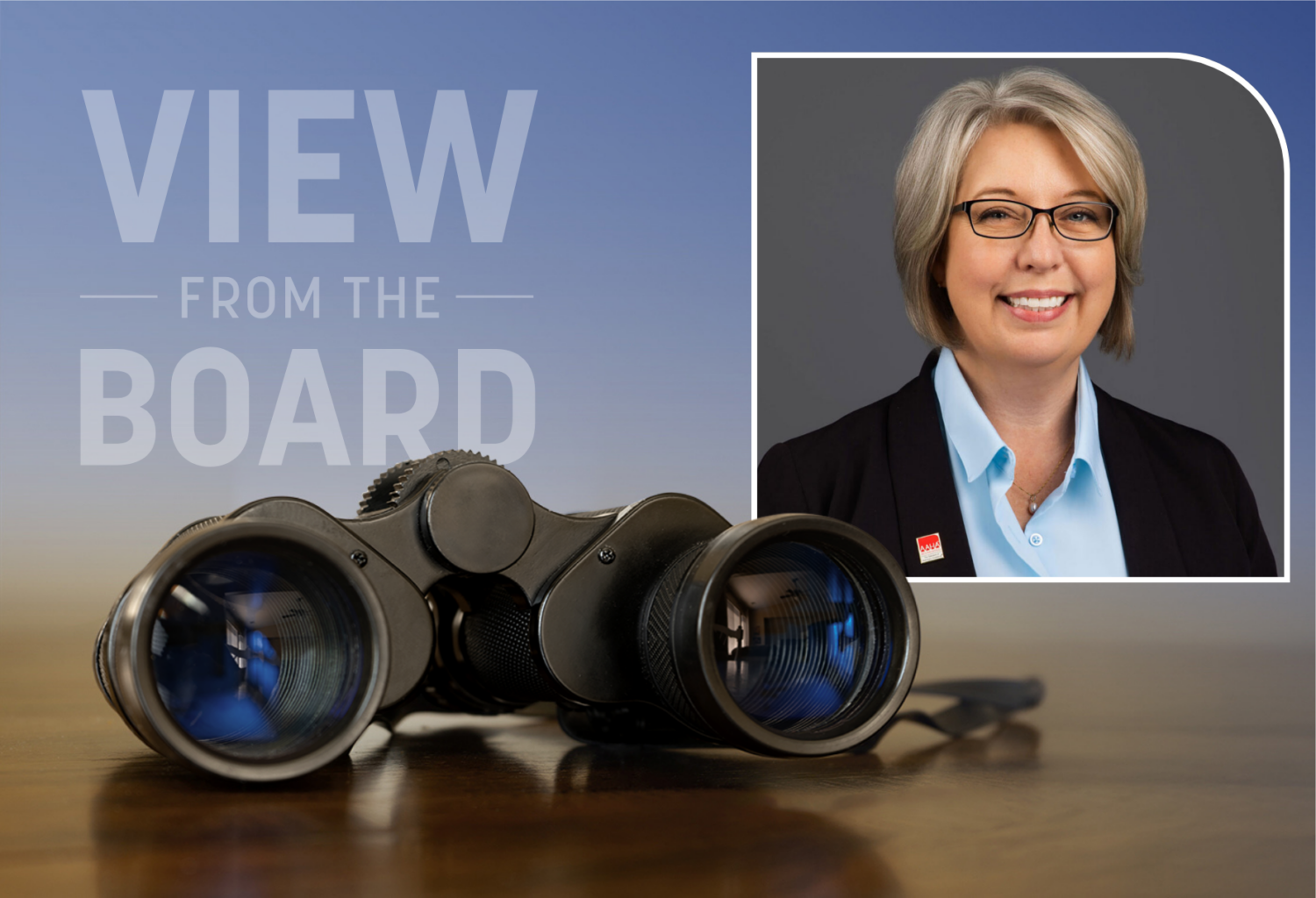
AAHA Board member Jenni Mitchell, DVM, points out that while psychological safety in the workplace is not a new concept, it has finally found its rightful place in veterinary medicine.
Advertisement
Years ago, when I was a freshly minted doctor, I happened across a JAVMA commentary titled “Responding to blame by blamectomy and blamotomy” in which the author framed blame as a potentially malignant disease which needed to be excised and ideally, prevented.
This article resonated with me because like many new graduates of my generation, I knew nothing about the importance of hospital culture when I accepted my first job offer, and I landed myself in an environment brimming with blame and emotional hostility. But like most mistakes, it turned out to be a formative experience, because sometimes the best way to learn how to do something right is to experience “what not to do.”
Psychological safety in the workplace is not a new concept, but it has more recently found its rightful place in the veterinary sphere since AAHA’s founding of Veterinary Visionaries, the collaborative task force that released its Psychological Health & Safety Guidelines in June 2024. It’s definitely worth a read, but my takeaway is this: every person on your team deserves the space to be human. And the two things I believe to be most core to our human nature are 1) the inevitability of error, and 2) the need to feel valued.
If we want to build a culture of psychological health in our hospitals, everyone must feel safe enough to admit mistakes, share them, and learn from them.
Humans make mistakes, and that’s inevitable. But it’s a hard truth to swallow for many veterinary professionals who are perfectionists by nature (and I speak from experience as one who is perpetually trying to drown out the ever-present inner voice of perfection.) If we want to build a culture of psychological health in our hospitals, everyone must feel safe enough to admit mistakes, share them, and learn from them. That’s Blamectomy 101. And if you’re a hospital leader who habitually punishes yourself for your own errors, there is no time like the present to stifle that voice of perfection and start openly celebrating your own mistakes as growth opportunities.
Likewise, the need to feel valued is very much a part of our humanity. While we commonly measure value in the form of monetary benefits, genuine value is experienced when people feel that their voice is heard, their ideas are important, and their work matters. We can demonstrate that we value each team member by recognizing them as a person who has a life outside of work, who sometimes has a bad day, and who has talents to share beyond their job description. We can show them how their work matters by taking time to celebrate successes. We can prove that we value them by sharing knowledge, delegating important tasks, and trusting them to follow through. And finally, we can demonstrate we value every person on our team by offering safe spaces to share ideas and feedback.
I have been part of teams where no one dared question a doctor or manager, and I have been part of teams where questioning and constructive feedback have been openly welcomed from everyone. There are stark differences in hospital culture and patient care between these two types of teams, and there is no question as to which kind of team most people would rather be on. Psychological safety is not a luxury; it is a vital sign of a healthy hospital culture.
 Jenni Mitchell, DVM, is a Director on the AAHA Board. She is managing veterinarian at Thiensville-Mequon Small Animal Clinic in Thiensville, Wisconsin.
Photo credit: © American Animal Hospital Association
Disclaimer: Trends content is meant to inform, educate, and inspire by providing an array of diverse viewpoints. Any content published should not be viewed as an official stance, position, or endorsement by the American Animal Hospital Association (AAHA) or its Board of Directors.
