Culture and People
5 Questions for a VTS Dermatology Specialist

Amanda L. Friedeck, BS, LVT, VTS (Dermatology), Veterinary Technician IV at Texas A&M University Veterinary Medical Teaching Hospital, answers the 5 questions.
Advertisement
 The Veterinary Technician Specialty (VTS): The mission of the Academy of Dermatology Veterinary Technicians is to promote excellence through specialization in the discipline of veterinary dermatology by demonstrating an advanced proficiency of dermatologic procedures, working with the veterinary team and client to advocate superior patient care, and providing cutting-edge continuing education.
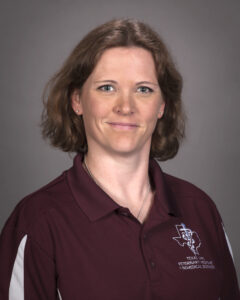 The Specialist: Amanda L. Friedeck, LVT, VTS (Dermatology) started working for Texas A&M University Veterinary Teaching Hospital in 1995 as a student worker and worked her way up to the dermatology service in 2003. In 2007, she graduated with a bachelor’s degree in animal science and received her LVT in the summer of 2014. Amanda became one of the first technicians to pass her specialty board exam to obtain her VTS (Dermatology) in the summer of 2018. Amanda has published multiple articles in veterinary magazines, a book chapter, and enjoys speaking to technicians across the state on dermatologic conditions. Amanda’s other interest are her family, wildlife management and canine sports.
1. What made you choose your specialty area?
In 2000 I was a floater tech in my hospital, so I covered any service that needed assistance. One summer I covered Derm when the technician had some medical issues. I fell in love right then and there. The cases were interesting, no case was 100% the same, and I got to pop things! I was very sad at the end of the summer when the technician came back to work. But in 2003 I accepted the Derm tech position when the last tech retired.
Once I got into the service as the “real” tech I began to learn a bunch of new things. Cytology became a second love, and I could spend hours looking at slides. Learning about all the different diseases and treatment options is still very exciting to me. Then you add in the fact that we see all species from companion animals to the exotic. No day was ever the same. Even if you have a day of all allergy patients, no two allergies are ever the same.
2. What is one thing you wish you could tell general practitioners regarding your specialty?
Dermatology is not cookbook; there is not just one way to treat Derm patients because each patient responds differently. Dermatologists do not have any special medications, we just use them differently (longer durations or higher doses) and in different combinations. Allergies cannot be cured, only managed. We expect our well-managed allergic patient to flare every once in a while, and that is success.
3. What opportunities have opened up for you since pursuing your specialty?
I have been asked to speak around the country since I became a VTS (Dermatology) and have multiple publications including two book chapters.
Even if you have a day of all allergy patients, no two allergies are ever the same.
4. What is the most rewarding part of being a dermatology VTS?
Helping those patients that are the worst of the worst to feel better than they have in years is the most rewarding. For owners to thank us for saving their “baby”, knowing the patients from the time they are young to their last days with some of our allergic patients. You get to know the owners after spending so much time with them in the exam room and over the phone.
5. What advice would you give to someone considering your specialty?
First off, you must have a strong stomach because most of our patients stink! If you like Dr. Pimple Popper, then dermatology is calling your name. Our specialty is still very small, but we are a tight knit community. You get to know each member, and we spend a lot of time together each year at the annual North American Veterinary Dermatology Conference.
Photos courtesy of TAMU
Disclaimer: Trends content is meant to inform, educate, and inspire by providing an array of diverse viewpoints. Any content published should not be viewed as an official stance, position, or endorsement by the American Animal Hospital Association (AAHA) or its Board of Directors.
