Practice Management
Traditional boarding services run into changing times
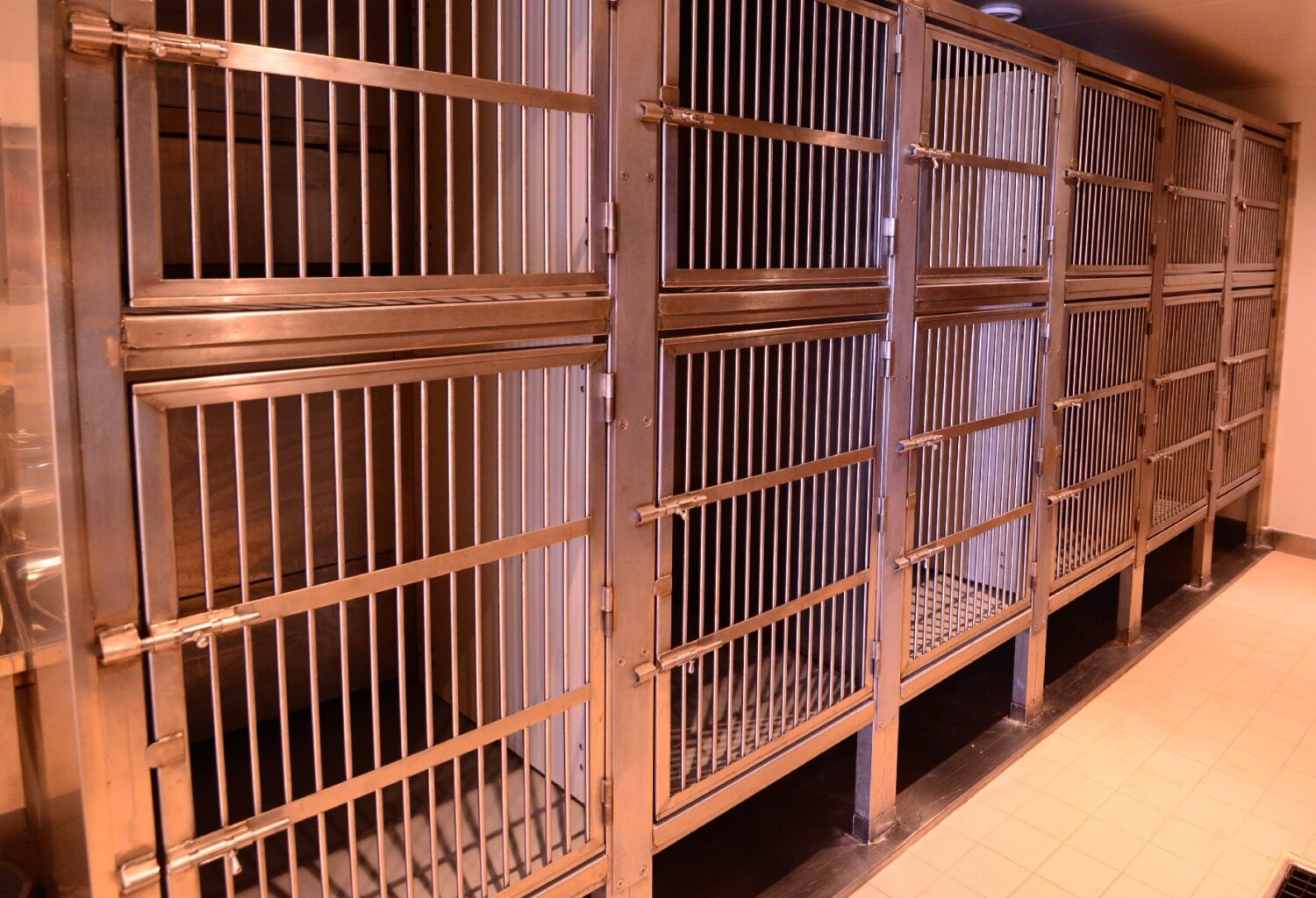
Staffing challenges, changing attitudes toward pets, and financial factors are all pointing to a decline in traditional kennel and boarding services.
Advertisement
You may have noticed a recent trend: Veterinary hospitals posting to social media that they will no longer offer boarding services.
“In our situation, we had been looking at discontinuing the service for some time,” said Joan McCue, BA, CVPM, hospital manager at Veterinary Services of Aiken, South Carolina. “There had been a significant drop in boarding revenue since the pandemic but, because it brought in just enough revenue, we couldn’t quite justify shutting it down.
Then last November she found out she was losing four (out of five total) employees in a two-week period right before Thanksgiving. McCue said one employee decided not to return after the birth of a child, one finished her degree in another field and found a new job, one was moving away, and another had been offered a full-time paid position at a business where she’d been interning.
“I knew it would be virtually impossible to rehire and train that many people in time to staff the kennel for the holidays, so that was the proverbial last straw,” she said. “We stopped taking additional reservations for the holidays to keep the census manageable, and my technicians stepped in to help cover the remaining weekends. We discontinued boarding as of Jan. 1, 2026.”
Richboro Veterinary Hospital of Richboro, Pennsylvania, closed its boarding operations on Jan. 5 after offering the service for more than 24 years.
“There were a few factors,” said Dorothy Linn, RVH, office manager. “The most pressing was the inability to find and keep the quality of staff that we’d always had in order to provide the standard of care our clients expected and their pets deserved. The hospital has not made any changes to that space as we still offer grooming and that is where those pets are kept while here.”
These situations are not unusual, according to Karen Felsted, DVM, CPA, CVPM, CVA, president of PantheraT, a management consulting firm. Her clients ending their boarding services generally offer one of two reasons: the inability to find reliable staff, or they think the space could be more efficiently and profitably used for something else.
If you need to expand and you have to stay within your footprint, you look for spaces you can give up, and boarding is sometimes one of the ones that goes.Becky Gasser
Director of Design, BDA Architecture
Multiple factors
Whether to drop boarding services depends on the individual hospital and factors involved: staffing availability, alternative uses of the space, demand for boarding, occupancy levels throughout the year, demand for veterinary services, explained Felsted.
“In some hospitals, boarding can be a good use of space, not just for the direct revenue but for the impact of the one-stop shopping and the spin-off medical services,” Felsted said. “You have to look at the bigger picture to make a good decision. And it doesn’t have to be all or nothing. A hospital will probably choose to continue providing medical boarding.”
At BDA Architecture, Becky Gasser, Director of Design, said the company has noted a decline in customers designing new facilities with boarding facilities. It also has seen clients asking to expand their existing medical space.
“If you need to expand and you have to stay within your footprint, you look for spaces you can give up and boarding is sometimes one of the ones that goes,” she said.
“To those clients, it makes more financial sense to expand their medical area to that space and have more exam rooms that might be better income-generating spaces than boarding.”
At Animal Arts, Principal Heather E. Lewis, AIA, NCARB, said the trend to discontinue boarding has been happening for quite some time but may be accelerating now.
“We have had experience with replacing boarding runs with clinical space. The company has done quite a bit of this type of work for both corporate veterinary clients who are ’flipping’ old practices to make them more profitable, as well as individual private clients who are doing the same. Ownership transition is a common catalyst: The practice has to bring in more dollars on the clinical side to afford bringing on new associates.”
Lewis said a veterinarian can make more money per square foot on clinical space than with boarding. She said a surgery room brings in a lot more revenue than the equivalent square footage of kennel runs.
Lewis pointed out that it’s difficult for individual veterinary clinics to be competitive in a world of corporatized boarding facilities.
“The corporate/franchises in boarding have professionalized boarding and worked hard on perfecting price points, construction methods, and operational models,” Lewis said. “They have more economy of scale, such as centralized billing systems and management software.”
Staffing and other concerns
McCue sees boarding kennels as very hard to staff “because you must have personnel on site on weekends and holidays, even if the hospital is closed. There is quite a bit of turnover, and unfortunately, because the profit margin is so slim, the pay is low for a job that is physically demanding with quite a bit of responsibility and an inherent level of trust. In our case, we also had to have a doctor on call for holidays and weekends as well, and if we had a diabetic boarder, a technician had to come in (at an overtime rate) and administer insulin.”
McCue also suggested that with pets increasingly seen as family members, some owners have higher expectations.
According to Gasser, that can mean higher-end luxury boarding. And what does that entail?
“Instead of a standard run, it might be a fully enclosed room with storefront glass in the front door making it more private, quiet, luxurious, for the animal. There would be nice finishes, tile walls. It would be colorful, and sometimes have webcams in each room.
“This offering can be very lucrative for a hospital as people like the idea of boarding with 24-hour medical care available.”
Lewis has seen that trend toward higher-end boarding, noting that hospitals can maximize prices to justify the inclusion of boarding because pet owners spend more on pets than they used to. She also sees the rise of more in-home pet care options than there used to be with sites like Rover.com connecting pet owners with pet sitters.
For McCue, those higher expectations are exemplified by her millennial children who travel with their dogs when they can. If their pets can’t come along on a trip, she said they want them to stay in familiar surroundings with a sitter rather than being in a kennel.
“In our area, I have noticed an uptick in the number of businesses devoted to in-home pet sitting and I think many of our clients have transitioned to having a caregiver come into their homes when they travel.”
Photo credit: © mauinow1 via iStock/Getty Images Plus
Disclaimer: Trends content is meant to inform, educate, and inspire by providing an array of diverse viewpoints. Any content published should not be viewed as an official stance, position, or endorsement by the American Animal Hospital Association (AAHA) or its Board of Directors.
