What we can learn from RCVS Knowledge’s contextualized care roadmap
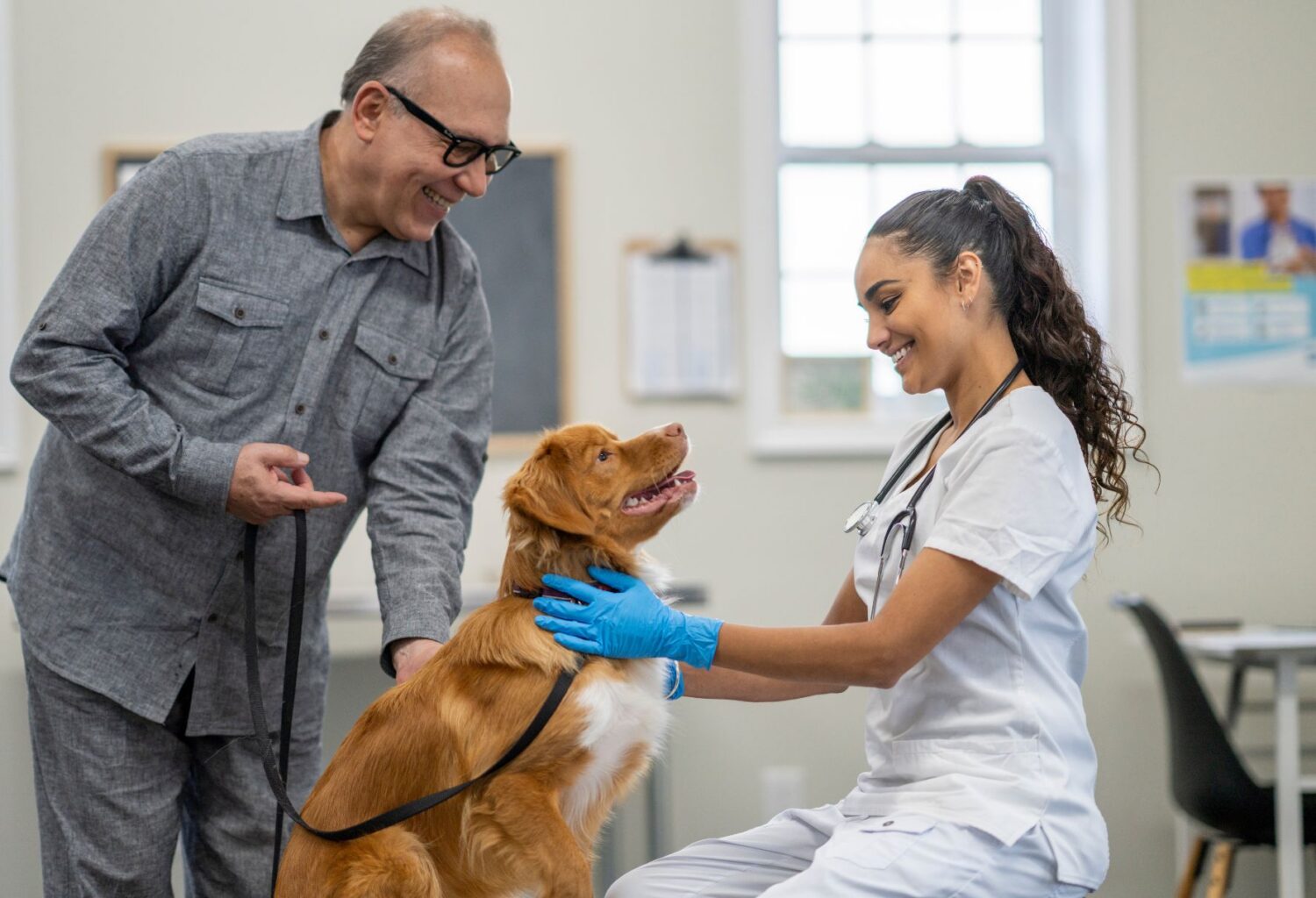
Understanding what contextualized care is (and is not) is one thing; developing a streamlined way to implement it into your veterinary practice is something else entirely. But there’s no need to go it alone! Between the 2024 AAHA Community Care Guidelines and RCVS Knowledge’s contextualized care roadmap, there are helpful resources to provide you with guidance and insights on both sides of the pond.
Advertisement
When the 2024 AAHA Community Care Guidelines for Small Animal Practice launched, they made some waves. However, pushing back against the traditional definition of the gold standard, providing starting points for workable solutions to access-to-care, and moving from a veterinarian-centered to a family-centered care approach aren’t new concepts, and AAHA is hardly alone in presenting them.
In fact, last year across the pond, RCVS Knowledge—the charity arm of the Royal College of Veterinary Surgeons—developed a contextualized care roadmap. With support from Battersea, the roadmap summarized recommendations from RCVS Knowledge’s 2025 report on achieving contextualized care. Responses from the veterinary sector and pet caregivers provided insights into what needs to happen to achieve contextualized care.
To better understand these findings—and to learn about how the challenges and opportunities in the UK compare to those here in the U.S.—we spoke with Katie Mantell, CEO of RCVS Knowledge.
What is contextualized care?
The roadmap defines contextualized care as care “adapted to the needs and circumstances of the individual animal, its owner and the wider context,” requiring a genuine partnership between the vet team and the owner.
“It’s not a race to the bottom, and it’s not about advocating for low-quality care at all,” Mantell said. “It’s about the right care for that animal in the real-world situation that you find yourself in.”
One of the things she was most pleased to see following the release of their report was how quickly those conversations were picked up in the specialist veterinary community.
“Referral and specialist care is absolutely part of contextualized care—and a really important part of it,” she said. “This is a concept that brings together all parts of the veterinary community.”
She noted that the Veterinary Specialists Association in the UK recently held a conference on contextualized care. “I think [the concept] is much more familiar to charity vets because they’re making very explicit trade-offs in day-to-day practice, but in order to deliver the impact that we want to in terms of animal health and welfare, it needs to be embraced across the whole of the veterinary community.”
Debunking the “gold standard”
As was the case with the Community Care Guidelines, redefining the notion of the “gold standard” to mean “the best care possible for that pet and that family in a given context” generated a great deal of attention in the UK.
“The way that the words ‘gold standard’ have been used is setting up a mental model that is acting against contextualized care delivery,” Mantell said. After all, language is powerful, and “it suggests it’s quite a binary term—something’s either the gold standard or it’s not—whereas the reality is much more complex than that.”
Helping people understand that excellent care exists on a spectrum based on that pet’s needs, their quality of life, and constraints of their caregivers, is crucial to making the gold standard a concept that can be applied to families of all kinds, even if they face financial or other barriers to care.
What are the benefits and barriers associated with contextualized care?
Mantell shared some striking statistics from the report:
- 96% of vet teams and 85% of pet owners believe contextualized care improves trust, and
- 84% and 80% respectively say it improves quality of care.
However, most (more than half of) professionals reported experiencing barriers.
One of the challenges Mantell has noted is generationally different approaches to practicing veterinary medicine. Older, more experienced veterinary professionals tended to feel that contextual care was simply “what vetting has always been about,” while younger, less experienced veterinary professionals mentioned more barriers—partly due to how their education had shaped their thinking. These younger vets have also come into the profession in a very different world, with things like increased specialization and expectations from pet owners that their pet’s care resemble their own in human healthcare.
So, although there’s a strong consensus on the benefits, the barriers must be addressed—and that’s where the RCVS Knowledge’s roadmap comes in.
Five pillars of the roadmap
RCVS Knowledge’s roadmap organized necessary changes into five areas: professional leadership, veterinary education, practice support, evidence and research, and pet owner empowerment.
Those first three pillars are fairly self-evident—if you want to see change in the veterinary profession, naturally you’d need to address the profession’s leaders, education, and how the existing practices are supported.
Those last two pillars, though, provide some rich potential—and some notable challenges.
Reaching pet caregivers, earning their trust, and empowering them to share the kind of contextual information that a practice needs in order to provide contextualized care, though, can be a tall order. This is especially true for practices that have never asked for this type of information in the past.
To aid in that, Mantell said that RCVS Knowledge developed a pre-consultation form to help owners prepare to share relevant contextual information, including barriers such as treatment, finances, and more.
Evidence and research may actually be where Mantell sees the most potential.
“This is a long burn, and this is a difficult nut to crack, but evidence and research … in order to give true clarity about the options, you need data on outcomes,” she said. “The amount of evidence on outcomes is much smaller in animal health than it is in human health, but I think there’s potential to do more thorough encouragement of practice-based research, more encouragement of anonymized sharing of outcomes across parties.”
This is “absolutely doable through practice management systems,” she said, but what’s often lacking is the will and drive to make it happen. She acknowledged that this is a tall order in a field that’s not only commercially competitive, but where research projects also compete for funds and attention. “There are a whole range of factors that need to be worked through, very practical things that make [research and evidence gathering] quite difficult,” she said. “But I think we shouldn’t just put it in the too difficult box. I think there are things that can be done that can make better use of the data that we’ve got.”
And it almost certainly begins with practices and the veterinary professionals working within them understanding the impact of collecting and finding a way to safely share how their clients make decisions on what care to accept and what outcomes those decisions lead to.
Beyond the roadmap
The veterinary landscape in the UK is a bit different than what we see in the U.S., and Mantell noted that a major catalyst for the contextualized care conversation there was the Competition and Market Authority’s two-year investigation into veterinary services for pets.
“Now, 60% of veterinary practices in the UK are owned by six large corporates,” she explained, “and so, because of that intense scrutiny of the of vets and their businesses, it really focused attention on contextualized care as a way of understanding and articulating that balance of factors that influence the options that are given to pet owners.”
That specific pressure in the UK provided a sense of urgency around the conversation that has not yet been seen in the States.
Still, the conversation is already crossing many borders. In January, when Mantell spoke about the roadmap at VMX, she said she found “kindred spirits—wonderful people who are passionate about the same issues and experiencing a lot of the same challenges, and some of the solutions are likely to be very similar.”
Other countries, including Canada, the Netherlands, and New Zealand, have all expressed enthusiasm for the roadmap—and the concept of working toward solutions without needing to reinvent the wheel.
Mantell believes that many of the countries that are working toward increasing access to care will come upon many of the same issues. “There are some differences, of course, but there’s way more similarity than there are differences,” she said. “So how can we get a global perspective, and share our learning? That’s really exciting to think about.”
And it’s also exciting to see that whichever side of the Atlantic one finds themselves on, there’s a national-level organization working to build systems that help veterinary professionals help more pets.
Photo credit: FatCamera via E+/Getty Images
Disclaimer: Trends content is meant to inform, educate, and inspire by providing an array of diverse viewpoints. Any content published should not be viewed as an official stance, position, or endorsement by the American Animal Hospital Association (AAHA) or its Board of Directors.
