Clinical
Update: ELIAS Animal Health gets full USDA approval for new cancer immunotherapy
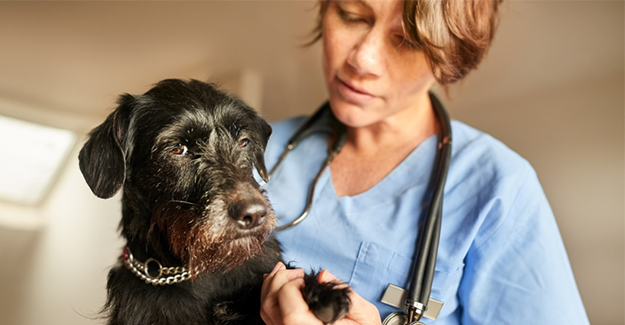
Using an individualized whole cancer cell vaccine and targeted T-cell lymphocytes, ELIAS Cancer Immunotherapy (ECI) can potentially create a “sustained immune effect” in dogs with osteosarcoma.
Advertisement
This is an update to the article originally published on March 1, 2024.
ELIAS Animal Health announced on March 19, 2025, that Elias Cancer Immunotherapy (ECI) has received full approval from the USDA Center for Veterinary Biologics (USDA-CVB). This is the first autologous prescription product to receive USDA-CVB approval. This treatment option for canine osteosarcoma can be accessed at one of ELIAS Animal Health’s 100 authorized treatment centers throughout the U.S. Veterinary teams are cautioned that the pet owners must make a decision to pursue ECI treatment prior to electing surgery so that the appropriate tissue samples can be collected at the time of surgery. To discuss ECI and its use with a particular patient, veterinarians can reach out to the company via this contact link.
In 2024, I spoke with Tammie Wahaus, CEO of ELIAS Animal Health, and Noe Reyes, DVM, chief medical officer, to learn more about this new therapy. The ELIAS Cancer Immunotherapy (ECI) combines the creation of an individualized whole cancer cell vaccine with the collection, activation, and reinfusion of T-cell lymphocytes that are primed to recognize and attack osteosarcoma cells in the body.
ELIAS has been working on this technology for more than 10 years, and they are very encouraged by the results from experimental clinical use in dogs.
What is ECI?
ECI has two components: autologous whole cell cancer vaccines and adoptive T-cell therapy. To make the cancer vaccines, a sample from the patient’s cancer tissue must be obtained and sent to ELIAS Animal Health. There, scientists will create a vaccine that is specific to the cancer cells in the sample. This personalized cancer vaccine is then administered intradermally to the patient by their veterinarian.
The second stage is adoptive T-cell therapy. After the patient has received a series of three vaccines, their T-cells (also referred to as mononuclear cells or MNCs) must be harvested so that they can be activated to fight the cancer cells in the body. To accomplish this, the patient must undergo a procedure called apheresis, whereby the patient’s blood is run through a specialized machine that separates out and collects the T-cells and returns everything else to the body.
The collected T-cells that have already been exposed to the cancer antigens via the vaccines are then sent to ELIAS, where they are activated so that they are not suppressed by any signals the tumor cells are releasing to avoid destruction.
After these cells have been activated, they are returned to the patient by IV infusion. The patient is then given a series of subcutaneous interleukin-2 (IL-2) injections. The expectation is that these activated cells will recognize and attack osteosarcoma cells throughout the body on an ongoing basis.
Safety and efficacy of ECI
According to Reyes, more than 200 canine patients diagnosed with osteosarcoma have undergone this treatment. He notes that success rates vary based on the stage of the patient’s cancer and the health of their immune system. What’s different between ECI and other treatment modalities, Reyes points out, is that ECI can potentially generate a sustained immune effect that will continue to go after the cancer without the need for further treatment.
Like other modalities, ECI will be most effective in cases where the cancer cell load in the body is low. It can also be used in combination with other therapies such as surgery, chemotherapy, and radiation.
Large tumors should still be surgically removed, Reyes clarifies, but ECI can be used to try to kill any remaining cancer cells and possibly prevent future relapse. Chemotherapy and/or radiation treatment are still helpful adjunctive therapies, he explains, as they can break up the cancer cells, exposing the antigens to the immune system where the primed T-cells can deal with them.
Case study: Roscoe
Reyes recalls an exceptional case; a dog named Roscoe, who had undergone the three vaccines and the adoptive T cell therapy who later started limping and was diagnosed with a distant limb metastasis. Roscoe’s owners decided at that point not to pursue further treatment other than palliative care.
Months later, when researchers called to check on Roscoe, the owners reported that he was running around the backyard with no signs of pain or lameness. A follow-up CT scan revealed no evidence of cancer anywhere in the body. Roscoe went on to live for years after this and died of unrelated causes.
Is ECI safe?
The safety profile for ECI, Reyes adds, is extraordinarily good. The main safety risk is for a condition known as cytokine release syndrome or cytokine storm, the result of the immune system releasing too many inflammatory molecules (cytokines) in response to the infusion of the activated T-cells. In all the dogs who have been treated so far, there have been fewer than six cases, Reyes reports, in which a clinician has needed to use a rescue protocol due to cytokine release syndrome. After receiving the high dose glucocorticoid rescue protocol, all these dogs recovered and did well.
What’s Next for ECI?
The team at ELIAS is exploring ways to make this therapy more accessible and more effective. This includes improving access to apheresis machines throughout the country, Reyes adds. He reports the ELIAS has already set up a network of 17 apheresis centers throughout the United States, with more planned for the future.
ELIAS also plans to study the efficacy of the combination of ECI along with an immune checkpoint inhibitor to treat metastatic disease in dogs. According to Wahaus, immune checkpoint inhibitors interfere with the interaction between the cancer cell and the immune system. Normally, cancer cells try to suppress any cytotoxic activity in immune cells to avoid destruction. The hope is that adding an immune checkpoint inhibitor will interrupt this pathway. ELIAS has been chosen to work with Merck Animal Health to study the combination of ECI and Merck’s checkpoint inhibitor, gilvetmab. This study was slated to begin in late 2024.
ELIAS also wants to evaluate the efficacy of ECI against other types of cancer. ECI should apply to any type of cancer where the source tissue can be isolated, Reyes suggests, but results vary.
Related reading:
Does My Pet Have Cancer? Signs of Cancer in Pets
2016 AAHA Oncology Guidelines for Dogs and Cats
Emily Singler, VMD, is AAHA’s Veterinary Content Specialist.
Cover photo credit: AJ_Watt E+ via Getty Images Plus
Other images courtesy of ELIAS
Disclaimer: The views expressed, and topics discussed, in any NEWStat column or article are intended to inform, educate, or entertain, and do not represent an official position by the American Animal Hospital Association (AAHA) or its Board of Directors.
