Culture and People
5 Questions for a Shelter Medicine Specialist
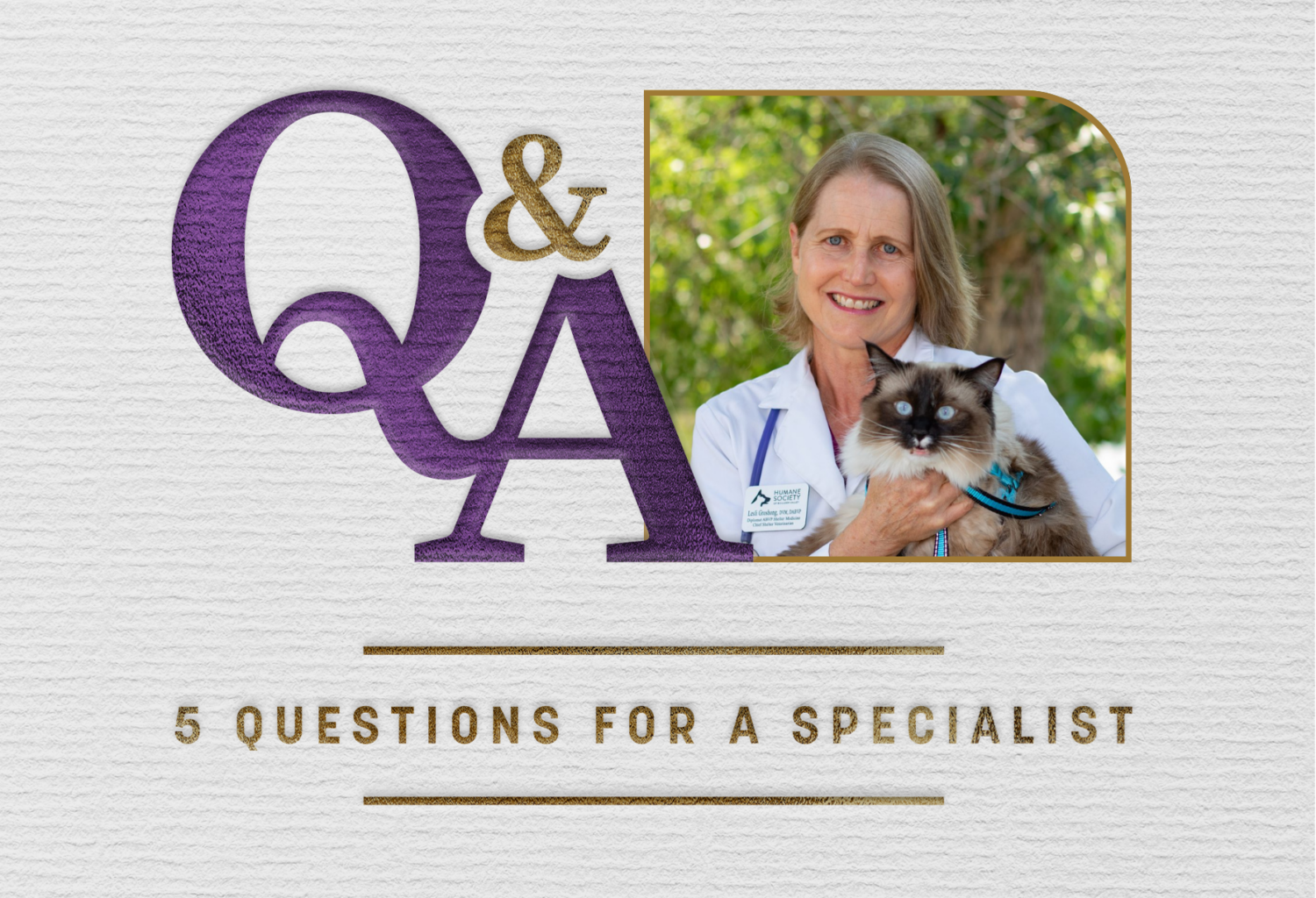
Lesli Groshong, DVM, DABVP (Shelter Medicine), is chief shelter veterinarian at the Humane Society of Boulder Valley (HSBV) in Boulder, Colorado. She joined HSBV in 1994, and since then has mentored hundreds of veterinary students in shelter medicine and spay/neuter surgeries.
Advertisement
5 Questions for a Specialist (5Q4) is a monthly micro-interview, where we ask five questions to a veterinary professional who has specialized in their field. The questions are the same each month, but the answers are always different and enlightening.
This month, we spoke with Lesli Groshong, DVM, DABVP (Shelter Medicine), chief shelter veterinarian at the Humane Society of Boulder Valley (HSBV) in Boulder, Colorado. She joined HSBV in 1994, and since then has mentored hundreds of veterinary students in shelter medicine and spay/neuter surgeries. In 2015, the Colorado Veterinary Medical Association named Groshong as Colorado Veterinarian of the Year.
What made you choose your specialty area?
My shelter medicine journey started by accident. Shelter medicine wasn’t considered as a career option 30+ years ago, and animal shelters were just a brief topic covered in my ethics/animal welfare class.
My first job after graduating from vet school was at a small animal clinic, operated by the owner and an associate, me. After a year, I had the opportunity to move to Boulder and didn’t have a plan for work.
I went to the Humane Society of Boulder Valley (HSBV) to buy a license for my dog and the woman issuing licenses saw that I was the veterinarian who signed the rabies vaccination certificate. She told me they were looking for a vet because one of their two vets was retiring. I had heard positive things about HSBV and needed a job, so I applied. For about two years I worked at the shelter two days a week and did relief work to fill out the work week. I really enjoyed the shelter work and jumped on the opportunity when a full-time position became available. Now, I wouldn’t think about doing anything else.
What is one thing you wish you could tell general practitioners regarding your specialty?
Foremost, I would like non-shelter vets to know that the majority of animals that enter shelters have had minimal or no previous veterinary care. In today’s economic reality, it is largely due to lack of available and affordable veterinary care options. When a general practitioner sees a pet for a “new adoption exam,” it is helpful for them to take into consideration the limitations of what the shelter could provide and to make providing care practical and easier for an adopter.
What is one thing that clients could do that would make your job more satisfying?
Preventative care! If you have a pet, so many health issues can be prevented by feeding a well-balanced diet, maintaining a healthy weight, considering oral health care at all ages, and vaccinating.
What is the most rewarding part of your job?
It is so rewarding to provide care for stray, sick, or injured animals whose history is a mystery and then seeing them get adopted. It is always a fun challenge to piece together a story for an animal—age, what breed or mix, possible travel history, was it previously well-cared for, etc. Pets are lost or surrendered for so many reasons, and it isn’t helpful to place judgement or blame.
What advice would you give to someone considering your specialty?
Shelter medicine relies heavily on strong physical exam skills without the benefit of a known history. There is a lot of mystery and inference that goes into an exam. You have to be flexible with your medical approach to be a good steward of the shelter’s resources so referring to specialists, running the “gold standard,” or even a minimum database is beyond what well-resourced shelters can afford. The shelter is the “owner” of the animals, and they have hundreds or even thousands of animals to provide care for.
Bonus question! What is something that people don’t know about shelter medicine?
Shelters see a wide variety of medical conditions, and most show up as a surprise. It seems that there is never a “boring” day in shelter medicine!
Photo credits: Courtesy of Humane Society of Boulder Valley
Disclaimer: Trends content is meant to inform, educate, and inspire by providing an array of diverse viewpoints. Any content published should not be viewed as an official stance, position, or endorsement by the American Animal Hospital Association (AAHA) or its Board of Directors.
