Culture and People
5 Questions for a VTS Zoo Medicine Specialist

Erica Campbell, LVT, VTS (Zoo), secretary of the Academy of Veterinary Zoological Medicine Technicians, answers the 5 questions.
Advertisement
 The Veterinary Technician Specialty: The Academy of Veterinary Zoological Medicine Technicians (AVZMT) exists to promote excellence in the discipline of zoological medicine. Technicians who are certified by the AVZMT must demonstrate superior knowledge of scientifically and humanely based techniques of zoological medicine.
 The Specialist: Erica Campbell, LVT, VTS (Zoo), is a veterinary technician at the Detroit Zoo. In 2018, Erica became the twelfth member of the AVZMT and is currently serving as secretary on the AVZMT executive board.
1. What made you choose your specialty area?
I’ve always been drawn to working with exotic species. My career began in an exotics‑focused practice, where I quickly realized how much I enjoyed the problem solving and adaptability required for nontraditional species. After building strong foundational skills in a small animal general practice, I found myself missing the complexity and diversity of exotics. That ultimately led me to pursue zoo medicine, where every patient requires you to think differently and collaborate closely with the entire animal care team. Zoo medicine brings together everything I love about veterinary technology: hands‑on technical skill, critical thinking, and a commitment to understanding species from both a medical and behavioral perspective.
2. What is one thing you wish you could tell general practitioners regarding your specialty?
I wish more veterinarians understood how much dedication goes into becoming a specialized technician and how impactful it can be when that expertise is fully supported. Most technicians who pursue a VTS work toward this goal on their own time and at their own expense, driven by a genuine desire to elevate patient care. Having veterinary and institutional support throughout that process, along with recognition that this level of training is a worthwhile investment, makes a tremendous difference. When veterinarians actively utilize the skills of specialized technicians, it strengthens the entire team and ultimately enhances the care we can provide to every species.
3. What is one thing that would make your job more satisfying?
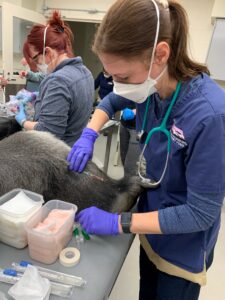
I’m very fortunate because my job is already incredibly fulfilling. If anything could make it even better, it would be having more time for training. Zookeepers are prioritizing training for voluntary behaviors more than ever, and the number of procedures we can accomplish this way continues to grow. The challenge is simply finding enough time to work with all the animals who are ready to participate. Being able to dedicate more time to this would be incredibly rewarding and would further support low‑stress, proactive care.
4. What is the most rewarding part of being a zoo medicine specialist?
For me, three things make this specialty especially rewarding. First is the strong sense of community within zoo medicine. Collaborating with colleagues who share the same passion for advancing care across such a diverse range of species adds so much meaning to the work.
Second is the extraordinary variety and constant growth the field demands. No two days are the same, and every species challenges you to think differently. Whether it is learning new equipment, diving into an unfamiliar species, or adapting techniques for a unique patient, the continual learning is incredibly motivating.
And finally, I am deeply fulfilled knowing that my work directly supports conservation. Every exam, procedure, and team decision contributes to the long‑term success of species whose futures often depend on the quality of care they receive. The collaboration, the variety, and the broader mission behind it all are what make this specialty so meaningful to me.
5. What advice would you give to someone considering your specialty?
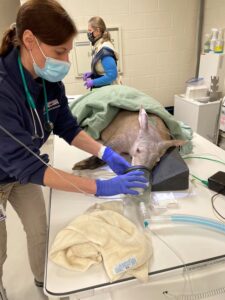
If you are interested in zoo medicine, the best thing you can do early on is build a strong, well‑rounded foundation. Experience in general practice, emergency, or large animal medicine helps sharpen the technical skills and clinical judgment this field relies on. It is also important to seek out exposure to exotics or wildlife whenever possible. Volunteering, shadowing, or pursuing zoo externships are great ways to see what this field is really like and begin building connections.
If you are considering pursuing a VTS in zoological medicine, give yourself time to grow into it. The experience requirements are significant, and the application process takes a lot of time, organization and attention to detail. Understanding the commitment involved helps set realistic expectations that make success much more achievable.
Photos courtesy of Detroit Zoo
Disclaimer: Trends content is meant to inform, educate, and inspire by providing an array of diverse viewpoints. Any content published should not be viewed as an official stance, position, or endorsement by the American Animal Hospital Association (AAHA) or its Board of Directors.
