Behavior and Training
Bringing cats into hydrotherapy using behavioral habituation
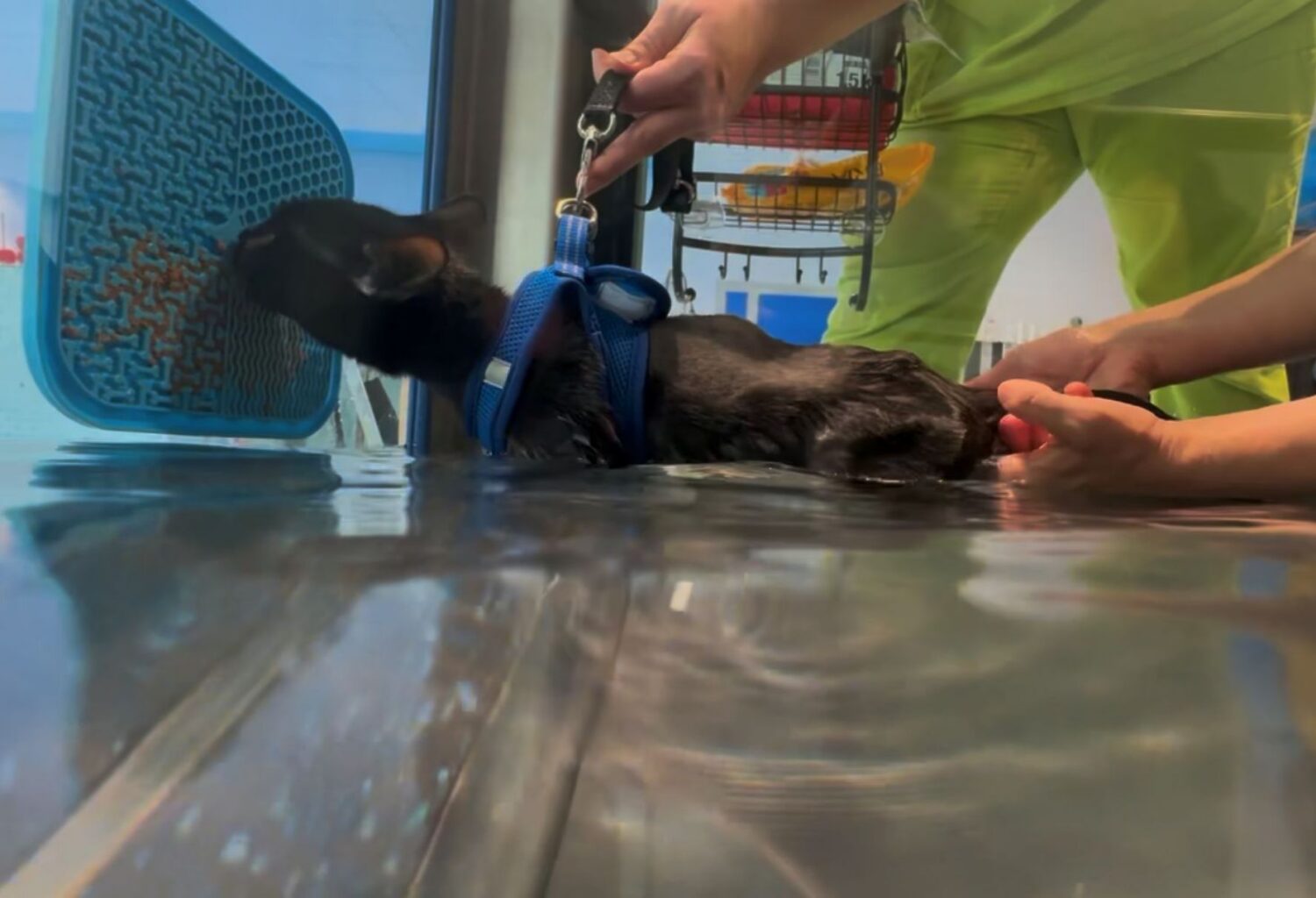
While it’s not uncommon to see dogs undergoing rehabilitation exercises using hydrotherapy, for cats, it’s not exactly mainstream. But perhaps it should be. By using behavioral habituation and keeping the focus on the cat’s welfare and stress management front of mind, hydrotherapy can help cats just as much as it’s helped our canine companions, as seen here with Babaganoush, a young cat, who’s taking part in an advanced underwater treadmill session. (Photo courtesy of Laura Sinigoi via Stefania Uccheddu, DVM, PhD, Dipl ECAWBM.)
Advertisement
Hydrotherapy is a common treatment option for dogs to support recovery from orthopedic surgery, neurological injury, or mobility decline. Underwater treadmills are now commonplace in referral clinics.
For cats, though, hydrotherapy has not traditionally been a conventional first option and is often dismissed as impractical or poorly tolerated. But this perception is now being challenged by new research.
A recent feline-specific aquatic rehabilitation protocol published in Applied Animal Behavior Science demonstrates that cats can not only participate in underwater treadmill therapy but can complete structured rehabilitation programs with measurable physical improvement when welfare and stress management are placed at the center of treatment design. The protocol approaches hydrotherapy as a gradual behavioral process. Stress, when recognized early and managed systematically, can become the key to inclusion rather than exclusion.
Hydrotherapy as part of a treatment plan
For clinicians who are already using hydrotherapy as part of physical rehabilitation for cats, the outcomes are inspiring. Kristine Conway DVM, CCRT, is a veterinary general practitioner within her own practice, Hodes Veterinary Group in New Jersey. After experiencing the benefits of water therapy with her own dogs, she developed a passion for physical therapy and pursued specialist certification, leading her to co-found Aqua Dog & Cat Rehabilitation in 2007.
She offers a case that highlights how feline hydrotherapy, as part of a treatment plan, can have significant impacts on feline health outcomes:
“Lola, an 8-year-old female spayed cat, came to us with FCE (fibrocartilaginous embolism), paralyzed in her rear legs with no bowel or bladder control. After weeks of E-stim, manual therapy, and hydrotherapy, she regained her function and litterbox habits. She still has a mild deficit in her left hind leg but can jump on furniture and navigate stairs,” Conway said. “She continues to visit us for maintenance.”
Why cats have been left out of aquatic rehabilitation
Veterinarians understand how buoyancy unloads joints, warm water boosts circulation, and controlled resistance builds strength with minimal impact—and these principles are standard for dogs in physical rehabilitation. For cats, the biggest obstacle has not been whether the treatment works, but whether it is perceived as a realistic option.
Because cats have low thresholds for stress, standard clinic visits can already be very challenging. The assumption has been that adding water exposure would make that anxiety worse. As a result, hydrotherapy has often been ruled out for cats, even when it might otherwise be the right clinical choice.
Stefania Uccheddu, DVM, PhD, Dipl ECAWBM, a veterinarian in behavioral medicine and welfare and coauthor of the recent feline underwater treadmill study, explains how this has resulted in hydrotherapy not being recommended for cats, even when they could benefit. “Cats are frequently excluded from hydrotherapy due to assumptions about water aversion and tolerance,” she said. “These assumptions, often reinforced by cautious language in the literature, result in systematic under-treatment. This study was designed to replace exclusion with a structured, welfare-based pathway.”
The research team did not focus on whether cats could cope with aquatic therapy; instead, they explored how therapy could be adapted to meet feline behavioral needs.
A cat-centered approach to aquatic therapy
The study was conducted at the San Marco Veterinary Clinic in Padua, Italy, an ISFM-accredited Cat Friendly Clinic with GOLD status. From day one, the approach was welfare-first, allowing feline-specific husbandry, low-stress handling, and real-time stress assessment to be core components of the rehabilitation process. The protocol was built not as a set of physical exercises, but as a gradual process of behavioral habituation.
Laura Sinigoi, DVM, MSc, CVA, CTPEP, in physiotherapy and rehabilitation at the same clinic, and co-author of the study, described the practical considerations that shaped the approach. “From a rehabilitation perspective, the protocol was shaped by the need to make aquatic therapy practically deliverable for cats. Individualized session planning, graded exposure, and built-in pauses were essential to ensure feasibility within a Cat Friendly clinical framework,” she said.
“The primary motivation stems from the significant gap in feline rehabilitation data,” explained Sinigoi. “While canine aquatic therapy is well-documented, cats are often overlooked due to management challenges and their high sensitivity to stress. This study was designed to prioritize welfare-oriented protocols, ensuring that the clinical focus on motor recovery never compromised the animal’s emotional state. By integrating Cat Friendly standards, the design shifted from a purely mechanical exercise to a behavioral habituation process.”
The research included 12 cats referred for neurological or musculoskeletal rehabilitation. They underwent progressive familiarization with the underwater treadmill environment while stress-related behaviors were carefully monitored with predefined thresholds determining whether sessions progressed, paused, or regressed. All 12 cats were included in the underwater treadmill rehabilitation protocol following initial evaluation.
Using behavior to guide rehabilitation progression
The study treated stress monitoring as a central part of clinical assessment. Where rehabilitation is typically progressed according to the patient’s physical ability, pain scores, and healing timelines, this program required behavioral stress levels to remain within set limits before therapy could progress.
Uccheddu emphasized that this change in priorities centers a cooperative approach to the process. “Stress monitoring should be considered a primary clinical parameter. Early identification of stress signals enables cooperative participation and protects welfare throughout the rehabilitation process.”
Sinigoi echoed the importance of welfare-guided progression. “Progression should be guided not only by pathology, but also by welfare thresholds. Therapy should proceed only when stress remains below predefined limits.” By allowing cats to progress at their own pace and allowing the process to be “patient-led,” the protocol helped prevent stress sensitization while gradually increasing comfort with the treadmill environment. Over a number of sessions, observed stress behaviors declined, suggesting that familiarization and positive exposure supported behavioral adaptation.
How the feline acclimation process works in practice
Each rehabilitation plan was designed to suit the individual cat’s medical condition and behavioral tolerance. Otherwise, all patients followed the same general acclimation sequence aimed at increasing familiarity and keeping stress low.
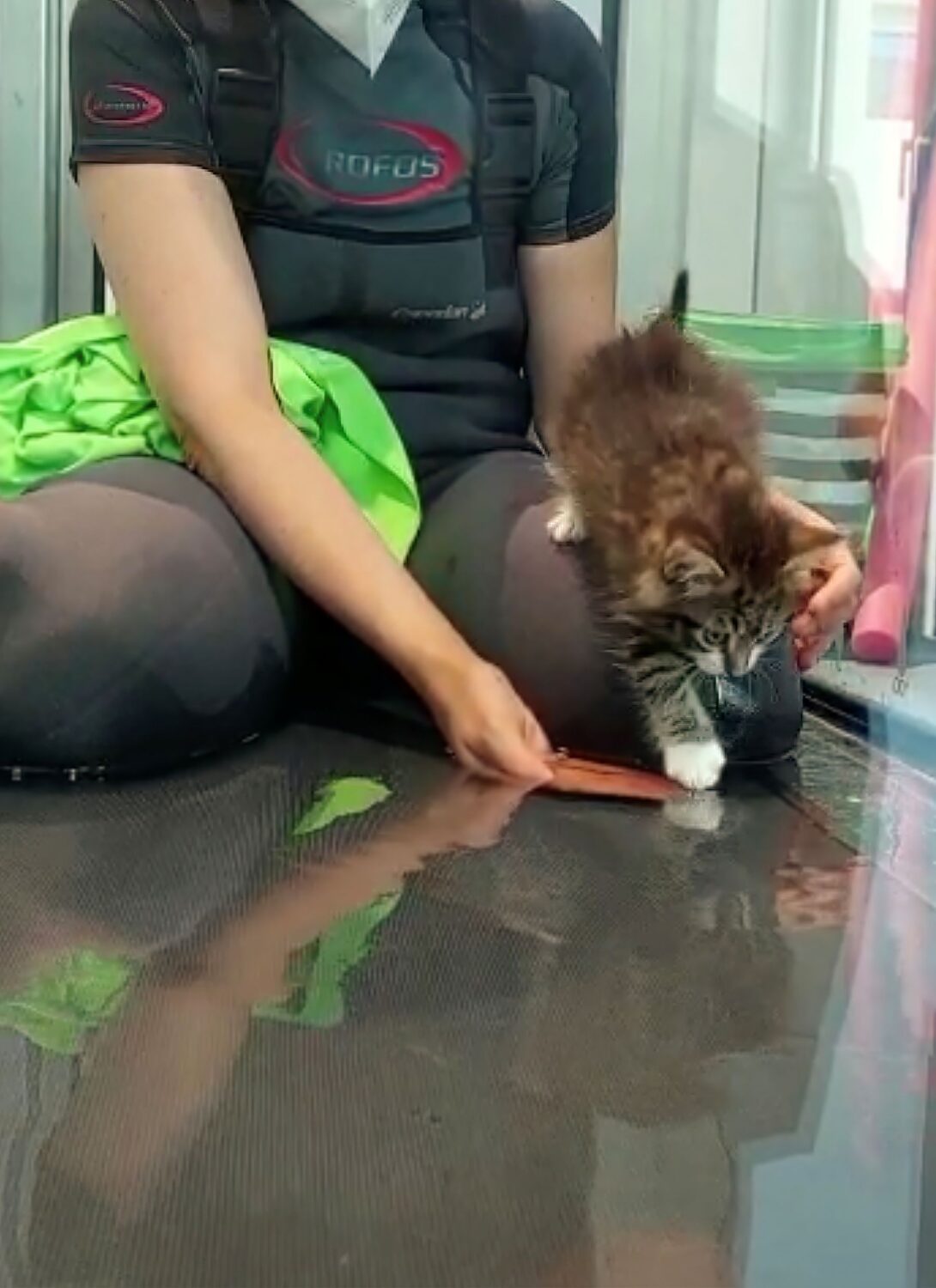
First, cats were given the time and space to explore the rehabilitation room and the treadmill while it was dry. This allowed them to relax within the therapeutic environment. Once the cats were comfortable, they were introduced to the sensation of moisture by gently touching the paws with a damp towel.
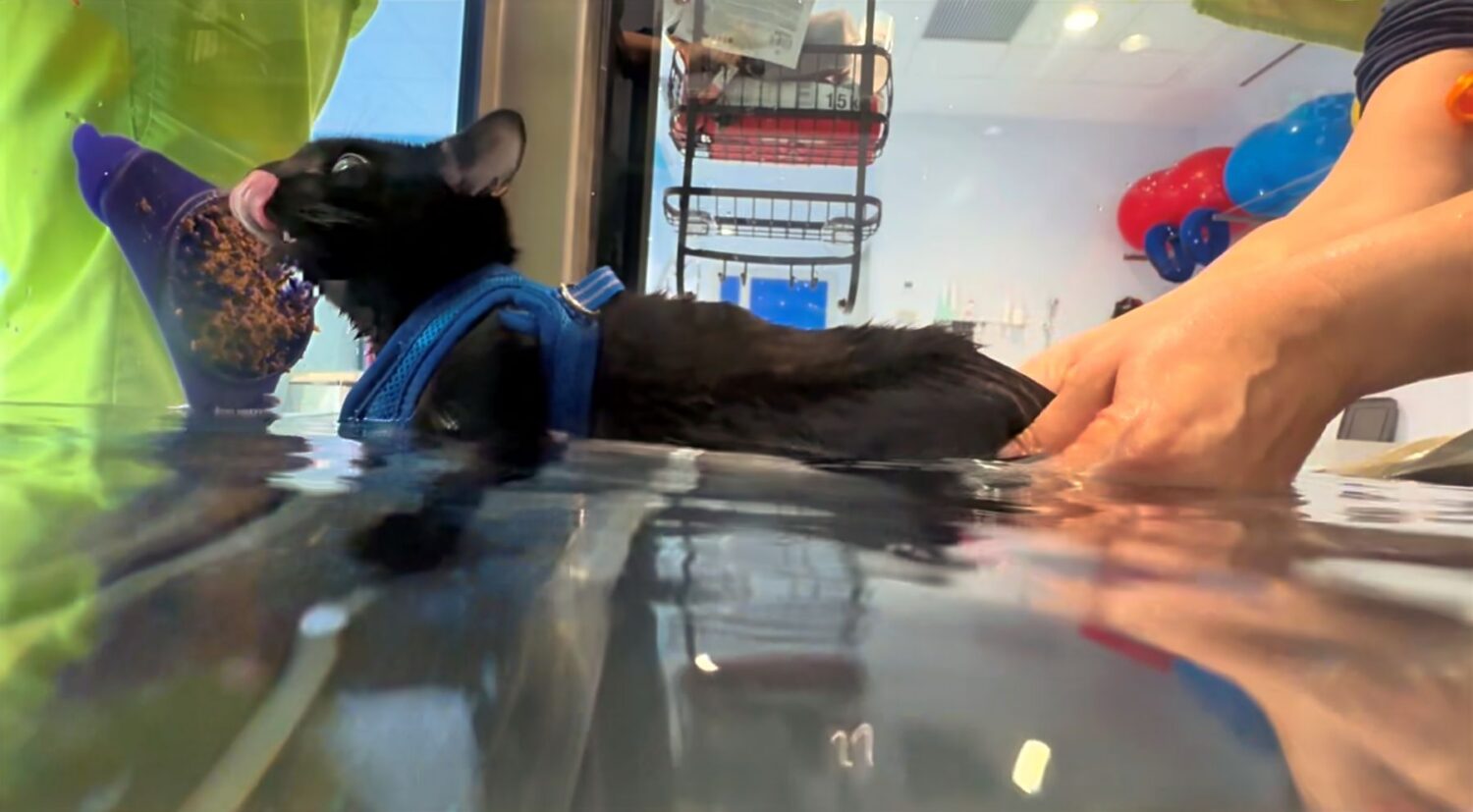
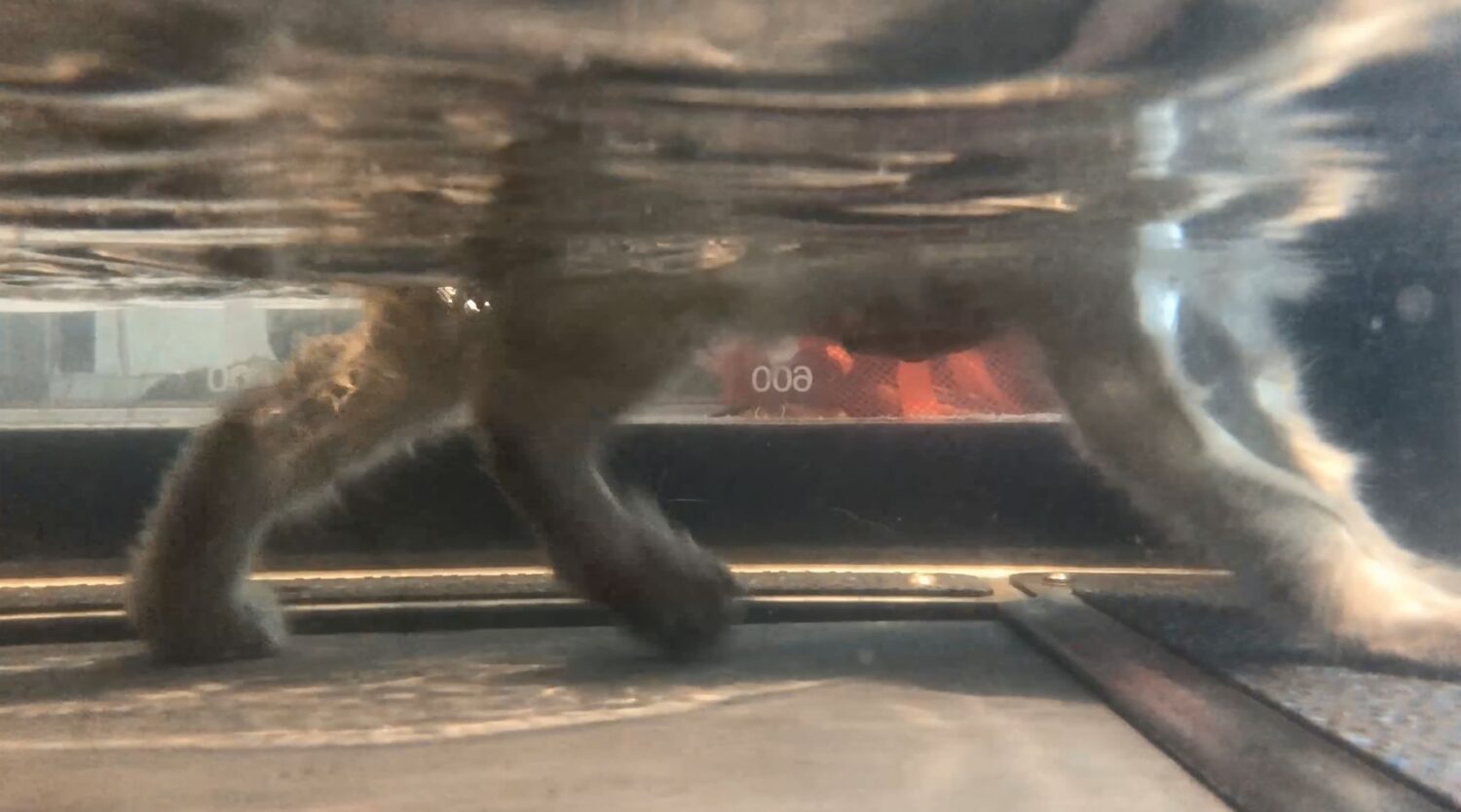
The first water sessions involved just two inches of warm water in the treadmill chamber, during which cats stood while becoming familiar with the sound and movement of the equipment. Over time, as their confidence built, water levels were raised in small increments. Cat parents stayed present to give the cats a sense of comfort and familiarity. Cats were encouraged with whatever form of reward they responded to best, whether food, touch, or play.
Most importantly, advancement happened only when observed stress behaviors stayed below predefined limits. If distress increased, sessions were paused or adjusted. Each appointment ended with a low-stress drying routine, using towels and no dryers, to avoid creating negative associations with water exposure and to maintain behavioral comfort.
Which cats are good candidates for hydrotherapy
Alongside medical suitability, clinicians also evaluated whether each cat could handle the environment and repeated handling involved in hydrotherapy. Uccheddu noted, “Good candidates meet behavioral feasibility criteria, including absence of behavioral pathology and exclusion of transmissible infectious diseases.”
From a clinical perspective, Sinigoi described the types of cases most likely to benefit from aquatic rehabilitation. “Clinically, suitable candidates include cats with documented neurologic or musculoskeletal conditions where aquatic rehabilitation is indicated.”
While similar selection standards are used for canine hydrotherapy candidates, there is an additional emphasis on behavioral tolerance and stress management for cats.
Conway’s years of experience have provided her with some insight into feline patients that can benefit the most from hydrotherapy. “My top three criteria for an ideal candidate are a committed pet parent, a cat that is amenable to handling, and a diagnosis of arthritis, IVDD, or obesity.”
She explains what a session might look like: “A typical session might include PEMF [pulsed electromagnetic field therapy], cold laser, massage with PROM [passive range of motion], isometric exercises in the underwater treadmill, and hydrotherapy. In cases where temperament is unknown, I have performed assessments in a smaller, enclosed space to allow the cat to acclimate comfortably.”
And her success in welcoming cats is inspiring. “To date, we have not encountered a cat we could not handle,” Conway said.
Measuring functional recovery in feline patients
The researchers looked not only at physical recovery, but at how well cats were able to resume normal daily activities. “Meaningful outcomes include restoration of species-typical behaviors alongside improved mobility,” Uccheddu explained.
In practice, the changes were often dramatic. “Functionally, we observed major recovery milestones, including complete or near-complete recovery in several cases,” Sinigoi said. For cats struggling with long-term mobility loss or recovering from injury, these gains could significantly alter long-term outcomes.
Jennifer Smallwood, DVM, MS, CVA, CCRP, CVFT, CVCH, owner and founder of Integrative Veterinary Wellness in Texas, offers feline hydrotherapy as part of their physical therapy services. While she recognizes that obtaining measurements from feline patients may prove more challenging than from canine patients, she emphasizes the need to do so.
“Collecting objective measurements when possible is important,” she said. “For example, serial goniometry and thigh circumference measurements and lameness scoring systems can be used in orthopedic cases when appropriate.”
There are other important indicators of clinical improvement, though. “One sign is increased mobility. Getting up more easily and showing more confidence when walking, running, or jumping. Owners can also look for functional improvements like improved posture when using the litter box or better grooming habits,” she explained. “Behavior changes are just as important as the physical changes and could include more playful or social behavior and reduced irritability.”
What clinics need to support feline hydrotherapy
Successful feline aquatic therapy relies as much on the clinical setting and trained staff as it does on the equipment itself. According to Uccheddu, “A Cat Friendly clinical pathway and staff trained in feline welfare and behavior are essential.”
Sinigoi added, “Facilities must support quiet, controlled sessions with appropriate equipment and trained rehabilitation professionals.”
While adapting the clinical space for cats is important, successful outcomes also depend on experienced veterinary oversight. Aquatic therapy is intended to complement comprehensive rehabilitation, not replace it, so it will be part of a comprehensive program and not a standalone treatment. For clinics that have focused solely on dogs, including feline patients will often require both changes to the facility and additional professional training.
Smallwood stresses that veterinarians and support staff offering feline hydrotherapy should always have specialist training as physical rehabilitation therapists. “It is important to keep in mind that hydrotherapy is only one modality we utilize in a rehab practice. It is not suitable for all conditions, so working with a veterinarian who is trained and certified rehabilitation is critical.”
What to look for in a feline-friendly hydrotherapy center
Many veterinary hydrotherapy rehabilitation centers were originally designed with canine patients in mind and may not yet be set up to manage cats.
When referring a feline patient, it is worth asking whether the facility follows Cat Friendly principles, has staff experienced in feline handling, and allows for gradual acclimation. Details such as noise control, quiet scheduling, behavioral monitoring, and individualized treatment planning are good indicators of whether a program is likely to offer positive outcomes for cats. As interest in feline rehabilitation continues to grow, more hydrotherapy providers are beginning to adapt their environments and protocols to better meet these needs.
According to Smallwood, “All treatment plans should be prescribed and medically overseen by a veterinarian trained in rehabilitation, with trained rehabilitation staff implementing and monitoring sessions. A calm, low-noise environment and cat-specific handling techniques are key to keeping feline patients comfortable.”
Expanding rehabilitation options for feline patients
This study demonstrates that when feline welfare is embedded into therapeutic design, hydrotherapy becomes both feasible and effective. The broader implication of this work extends beyond underwater treadmills. “The major impact lies in replacing assumed intolerance with welfare-based inclusion,” said Uccheddu.
From a rehabilitation perspective, Sinigoi summarized the clinical significance. “From a rehabilitation standpoint, this approach prevents systematic exclusion of cats from effective therapeutic options. We prove that aquatic therapy is a viable and highly effective tool for feline rehabilitation. This opens the door for a higher standard of care and better quality of life for feline patients worldwide.”
For veterinarians managing neurological injury, post-surgical recovery, or chronic mobility decline in cats, aquatic rehabilitation may soon represent an evidence-based option instead of an impractical ideal. It can now become part of a pathway to recovery for cats.
Currently, the only feline-specific post graduate course in feline hydrotherapy is available from Tech School of Veterinary Medicine, which offers a global, online program. For a broader rehabilitation focus, numerous RACE-approved courses in veterinary physical rehabilitation do include feline modules as part of their comprehensive curriculum.
Photo caption/credit: Babaganoush, a young cat, participates in an advanced underwater treadmill session. Food is provided on a licking mat to create a positive association, tailored to the individual needs and preferences of the cat. Photo courtesy of Laura Sinigoi via Stefania Uccheddu, DVM, PhD, Dipl ECAWBM.
Disclaimer: Trends™ content is meant to inform, educate, and inspire by providing an array of diverse viewpoints. Any content published should not be viewed as an official stance, position, or endorsement by the American Animal Hospital Association (AAHA) or its Board of Directors.
