Less stress and better outcomes with cooperative care

Recognizing anxiety and its impact on veterinary care is a crucial step toward ensuring every animal who enters your practice has the best experience possible. In some cases (like with Dash, the terrier mix in this story), cooperative care provides a way for the family and team to help anxious animals receive the veterinary services they need.
Advertisement
Sisters Sylvia and Juliet Orellana were experienced dog owners when they adopted Dash, a terrier mix who had been surrendered by his previous family with small children because he was “too energetic.” Juliet Orellana said, “We thought we knew what we were in for, but we really had no idea.”
Dash’s anxiety became evident during his very first visit to St. John Animal Clinic, the family’s trusted veterinary practice. Fear Free-certified veterinarian, Kim Michels, DVM, was the first to see him, and she could not even touch him.
“He was very alert. He reacted every time she would get near, so he would bark and try to get away from her,” Juliet Orellana explained.
They’d never experienced one of their dogs reacting this way and were relieved when Michels prescribed Trazodone and gabapentin to help Dash feel calmer for future visits. However, veterinary visits weren’t the only thing riling up the rescue dog.
Concerns beyond the clinic
At home, Dash exhibited other concerning behaviors. He was hypervigilant, unable to relax even in familiar surroundings. When other family members entered the room, even if he appeared to be fast asleep, he would vocalize furiously. He was also extremely fixated on a neighbor’s dog, reacting intensely to sounds the other dog made and seeming so frenzied that the sisters didn’t feel they could even try to touch him to get his attention.
Although they were taking him to agility classes weekly and had a lot of experience from training their previous dogs, they came to realize that Dash needed more help to live a happy life. That became especially urgent after he was diagnosed with Lyme disease during an annual examination and learned about the future health issues that could lead to.
Every visit to the veterinarian had become hugely stressful for all of them as Dash had to be sedated and restrained. The sisters, who had two older dogs with health issues, were familiar with the demands of ongoing veterinary care.
“We started thinking, you know, we’re not going to be able to get him treatment if he develops heart disease. If he develops kidney disease, he just won’t tolerate it,” Juliet Orellana said.
Implementing cooperative care: A multidisciplinary approach
That’s when they began discussing their concerns with Melissa Dunn, DVM, their primary care veterinarian at St. John. Dunn suggested that cooperative care might be an option for Dash.
What is cooperative care?
Cooperative care, a positive reinforcement-based approach, allows animals to participate voluntarily in their own treatment, reducing stress and fear. Practitioners use low-stress handling techniques (sometimes in addition to anxiety medications), such as teaching behaviors like targeting and stationing, to help animals become comfortable with handling for procedures such as injections, nail trims, or blood draws. Cooperative care is quite common in zoos, where it’s not feasible to sedate large animals for every procedure, and it can also be helpful for companion animals like Dash.
In April 2024, Dunn referred Dash to Kelly Ballantyne, DVM, DAVCB, a board-certified veterinary behaviorist. Ballantyne assessed Dash and identified two sets of issues: generalized anxiety, which left him unable to relax even at home, and situational panic at the vet.
“If an animal is escalating to the point where they are struggling or snapping or biting, they’re doing it because they are terrified for their lives,” Ballantyne explained. “Most animals … try to reserve aggression as the last possible intervention because it’s risky to use aggression. You know, if you start a fight, you can get hurt too.”
Ballantyne’s plan began with a recommendation for a new medication protocol to manage Dash’s generalized anxiety and situational panic, which included alprazolam and clonidine. Ballantyne and the family closely monitored Dash’s response at home to ensure there were no side effects.
Then, Dash and his family made some quick visits to the clinic, without any type of examination, to ensure the drugs would stabilize him enough emotionally to make the next steps of the program possible.
Six months of planning
Once Ballantyne was confident Dash was doing well on the medication and her recommended management strategies, she suggested one more addition to Dash’s care team: Laura Monaco Torelli, who got her start in cooperative care over 30 years ago as a marine mammal trainer.
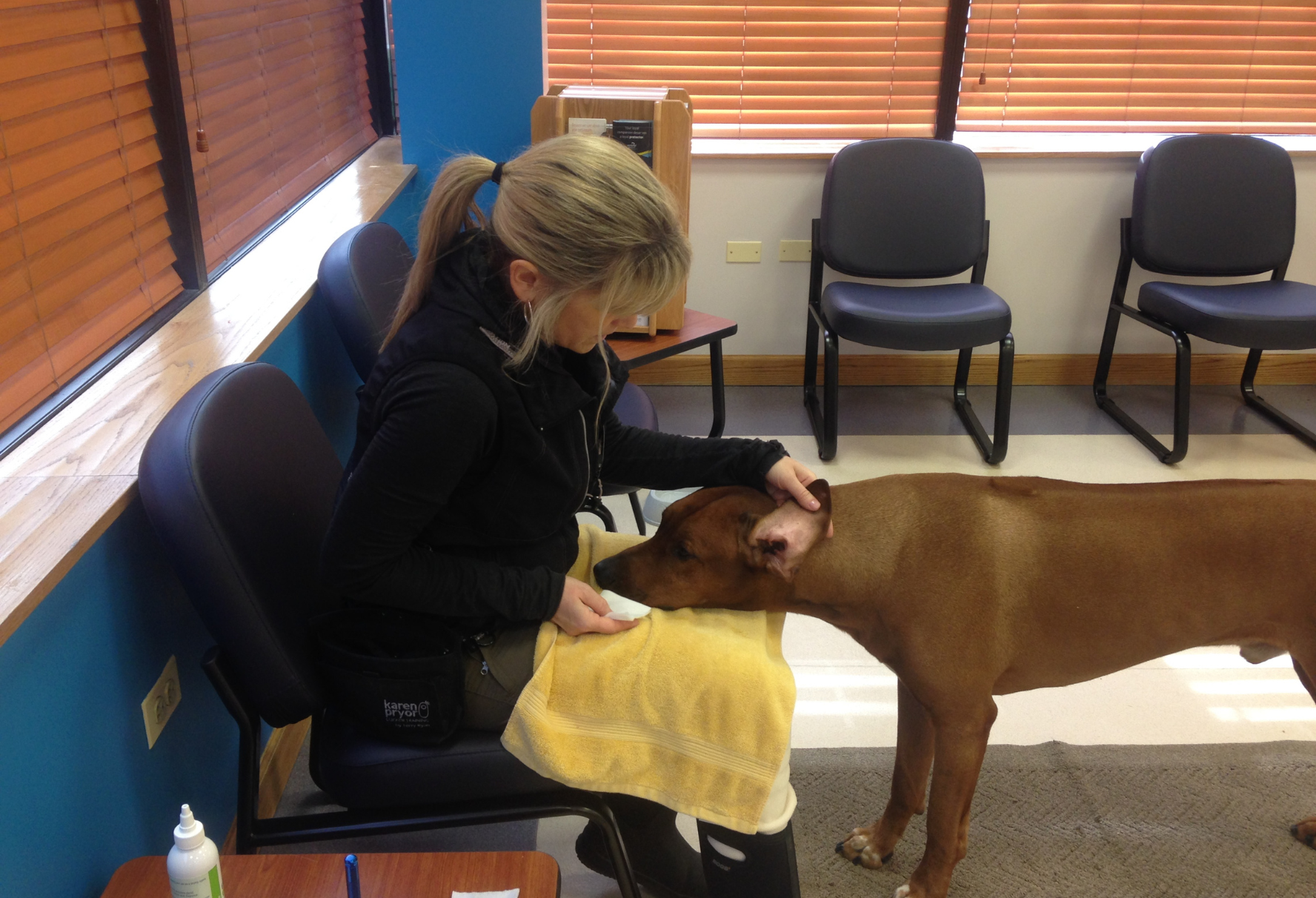
Monaco Torelli started working with Dash’s family in June with the aim of setting achievable goals. The first was teaching Dash to wear an Elizabethan collar happily. After that, they worked toward Dash tolerating a veterinarian listening to his heart in anticipation of sedation. His next health check was in December.
Meanwhile, the Orellana family made weekly “happy visits” to the veterinary clinic, a service the clinic offers at no charge. Through positive reinforcement, Dash learned to be comfortable walking through the waiting room, standing on the scale, and jumping up on the table. Technicians and front desk staff helped Dash get accustomed to new people by coming into the room and interacting with him.
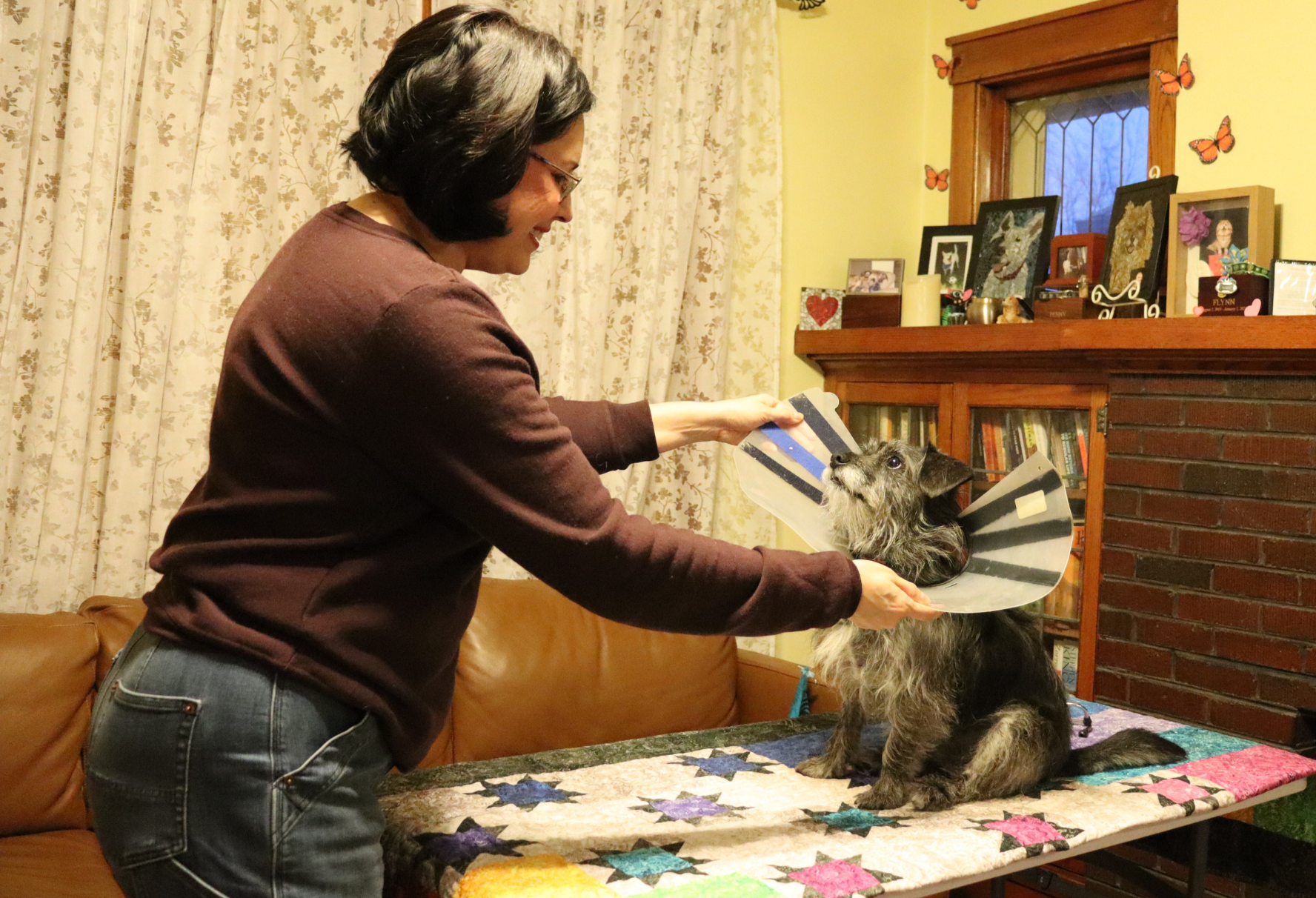
All of this was done under Monaco Torelli’s supervision through virtual visits.
The big day
When Dash’s December appointment arrived, everyone was nervous. This would be the first time Dunn would see Dash since they began the cooperative care training process. Monaco Torelli drove in to provide backup and support.
They followed the plan: letting Dash, who had received his medication at home prior to the visit, relax in the room before Dunn’s arrival; going through the routine of putting on his Elizabethan collar; and asking him to get on the table. They incorporated trained behaviors such as touch, sit, down, and wait to keep him engaged and relaxed.
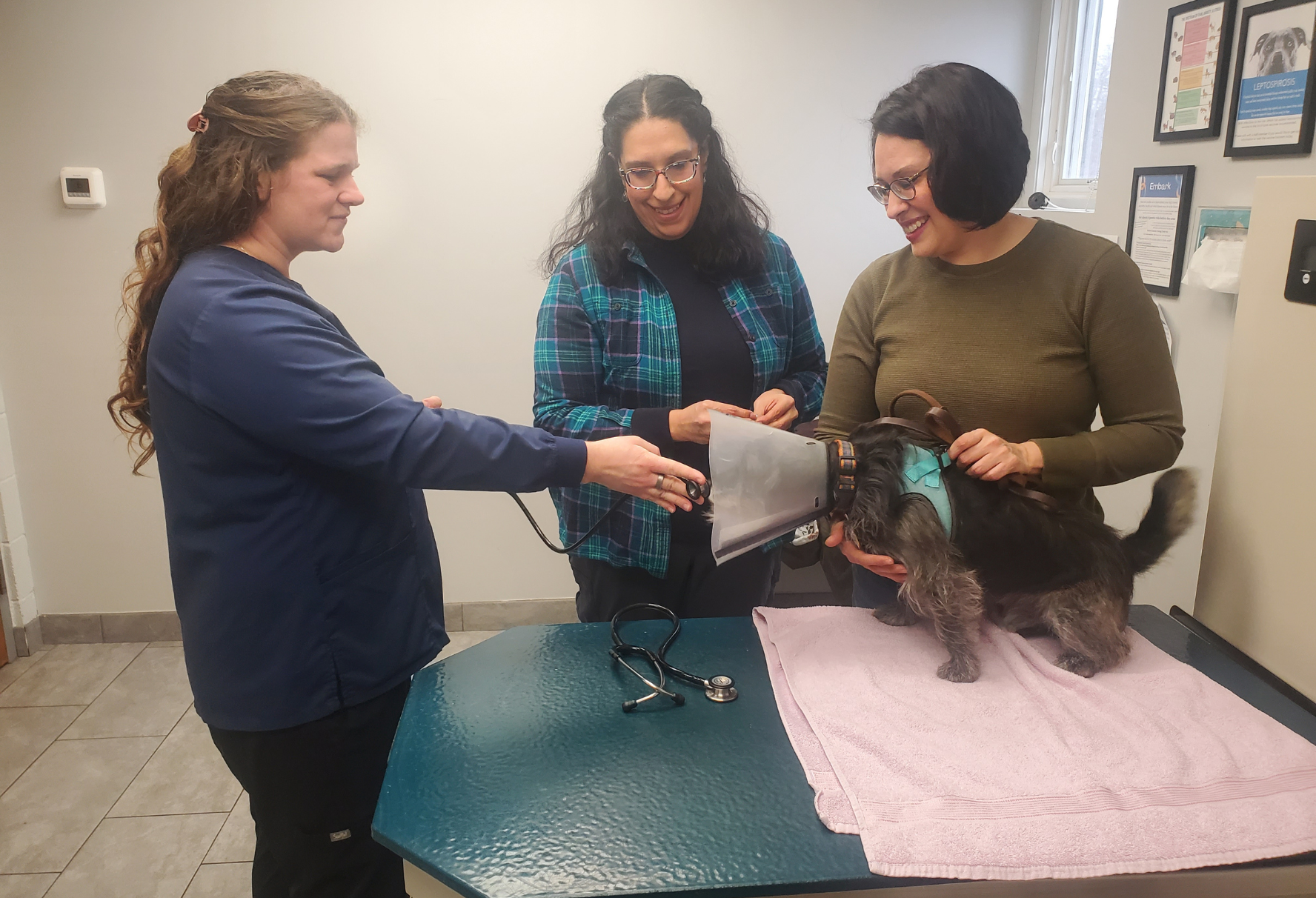
And it worked. Dunn was able to interact with Dash, give him treats, and listen to his heart with a stethoscope. Everyone celebrated—quietly.
Teamwork and time
This success was a team effort. Dunn provided step-by-step insight on what she needed to do with Dash, including where she would stand and how she would touch him. Ballantyne’s medical intervention made Dash receptive to training. Monaco Torelli’s expertise guided the family through the detailed process of teaching Dash to participate voluntarily in his own care.
Together, they supported the sisters and Dash, even when progress was slow.
Cooperative care can seem daunting, especially in emergency situations, which is why a proactive approach—starting with puppies—is preferable. However, as Dunn emphasized, it’s never too late to try.
“What will it hurt to just try it one time? We can read body language and stop if we feel like the animal is escalating and not tolerating what we are trying to accomplish at the time,” she said. “It isn’t a failure if we have to do injectable sedation, so what do we have to lose?”
In fact, she believes that the impact it makes on how patients (and owners) interact with the care team at the office will make many veterinary professionals wish they’d implemented cooperative care sooner. “We can’t make every dog or cat like us,” she said, “but we can try to make the few interactions we have with them less stressful.”
Monaco Torelli stresses the importance of teamwork and recommends building a strong team infrastructure to support clients through this process. She suggests that the best place to begin is to contact colleagues that have already collaborated with a certified trainer that offers/specializes in cooperative care in-person or virtual workshops.
Dash’s story is a testament to the power of cooperative care. By prioritizing the emotional wellbeing of patients, veterinary professionals can transform stressful visits into positive experiences—for their patients, clients, and themselves.
Further reading: Resources for implementing cooperative care in veterinary practice
If you or your practice would like to learn more about cooperative care, Monaco Torelli has recommended the following resources:
- Fear Free-certified trainers plus their site resourcesand online courses.
- RACE approved online course: Better Veterinary Visits
- Cooperative Care: Seven Steps to Stress-Free Husbandry by Deborah A. Jones, Ph.D., published in 2016 by Dogwise Publishing
- Online courses: Sophia Yin’s Low Stress Handling
- https://journal.iaabcfoundation.org/cooperative-care/ by Sarah Dixon, CDBC, Lauren Fraser, CHBC, and Stephanie Edlund, CPBC, IAABC Foundation Journal
Photo credits: Juliet and Sylvia Orellana; Laura Monaco Torelli
Disclaimer: Trends content is meant to inform, educate, and inspire by providing an array of diverse viewpoints. Any content published should not be viewed as an official stance, position, or endorsement by the American Animal Hospital Association (AAHA) or its Board of Directors.
