Clinical
From the Guidelines: Elevating everyday dentistry

A wealth of high-impact guidance from the 2019 AAHA Dental Guidelines for Dogs and Cats remains underutilized in daily practice. When utilized effectively, these recommendations can offer remarkable potential to elevate patient outcomes, increase client trust, and create more efficient, well-rounded veterinary dental teams.
Advertisement
The 2019 AAHA Dental Guidelines for Dogs and Cats remain a cornerstone reference for veterinary professionals seeking to provide comprehensive and ethical oral healthcare.
While many of its best-known recommendations—such as the necessity of intraoral radiographs and anesthetized comprehensive exams—are now commonly referenced, a wealth of high-impact guidance remains underutilized in daily practice.
These underused recommendations include conscious oral exams, pediatric prevention, technician empowerment, preemptive pain management, communication terminology, the fallacies of non-anesthetic dentistry, managing anesthetic fears, and reframing dental procedures as essential medicine.
All of the above, when utilized effectively, offer remarkable potential to elevate patient outcomes, increase client trust, and create more efficient, well-rounded veterinary dental teams.
Below are eight nuggets of wisdom gleaned from the pages of the guidelines. By re-centering attention on these concepts, practices can more fully implement high standards of care outlined in the guidelines.
1. Conscious oral exams: See more than you think
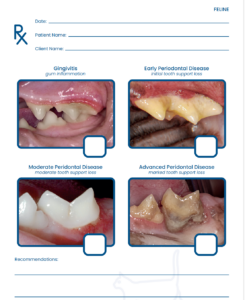
It’s tempting to view the conscious oral exam as a superficial or limited procedure, but the guidelines stress that it is a vital component of veterinary dentistry—not only diagnostically, but communicatively. While it cannot replace an anesthetized COPAT (Comprehensive Oral Prevention, Assessment and Treatment procedure), a thorough conscious exam can reveal discolored and fractured crowns, missing or extra teeth, malodor, occlusal abnormalities, and visible gingival changes.
Moreover, these exams are a perfect opportunity for client education. Using clear language and visual aids (e.g., dental models or photos), veterinarians can point out areas of concern and explain why an anesthetized evaluation is necessary. Clients are more likely to agree to care plans when they understand the rationale and feel included in the discovery process.
Breed-specific discussions can also be embedded into this exam. For instance, alerting the owner of a Cavalier King Charles Spaniel to their predisposition to periodontal diseases or noting the orthodontic risks in a brachycephalic puppy builds a bridge between patient individuality and dental recommendations.
2. Pediatric prevention: The critical first year
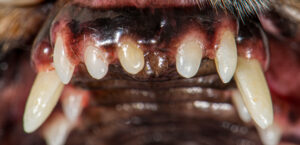
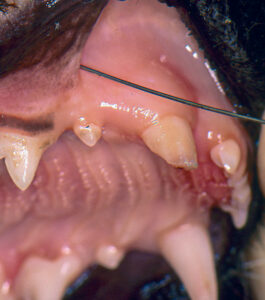
Perhaps one of the most underemphasized portions of the AAHA guidelines is the call for preventive dental care starting at the very first veterinary visit. Puppies and kittens should receive an oral exam at each wellness appointment, including a bite evaluation to identify early malocclusion and malpositioned teeth. Discussions should include the eruption schedule, monitoring for persistent primary teeth (such as in the title photo for this article), and breed-specific concerns related to overcrowding and jaw length discrepancies.
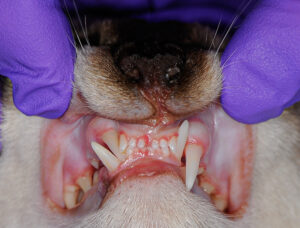
The guidelines recommend small and medium breed dogs and all cats receive their first anesthetized dental evaluation including tooth-by-tooth probing and full-mouth intraoral radiographs by one year of age. These pets are at the highest risk of early-onset periodontal disease—particularly toy breeds like Chihuahuas, Yorkies, and Dachshunds. Yet in practice, this recommendation is frequently delayed or ignored due to cost concerns, misperceptions about risk in young animals, or client hesitation regarding anesthesia.
Starting the dental conversation early enables behavior shaping, introducing toothbrushing, tooth wiping, and daily plaque control with VOHC-accepted products. It also strengthens client trust by normalizing dental care as a routine and necessary aspect of lifelong health, not an intervention reserved for illness.
An empowered, trained technician team allows the veterinarian to focus on interpretation and treatment, increases efficiency, and elevates the entire client experience.
3. Empowering technicians: Building a dental dream team
The AAHA guidelines strongly advocate for expanding the role of veterinary technicians and assistants in dental care—a strategy with benefits for workflow, patient safety, and job satisfaction. Despite this, many practices limit their technician team to restraint and recovery roles, missing out on their full potential.
Dental assistants and technicians can perform dental charting, scaling, polishing, irrigation and taking diagnostic-quality intraoral radiographs. With proper training, they also play a central role in client education, discussing home care protocols and presenting discharge instructions.
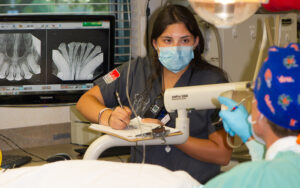
Technicians pursuing the Veterinary Technician Specialty (VTS) in dentistry can serve as dental leaders within the practice. An empowered, trained technician team allows the veterinarian to focus on interpretation and treatment, increases efficiency, and elevates the entire client experience. Implementation begins with investment in continuing education, consistent protocols, and delegation of responsibilities rooted in trust and training.
4. Preemptive pain management: Treat before they flinch
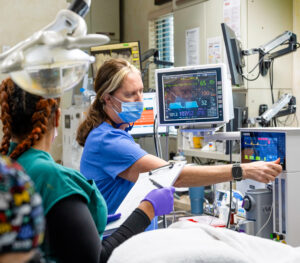
Veterinary dentistry centers around the prevention and control of pain—not merely responding to it post-operatively. The AAHA guidelines endorse a multimodal and preemptive approach, yet many practices still rely solely on post-operative NSAIDs or avoid analgesics entirely for “minor” procedures including dental scaling or single extractions.
Preemptive analgesia, including opioids (e.g., buprenorphine, methadone), local anesthetic nerve blocks (infraorbital, maxillary, inferior alveolar, mental), and NSAIDs (where appropriate), provides measurable benefits: improved recovery times, reduced anesthetic requirements, and increased patient comfort.
The guidelines also remind practitioners that pain is not always visible, especially in cats. Because dental disease is inherently painful, veterinarians should default to treating for pain, not waiting for overt signs. This section of the guidelines underscores that ethical veterinary care includes proactively managing all sources of discomfort, regardless of the animal’s behavioral display.
5. Words matter: Rethinking “dentals” and “prophys”
Language influences perception, and nowhere is this more critical than in how we present dental services to pet owners. The guidelines caution against casual terminology like “prophy” or “dental,” which minimize the complexity and value of a COPAT. These terms may contribute to a client’s perception that the procedure is routine, optional, or cosmetic.
Instead, veterinary professionals are encouraged to use descriptive, medically accurate terms such as:
- “Comprehensive Oral Prevention, Assessment and Treatment (COPAT)”
- “Comprehensive Oral Health Assessment and Treatment (COHAT)”
- “Anesthetized oral exam and full-mouth radiographs”
- “Periodontal therapy with nerve blocks and analgesia”
Instead of using the term “estimate” for proposed dental care, instead use “treatment plan.” Keep estimates reserved for car services and air conditioning repairs.
In practice, substituting vague or outdated phrasing with precise language increases client understanding and helps justify the cost and necessity of services. This clarity should be reflected in invoices, treatment plans, discharge forms, and staff-client conversations.
6. Non-anesthetic dentistry (NAD), anesthesia-free dentistry (AFD): Why it’s not an option
Despite clear professional consensus, non-anesthetic dentistry continues to be marketed as a safe alternative. The guidelines unequivocally state that NAD/AFD is inappropriate and may be harmful. It does not allow for subgingival scaling, full-mouth radiographs, or pain control. Worse, it gives clients a false sense of security about their pet’s oral health.
Veterinary professionals must be prepared to communicate clearly with clients about the limitations and risks of NAD/AFD. These include missed diagnoses, aspiration risk, chronic pain from untreated disease, inability to probe and radiograph, as well as behavioral trauma from manual restraint. NAD/AFD is not only ineffective—it may delay necessary care and result in prolonged suffering.
This conversation must be handled with compassion and education. Reframing the discussion around what NAD/AFD fails to do—not just what it can’t do—helps clients appreciate the value of proper anesthetized procedures. Resources including radiographic comparisons and case photos can be effective in demonstrating the difference in outcomes.
The American Veterinary Dental College website includes anesthesia free dentistry education for veterinarians and pet owners.
A subtle but important theme in the guidelines is the idea that dentistry is not an “add-on” service—it is a critical component of comprehensive medical care.
7. Managing anesthetic concerns: Safety over assumptions
For many clients, resistance to anesthetized dental care stems from fear—particularly fear of anesthesia in older or chronically ill pets. While these concerns are valid, they are often based on outdated assumptions. With modern preoperative diagnostics, individualized protocols, modern anesthetic monitoring, and properly trained staff, anesthesia can be safe and well tolerated, even in senior patients with and without comorbidities.
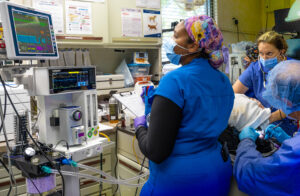
The guidelines recommend addressing client fear through education and transparency. Provide details about pre-anesthetic bloodwork, intraoperative monitoring (ECG, capnography, pulse oximetry), and pain control strategies. Be honest about the risks—but also share statistics on anesthetic safety and recovery.
Including technician support in these discussions can reassure clients. When pet owners understand that safety is a priority and protocols are tailored to each patient’s needs, they are more likely to consent to care.
8. Dentistry is medicine: Shifting the paradigm
A subtle but important theme in the guidelines is the idea that dentistry is not an “add-on” service—it is a critical component of comprehensive medical care. Periodontal disease affects systemic health, quality of life, and behavior. Fractured teeth and endodontic disease cause chronic pain. Oral tumors require early detection and intervention.
Reframing dentistry as medicine—rather than grooming or maintenance—helps shift both staff and client perspectives. COPATs are not “cleanings”—they are preventative, diagnostic and therapeutic procedures that uncover pathology and improve lives. When this becomes the cultural norm in a hospital, dentistry gains its rightful place alongside internal medicine, surgery, and preventive care.
Conclusion: From the page to practical applications
The 2019 AAHA Dental Guidelines are more than a checklist—they are a philosophy of care. By focusing on conscious exams, pediatric prevention, technician engagement, pain management, precise language, ethical anesthesia use, and communication strategies, practices can bring new depth and integrity to their dental offerings.
These underutilized recommendations are not niche concepts—they are accessible, evidence-based actions that can be implemented in every practice. As veterinary professionals, it is our responsibility to ensure that we don’t just meet the minimum standard of care but exceed it. When we do, our patients, clients, and profession all benefit.
References:
American Animal Hospital Association. 2019 AAHA Dental Care Guidelines for Dogs and Cats. Lakewood, CO: American Animal Hospital Association, 2019.
Holmstrom, Steven E., Patricia Frost, and Edward R. Eisner. Veterinary Dental Techniques for the Small Animal Practitioner. 3rd ed. St. Louis, MO: Elsevier Saunders, 2013.
Niemiec, Brook A. Veterinary Periodontology. Ames, IA: Wiley-Blackwell, 2012.
Lobprise, Heidi, and Jeanne Perrone Dodd. Wiggs’s Veterinary Dentistry: Principles and Practice. 2nd ed. Hoboken, NJ: Wiley-Blackwell, 2019.
Photo credit: All images courtesy of Jan Bellows
Disclaimer: Trends content is meant to inform, educate, and inspire by providing an array of diverse viewpoints. Any content published should not be viewed as an official stance, position, or endorsement by the American Animal Hospital Association (AAHA) or its Board of Directors.
