Culture and People
HAB-py tails: Brain boosts, chatty catties, and more
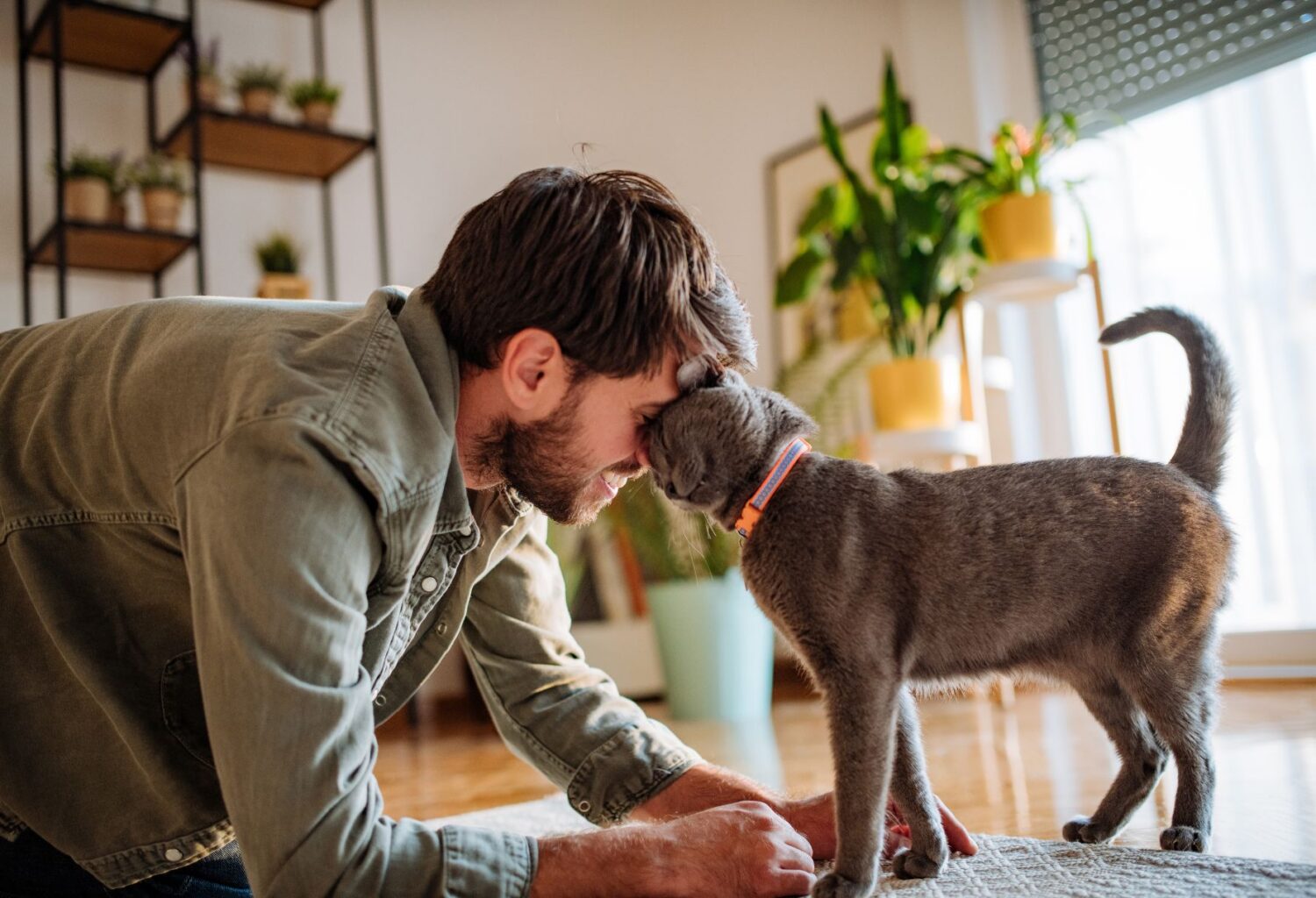
Supporting and strengthening the human-animal bond is a major reason for veterinary professionals to choose this field. That’s why each month, we’re rounding up a few fantastic examples of just how powerful that bond can be.
Advertisement
When you have a rough day in the clinic, it can be helpful to remember that the important work you do doesn’t only help your patients feel better, but it also helps to preserve and strengthen the human-animal bond (HAB).
To help veterinary professionals feel connected to that mission, we’re sharing a monthly round-up of stories showcasing the human-animal bond, including recent research that highlights just how crucial that bond can be.
(Got a suggestion for a story to include in our next HAB-py tails round up? Send it over to [email protected]!)
Dog-assisted therapy’s impact on children with autism
While we’ve long known that dog-assisted therapy (DAT) can be beneficial for children with autism spectrum disorder, we didn’t have much evidence on the impact it had on certain key outcomes, like emotional and behavior problems or quality of life. That is, we didn’t—until now.
A study of DAT on children in Hong Kong with autism spectrum disorder showed that DAT’s impact on those key outcomes was similar to the school’s educational curriculum. That doesn’t mean DAT should take the place of other therapies, however; it’s most valuable as a complementary therapy, used alongside other conventional, curriculum-based training for children with autism spectrum disorder. Still, the more tools we have to help these children, the better!
Playing with dogs provides a brain boost
Looking for an excuse to spend more time playing with dogs? New research out of South Korea measured changes in brain activity during puppy playtime, and found that these interactions produced positive changes in activity tied to relaxation and concentration.
They monitored brain waves during various types of dog play activity, including playing with toys, offering treats, walking, and more. And the different activities triggered specific responses in the brain. Playing and walking with the dog, specifically, correlated with increased alpha-band oscillations—notable because alpha wave activity, which has a link to better memory and reduced stress. The more hands-on activities boosted beta-band oscillations, which are connected to greater focus and concentration. So, the takeaway is that playing with your pooch is good for your brain—and you can tailor your interactions to give your brain the right type of boost.
Clearing up cat communication
Speaking of variety, let’s take a look at what scientists are learning about cat vocalizations. Researchers analyzed 276 meows from 14 cats and 557 purrs from 21 cats to better understand how these distinct types of vocalizations serve them in communication—with humans and with fellow felines.
The study found that both meows and purrs showed individual identity, although purrs were a considerably more—wait for it—purr-sonalized. Still, when compared to the meows of wild cat species, domestic cat meows showed far greater variability, which is likely due to the fact that domestic cats often use their meows to communicate with their humans. Domestication has had a big impact on how cats communicate, and it’s important that we all make sure we’re taking the time to listen to what our kitties have to say.
Pet grief gets its due
In this field, many of us understand just how profound the loss of a pet can be for their loved ones. However, among the general population, it’s still common for people to view these losses as less significant than the loss of a human loved one. And while grief of all kinds affects everyone differently, those who experience intense grief over the death of a pet can seriously struggle when they don’t receive the support they need.
A UK survey looked at almost 1000 adults to better understand how the loss of a pet impacted their wellbeing. It found that 7.5% of those who’d lost a pet experienced symptom patterns that lined up precisely with the symptom patterns of human loss. In other words, for some individuals, the loss of a pet can lead to prolonged grief disorder in the same way that the loss of a human family member can.
This knowledge doesn’t necessarily make navigating those losses and that grief easier, of course, but it provides evidence that grief over the loss of a beloved pet deserves the same empathy and support as grief over a human loss.
Photo credit: Drazen_ via E+/Getty Images
Disclaimer: Trends content is meant to inform, educate, and inspire by providing an array of diverse viewpoints. Any content published should not be viewed as an official stance, position, or endorsement by the American Animal Hospital Association (AAHA) or its Board of Directors.
