Clinical
Hands-free radiology: Benefits and best practices
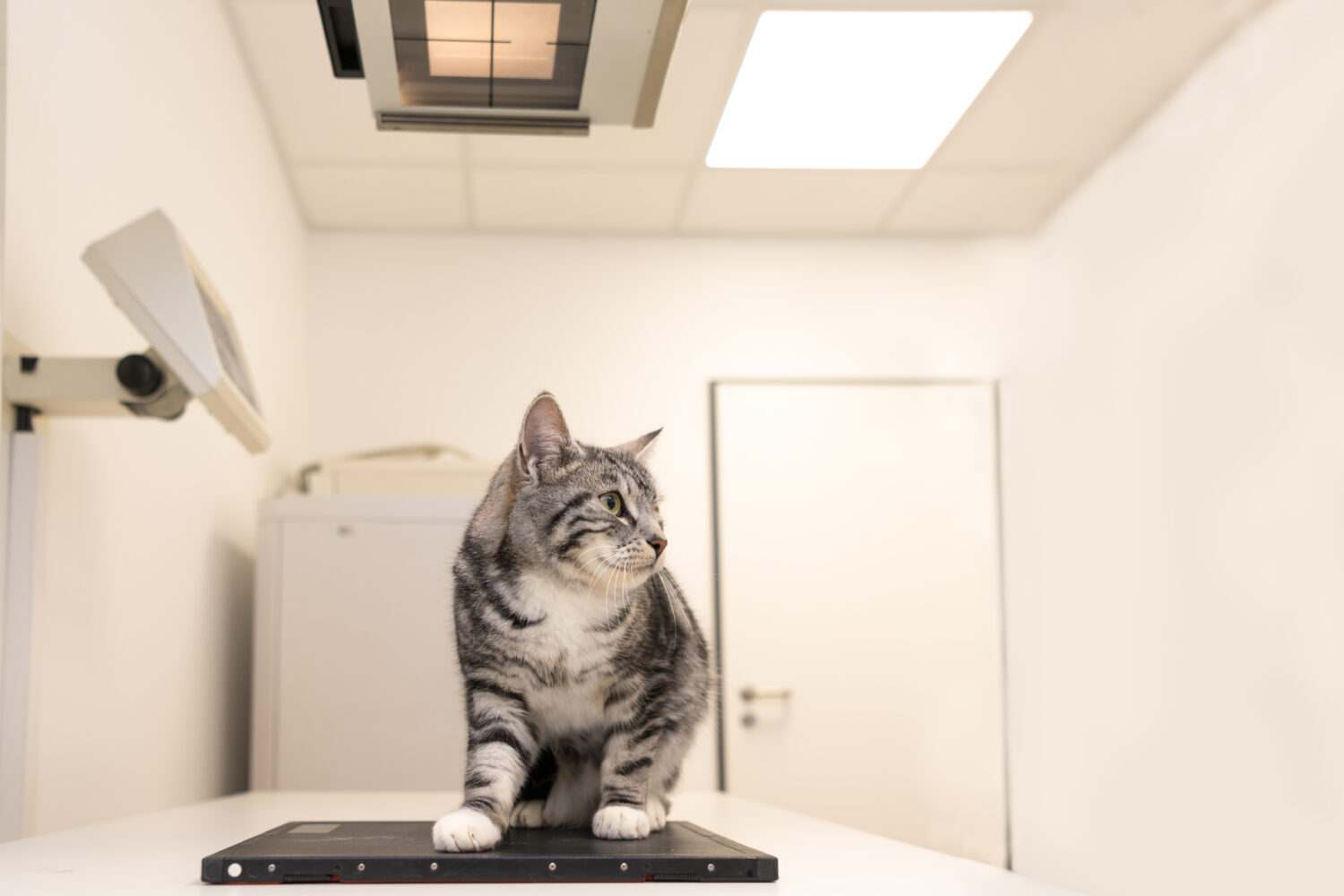
Do you want to reduce radiation exposure for your team and stop holding pets down for their radiographs? Here’s a great primer on hands-free radiology to get your team started.
Advertisement
Recently in the AAHA Community, members asked and answered questions about hands-free radiology and how to best implement it in their practice. Commenters generally agreed that the benefits of hands-free radiology in their practices outweighed any downsides, and that this practice is an important way to reduce radiation exposure to team members who might otherwise be exposed repeatedly over their careers in veterinary medicine.
Benefits of hands-free radiology
Kimberly Ferrell, CVT, CCFP, Practice Consultant for AAHA, talks about hands-free radiology each time she visits a practice for an evaluation. This technique involves the use of positioning aids like sandbags, troughs, Velcro, and tape—and in many cases, sedation—to position patients for radiographs without the need for human team members to restrain them.
This allows team members to step away from the patient and leave the room, stand behind a lead barrier, or otherwise distance themselves from the x-ray beam and the patient, thereby reducing their own radiation exposure.
Ferrell said that in addition to the safety benefit for team members, hands-free radiology provides important benefits to patients. “When we allow ourselves to use more sedation when it’s not contraindicated, it just provides a better, safer, calmer experience for those patients.”
Ferrell added that creating the circumstances for a patient that doesn’t have to be physically restrained can also result in getting good quality images more quickly with fewer attempts needed to obtain them, which can reduce radiation exposure to the patient as well.
Setting the scene for hands-free
If the idea of hands-free radiology is totally new and seems overwhelming, Ferrell has some great advice that she shares with practices wanting to implement it for the first time:
Start small
Start with hands-light, meaning that only one team member is in the radiology suite instead of two, using positioning aides and/or sedation to reduce the need for hands-on restraint. Then, as they get more comfortable, the team member can work toward being in the suite but not touching the patient (Ferrell suggested taping lines on the floor so that team members have a reference when they are first trying this). As team members learn what works and what doesn’t, they can work toward not being in the suite at all (or being behind a barrier or six feet back, if the radiology suite is not an enclosed space).
Set up the radiology suite for success
Ferrell said that in order to be hands-free, the x-ray machine needs to have the capability for exposures to be taken from a distance. In states like New York where hands-free radiology is mandated by law, she said, radiograph machines often are not equipped with foot pedals but instead have switches installed outside of the radiology suite. But even if the radiology suite has not been constructed in this way, most radiology machines can be equipped with hand-held switches on long cords that allow team members to step out of the room, around the corner, or behind a lead barrier.
Check your equipment
Be prepared with the necessary positioning aids, which can include sandbags, wedges, Velcro straps, troughs of various sizes, tape, and even wooden spoons (these can be great for positioning small exotic species, Ferrell said). “Not all sandbags are created equal,” Ferrell said, so it’s important to research the available options.
Decide on sedation protocols
It can be helpful to start with pre-visit pharmaceuticals and then add additional injectable sedation where needed. Ferrell has often seen variations of the “chill protocol” used successfully. For patients who need additional injectable sedation, she prefers agents that can be reversed like dexmedetomidine and other drugs that are fairly short acting like butorphanol. In cases where an attempt will be made to be hands-free without any sedation, Ferrell advised to pick patients carefully. She gave examples of the “old soul” black lab who is more than happy to lie in one position and not move and sick or depressed patients who may be very compliant without much (if any) restraint.
Start setting up all x-ray appointments as drop offs
To account for the time needed for taking radiographs, especially if sedation is needed, Ferrell recommends setting the expectation that clients will drop their pet off instead of trying to quickly take x-rays while the client waits. While this may not be necessary for every case, setting expectations helps the team (and clients) get into the habit of expecting a drop-off, which can lead to less disappointment and frustration later when the drop-off is needed.
Know what to say
Practice a script explaining to clients the reasons that both sedation and a drop-off appointment may be needed for their pet’s radiographs going forward. Ferrell likes to stress that there is less “manhandling” of their pet with hands-free radiology and that sedation can further reduce their pet’s stress. She describes the sandbags as being like a weighted blanket that can help pets feel safe and calm while on the x-ray table. “I think when you explain that we’re not going to have to hold them down, that they’re going to be more relaxed, clients seem to be more receptive,” she said.
The future of hands-free
Ferrell sees hands-free radiology becoming more commonly practiced going forward. “There’s a lot more talk around safety,” she said. “I think people that are in the x-ray room all the time want to be safer. They’re thinking about it a little bit more than they used to.”
As a member of the AAHA Community, you can also learn more from your colleagues and AAHA accreditation specialists on this topic on this thread:
Further reading:
Hands Free Radiography: positioning (video)
Photo credit: K_Thalhofer/iStock via Getty Images
Disclaimer: Trends™ content is meant to inform, educate, and inspire by providing an array of diverse viewpoints. Any content published should not be viewed as an official stance, position, or endorsement by the American Animal Hospital Association (AAHA) or its Board of Directors.
