Behavior
How sleep shapes canine behavior
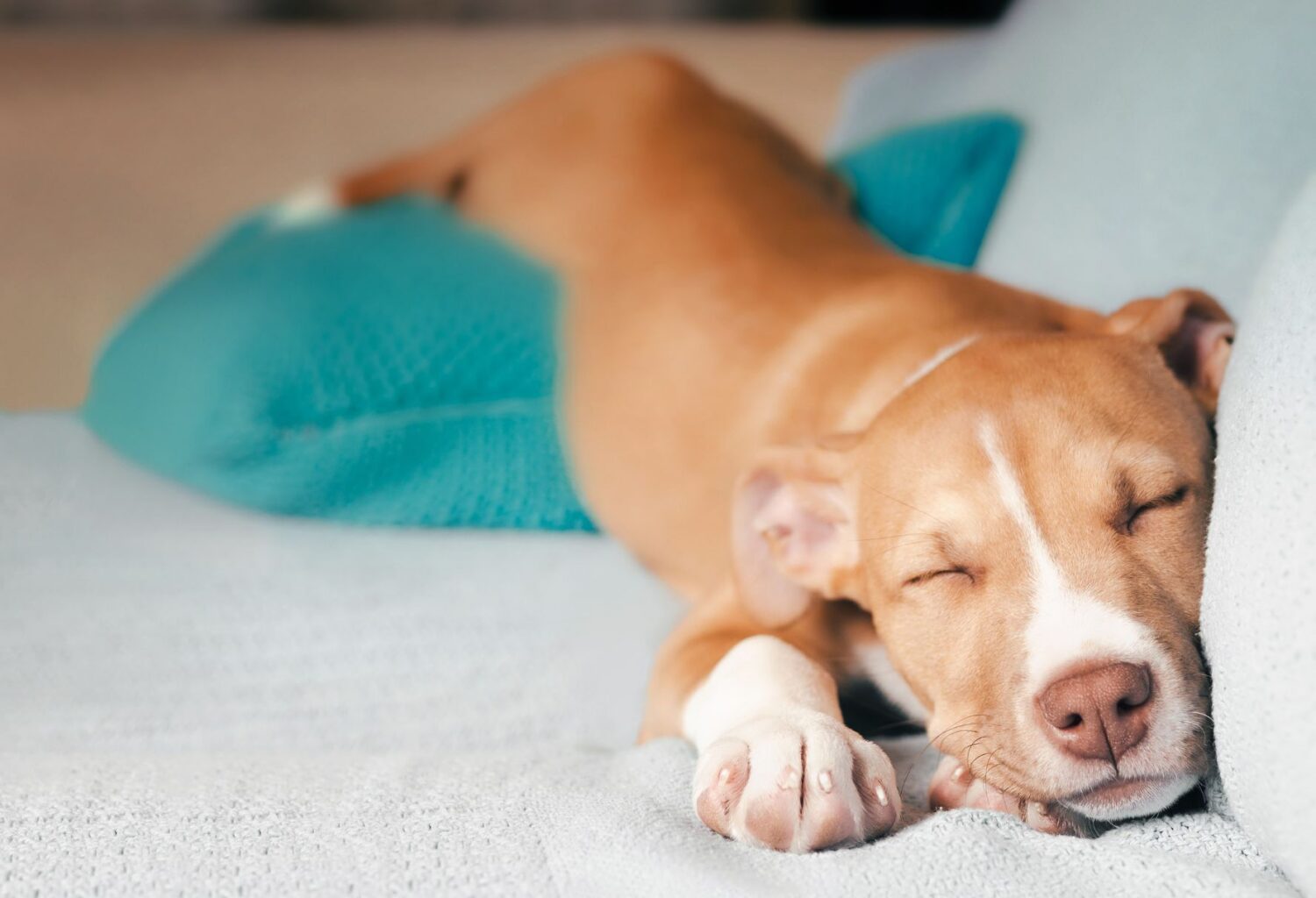
Sleep may have a bigger impact on dog behavior than many of us realize, according to a recent literature review. And that’s particularly true when it comes to those suddenly “naughty” puppies, who seem to start biting out of the blue. Here’s what you (and your clients) need to know about how sleep influences canine behavior.
Advertisement
A client brings her 13-week-old Jack Russell in for a booster and admits that she thinks something is wrong with him in the evenings. Between dinner and bedtime, her puppy turns into a menace. She bites hands and ankles furiously, steals cushions off the sofa, and growls whenever she tries to stop him. She says he’s very naughty and she’s started to wonder if this all may be a sign that he’s aggressive.
The honest answer might be simpler. That little Jack Russell might just need to sleep.
Tom Candy, BSc (Hons), MSc, CCAB, ABTC-CAB, CSBS ,CDBC, CBATI-KA, clinical animal behaviorist at Dogs Trust UK and author of a recent IAABC literature review on dogs and sleep, says the pattern is so consistent he can often guess the time of day that this type of behavior is being reported. “It’s really interesting when I used to do post-adoption phone calls or puppy phone calls,” he says. “They say, ‘Oh, they’re really getting bitey ,‘or, ‘They’re stealing things.’ But it’s not all of the time.”
He will then ask whether it happens specifically between 8 and 10 in the evening, and caregivers are usually surprised he’s guessed so precisely. “Because evolutionarily, that’s when dogs would be most active, during that kind of twilight period,” he explains.
Pet parents rarely make the connection between sleep and behavior for puppies the way they do for toddlers. “In human babies, we almost have this attachment to sleep and sleep equaling frustration, but it doesn’t seem to come across as much in puppies,” Candy notes. That lack of understanding is exactly where a veterinary team can help.
Understanding canine sleep
Understanding why sleep affects behavior starts with understanding how dogs actually sleep.
Candy’s paper explains that dogs are polyphasic sleepers, cycling through slow-wave and REM sleep many times a day rather than consolidating rest into one long overnight block. Most of a dog’s day is, in fact, spent asleep, far more than most pet parents realize, and puppies, whose busy brains are consolidating new learning, spend proportionally more of that time in REM than adult dogs do.
While popular guidance often recommends 18 to 20 hours of sleep a day for puppies and 12 to 14 for adults, the actual measured data in the literature, including in a 2020 study of puppies up to 12 months old, comes in lower, suggesting closer to 11 hours for puppies. The disagreement is itself a reminder of how little standardized measurement exists in this field and, perhaps, whether the quality of sleep has ever really been considered previously.
A 2022 survey of 1,330 people with dogs, published in Animals, found a clear relationship between sleep and behavior.
Dogs who sleep less than eight hours during normal household sleeping hours reported higher problem-behavior scores. What was interesting was that so did dogs sleeping more than 10 hours. This suggests that both too little sleep and too much disrupted sleep may carry a behavioral cost.
What mattered more than the actual duration of sleep was how easily a dog was disturbed.
Dogs who were startled awake by footsteps or passing cars scored significantly worse on problem behavior than dogs who slept through the same stimuli. Once that “ease-of-disturbance” factor was added to the statistical model, the apparent benefit of simply sleeping more during the day disappeared entirely. The quality of sleep, not the duration, does seem to be where the benefit lies, which is a finding that lines up with Candy’s clinical view.
What good sleep looks like
Candy suggests that if veterinarians are going to approach clients about their dog’s sleep, they might not want to ask for a simple hours count. “I actually think that’s quite hard for owners to actually identify because dogs rest so much anyway,” he says.
He suggests it’s more useful to ask what the dog’s sleep actually looks like. “What do they look like when they’re sleeping? Is the dog taking deep breaths? Are they relaxed? Are their eyes closed? Are they on their side versus just laying and resting, or all curled up in a ball? You could have a dog who’s laying still for 12 hours a day, but if they’re not going into REM sleep, they’re still missing a lot of the benefits.”
The tell, he says, is in the posture and the breathing. Good sleep looks like a dog lying flat and breathing deeply versus a dog whose “ears [are] twitching, eyes moving, shallower breathing, quicker breathing, where they’re sort of still paying attention to what’s going on about them.”
The type of bed they sleep on seems to be important in respect to sleep quality for dogs. Rectangular beds let a dog stretch out fully, whereas round, doughnut type, beds, as cozy as they look, often cannot. “That’s one thing owners miss the most,” he says, “that good sleep is like completely flat, completely stretched out.”
The puppy witching hour
Frantic and biting puppies causing chaos in the evening at home is a common complaint, and it is where sleep deprivation has the potential to result in poor outcomes. A puppy who is mouthing, stealing, and unable to settle is, behaviorally, doing exactly what an overtired toddler does. But because nobody says, “the puppy missed his nap,” pet parents reach for other explanations. They may scold or physically restrain the puppy, increase crate time, or simply stop taking their fractious puppy out and about with them. This can result in less socialization during a critical developmental stage.
Candy favors pens over crates for exactly this reason because he believes that giving a puppy a choice is beneficial. “What we tend to see in a pen is the puppy will sleep, they might get up, they might have a little chew on something, have a play with something, and then they’re able to go back to sleep. Versus a crate, they’re kind of just forced into doing nothing. And then when you let them out, it can be chaotic.”
The timing of exercise and stimulation can make all of the difference.
Candy’s review recommends giving puppies their walks and active play earlier in the day, then shifting into low-arousal activities, such as chews and snuffle mats, as the evening approaches. That way the puppy starts to associate that window with settling rather than escalating. He warns against trying to solve the problem with one big burst of exercise right before bed instead. “I went to the beach and threw the tennis ball for half an hour. Why aren’t they sleeping? Well, all you’ve done is just absolutely rile them back up,” he says.
During the evening, an appropriate outlet, such as a puzzle toy, gives the puppy somewhere to put that energy without it turning into mouthing or stealing. A consistent wind-down routine can make a huge difference at this tricky time before bedtime for puppies.
Where appropriate, co-sleeping rather than isolation can also help. Both studies referenced earlier point to the same pattern: when given a genuine choice, most dogs choose to sleep close to people rather than alone, true for around 87% of puppies and for about 63% of adult dogs.
The hidden cost of poor sleep
In busy multi-dog or multi-child households, adult dogs can accumulate a sleep debt nobody notices.
Candy describes the resulting arousal buildup like climbing a ladder. A stressful encounter such as a reactive episode on a walk, a startling noise, an overexcited greeting, can send a dog up several rungs almost at once. “You’d hope that throughout the day, whilst they’re sleeping, they’re coming back down a couple of rungs,” he says. “So, if we’re not getting them that sleep, we just have this constant buildup of arousal.”
A dog stuck near the top of that ladder is the one who could suddenly snap at a child for ”no reason,” or gets labeled as aggressive. That dog may end up being isolated, rehomed, or surrendered, when the underlying issue was never temperament at all.
Brachycephalic breeds illustrate this starkly. Fragmented breathing disrupts sleep, and Candy sees the behavioral fallout regularly.
Often these dogs are labeled “hyper,” “highly strung,” or described as getting into everything. Pet parents may report that the dog follows them around constantly. He says, “There definitely is an argument to say they’re not getting the quality of sleep that dogs with standard length noses can achieve.”
This is a useful way to help pet parents understand that snoring and restlessness is not just typical of the breed, but rather a treatable welfare issue.
Sleep and cognitive decline in dogs
Cognitive decline is another welfare issue that benefits from early diagnosis and care. It frequently disrupts the sleep-wake cycle long before other signs become obvious.
The impact of age on sleep needs
As dogs and cats move from puppyhood to adulthood and into their senior years, their sleep requirements (and other needs) change. Understanding what those needs are at each stage of life is important for both veterinary professionals and clients, and the AAHA Canine and Feline Life Stages Guidelines are a helpful resource.
Nighttime pacing, vocalizing, or reversed day-night patterns are all symptoms that should result in a trip to the veterinarian. But exhausted owners often respond by moving the dog to another room overnight so everyone can rest.
That solves the human problem while compounding the dog’s. An anxious, disoriented senior is now also isolated, and the very behavior that might have prompted an earlier veterinary workup gets managed away rather than investigated. A sleep history at senior wellness visits can catch this drift early.
Why the environment matters
Sleep quality deserves the same scrutiny in clinical and shelter environments. Candy has watched this play out as his own organization shifted toward longer opening hours.
“I think we know that when stuff is happening, some of the dogs struggle to sleep a lot more. If there’s people moving on the outside of the kennels, but then also members of the public moving through corridors and stuff, I do think it’s going to make it trickier for dogs.”
Even lighting choices matter more than most teams assume. Candy points out that the bright white light favored for its low cost and clean look in public-facing kennel areas is, in his words, “the worst light if you’re trying to sleep.”
The same logic applies directly to overnight veterinary hospitalization. A noisy, brightly lit ward may be undermining recovery in ways unrelated to the presenting condition.
Bringing sleep into the exam room
During a short consultation, just one or two questions can provide a clinical insight into the ways sleep may be impacting the welfare of a dog. A brief sleep history could even be taken by a member of the veterinary team before the consult.
Finding out where the dog sleeps, if that location is quiet, what the dog’s posture and breathing look like at rest, takes little time and can provide a more holistic picture of the dog’s health and behavior. Candy explains that sleep is rarely the sole cause of a behavior concern, but stresses, “you’re never going to have a negative outcome really of getting more sleep.”
For all the “naughty” puppies out there, that may be the easiest recommendation in the visit.
Photo credit: Petra Richli/iStock via Getty Images Plus
Disclaimer: Trends™ content is meant to inform, educate, and inspire by providing an array of diverse viewpoints. Any content published should not be viewed as an official stance, position, or endorsement by the American Animal Hospital Association (AAHA) or its Board of Directors.
