Culture and People
“I just happened to point a camera at it”: Dr. Nicole Fein on balancing humanity and professionalism in vet med
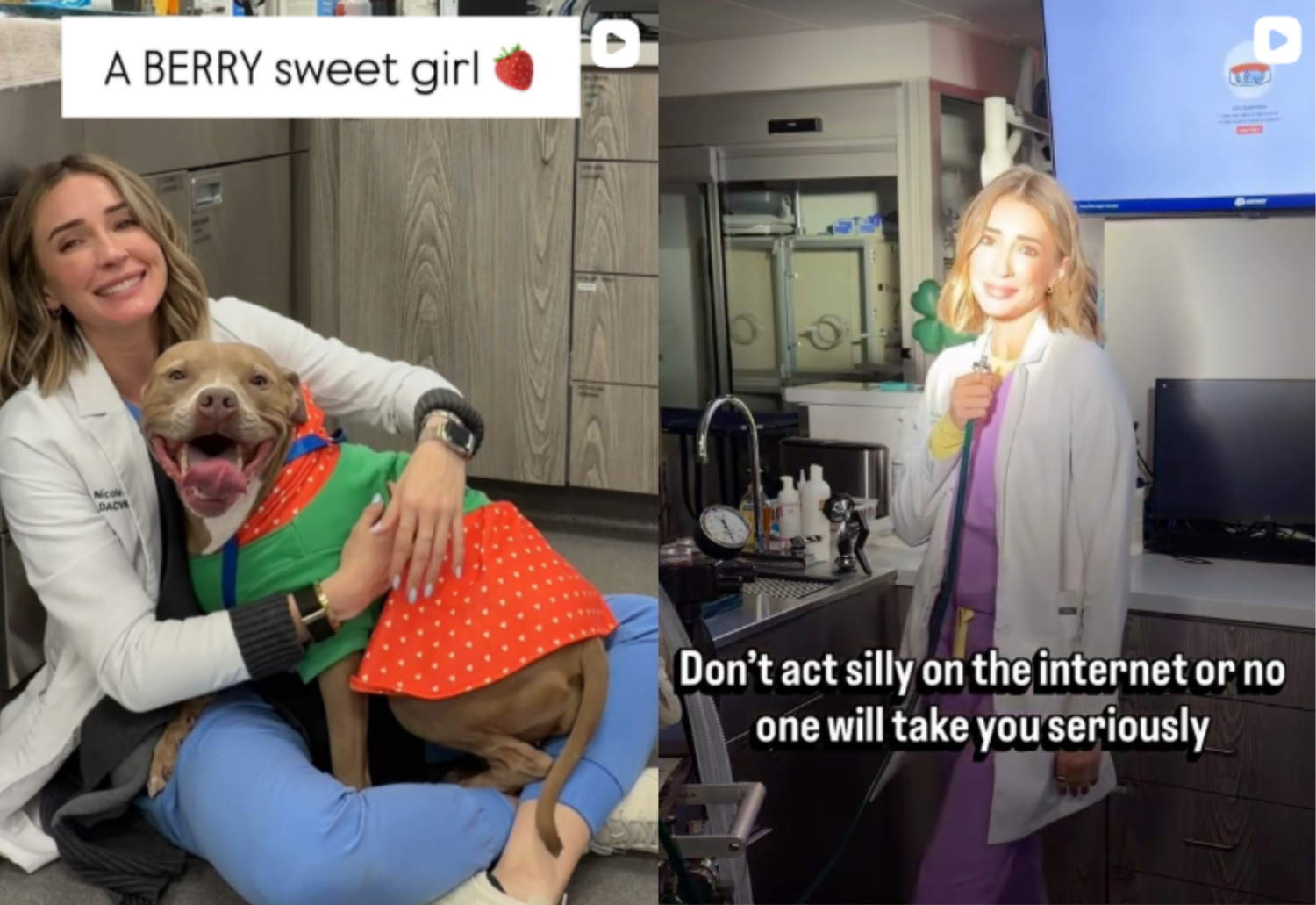
What does professionalism really mean in veterinary medicine? Nicole Fein, DVM, DACVIM, explores how nontraditional approaches can prioritize patients and build trust.
Advertisement
Who hasn’t seen a fuzzy puppy or cuddly kitten and immediately swooned? Even veterinary professionals aren’t immune to the siren call of humungous puppy eyes, kitten purrs, and the countless other traits that make pets so lovable (and darn cute!).
Nicole Fein, DVM, DACVIM, a veterinary internist and content creator, is no exception. And she’s carved out a unique space in content creation by offering followers a glimpse into the seemingly immediate attachment she forms with her patients in the exam room. Whether it’s admiring the “mouth meat” of floppy-faced pups, cradling sedated cats, or making dirty jokes about Bruce Ween the wiener dog, Fein’s videos aren’t your typical veterinary fare—while you’ll catch snippets of medical discussions in her content, the main focus is her very human reaction to being “obsessed” (in her words) with the pets that come in and out of her doors on a daily basis.
Redefining veterinary content
Fein’s self-described “over-the-top” reactions to pet patients wasn’t the original intent for her social media platforms. She had originally planned to go for a more traditional educational route for her content aimed toward veterinary students and general practice vets. But one of her own posts changed her perspective and shifted her goals.
“I didn’t really think that page would be focused towards pet parents as much,” she said. “I forget what the first one was, but someone really, really cute came in and I was like, ‘The world needs to see this creature.’ And so I was like, ‘let me just show what an exam looks like and kind of give a peek into what life behind the door looks like.’ Because owners don’t really have access to that. And that first video went mega viral immediately. It got millions of views in the first day or two.”
From there, it seemed that Fein had found her niche. Her next videos saw similar levels of success, and her page is now mostly dedicated to the human side of veterinary medicine, as well as the lighter side of the profession—namely, fawning over pet patients.
“Very quickly my audience shifted from veterinary professionals and students and people within the space to the vast majority is now pet parents and the response to that and just how overwhelmingly positive,” she said. “The comments and feedback that I’ve gotten have made me realize that that is such a sweet spot and people really appreciate it, and I think it’s kind of nice to just have wholesome happy things to look at on the Internet. These days, we get bombarded with so much darkness and the main response I get is that it’s a nice reprieve. And so I feel like if that’s a space I can fill, then I’m happy to do it.”
Levity in the veterinary workplace can play a key role in creating a calm environment for patients. Fear Free fundamentals emphasize gentle handling and positive reinforcement. So, too, do principles of low stress handling. Stress-reducing care can also help create a safer workplace environment, which is a win for everyone in the exam room. So, although Fein’s main audience is now mostly comprised of pet parents, veterinary professionals can also enjoy watching her content—and they might even relate to it.
“I think [pet parents] just really appreciate seeing how loved their animal is, and I think too, like I want to make it known that I’m not really doing something different,” she said. “I did not reinvent the wheel of how vets practice medicine. I just happened to point a camera at it.”
“Professionalism” in vet med
However, recently, one user in the profession recently took issue with Fein’s content, critiquing her approach and labeling it “unprofessional” with a video on their platform. According to the user, Fein’s approach was harmful to other women in the field.
“I just DM’d her and said something along the lines of ‘It’s a 17-minute-long video that was whittled down to 3 minutes,” Fein said. “The purpose of it is not to demonstrate a complete physical exam, it’s just to show the interaction with the patient and how cute this dog was.’ And then her response was that the way in which I was speaking made it difficult for women in the profession to maintain credibility. And then sent me screenshots of basically direct messages or people who had commented on the post that she initially posted agreeing with her saying like, ‘Oh yeah, this person’s incompetent and she’s setting women back 20 years.’”
While it would be easy to dismiss the criticism as an isolated incidence of negative feedback on Fein’s otherwise well-accepted social media platform, it nonetheless highlights a seemingly impossible standard for women in medicine to navigate: professionalism. The big question for a veterinary professional and content creator like Fein what constitutes professional conduct in a field that is both highly technical and emotionally-laden?
The “feminization” of veterinary medicine
In recent decades, the field of veterinary medicine has undergone a demographic shift. While it used to be a male dominated field, women now make up over 50% of global veterinary professionals and 80% of veterinary students. And although this shift is evident, it doesn’t always translate for increased opportunities or respect for women in the profession, as Fein notes that many norms in veterinary medicine still reward stereotypically masculine traits.
Although research notes that veterinary medicine is still viewed as a communal, nurturing, or “feminine” field, other studies shows that the field nonetheless is perceived as masculine by women in the profession. Thus, the culture of vet med encourages women to adopt “stereotypically masculine traits and attitudes” because these traits are highly valued and rewarded—not to mention the fact that men still hold the majority of leadership positions in veterinary medicine, from practice owners to veterinary school executives. Given that the field was largely shaped by male leadership, it’s easy to see why some women see the need to masculinize their presentation to appeal to traditional norms of professionalism.
“Professionalism kind of has historically been defined through a pretty male coded lens,” Fein notes. “And I think presenting yourself with a certain tone and demeanor and kind of style doesn’t leave a lot of room generally for warmth and femininity and playfulness. But I don’t think any of those traits correlate with competence.”
Fein, however, takes a different approach to defining professionalism in her line of work.
“Professionalism more centers around the quality of work that you do and less about the way in which you approach your presentation in doing it. I think being a positive influence in your work environment, being polite to co-workers, functioning with integrity and being honest about your work–those things I think speak much more to professionalism than outward appearance.”
Not to mention the fact that so-called “soft skills” like communication and people skills can make or break a client relationship. A Texas-based study that focused on a clinic’s adoption of a 15-month communication intervention program found that client satisfaction improved dramatically after the program was implemented, with more clients than ever indicating complete satisfaction after their visits. Other studies identify communication as a fundamental competency in veterinary medicine and note that failure to demonstrate empathy is a leading cause of client complaints.
For Fein, a key part of her communicative competency comes from her people skills. Although her videos are always lighthearted, she acknowledges the importance of meeting a pet parent where they are and adjusting accordingly—and these instances aren’t the ones making her socials.
“I think one of the skills that I happen to think I have is being able to very kind of quickly read the room and figure out who the pet parent needs me to be in that moment,” she said. “And certainly I’m never going to be inauthentic. But I do know that there are parents who are so worried that if I come in and I’m kind of laughing and making jokes about it, they’re gonna think I’m not taking it seriously. And there are other people who need you to fawn all over [their pet]. And I think those subtle cues can be picked up on with training in doing it.”
At the end of the day, Fein’s videos are designed to humanize the profession, which then lends trust and credibility to veterinary professionals—whether or not they match up with stereotypes of professionalism or not.
“Especially with vet med, but also human medicine and the internet right now, there’s so much distrust in Western medicine and big pharma and all of those things,” she said. “I’m not there specifically to change anyone’s mind. But hopefully I can be kind of a bridge in that now people see behind the scenes, maybe they’re more trusting, they realize that our motives are better, and they’re more open to having these conversations with their own veterinarian about what’s best for their pet and they go into it with a little less skepticism about it.”
Pointing a lens at the human side of vet med can help bridge the gap between veterinary professionals and pet parents—and Fein notes that doing so can reap important results, especially when a pet’s health is on the line.
“Hopefully if we build a little trust, then those conversations have a little more success.”
Photo credit: © @dr.nicolefein via Instagram Plus Disclaimer: Trends content is meant to inform, educate, and inspire by providing an array of diverse viewpoints. Any content published should not be viewed as an official stance, position, or endorsement by the American Animal Hospital Association (AAHA) or its Board of Directors.
