Culture and Wellbeing
Let color and art lift the mood at your practice
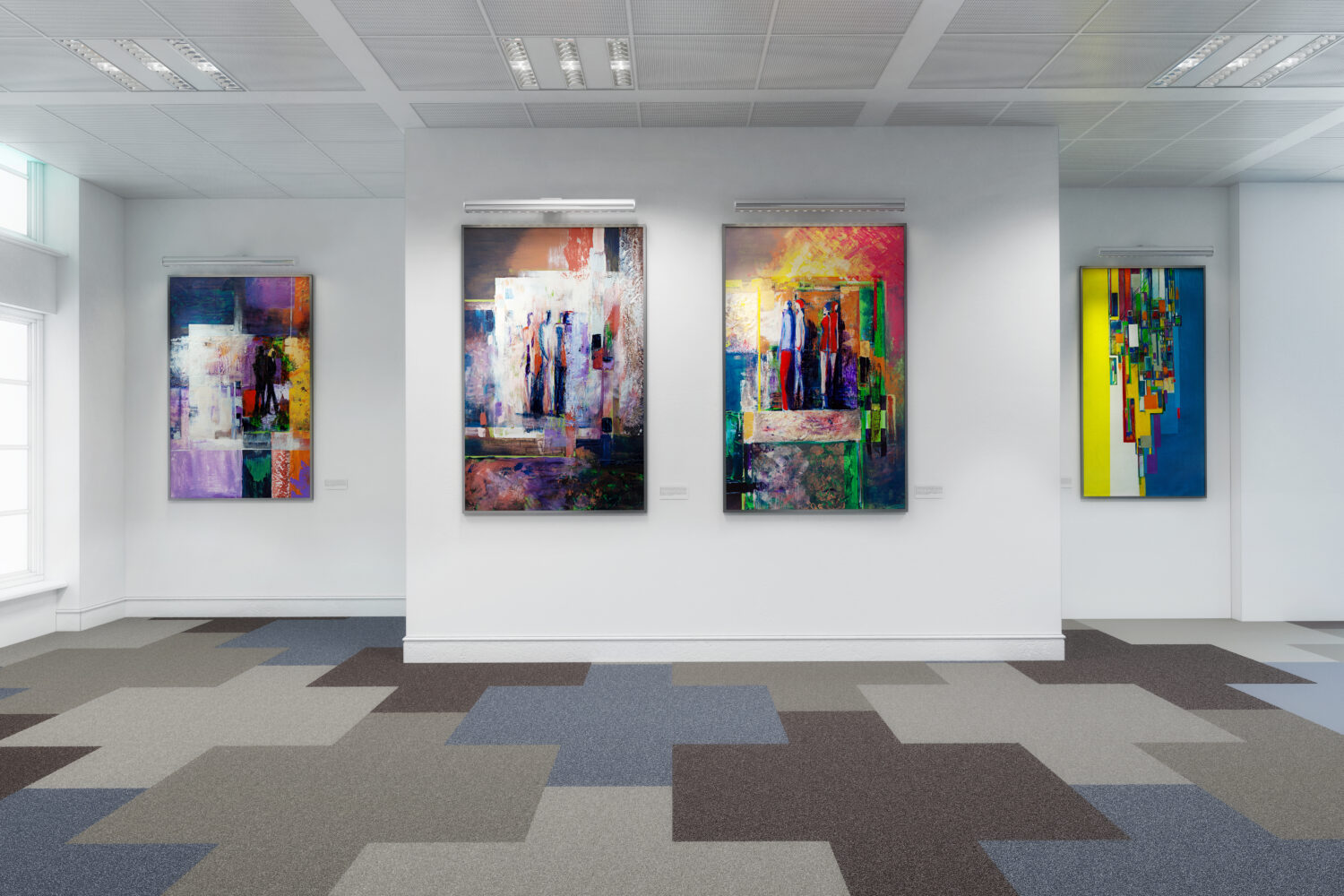
With everything on your plate, choosing art to hang on the wall in your practice might not be a priority. But, art and color can have a surprising effect on emotions and wellbeing.
Advertisement
Adding art and color to your veterinary spaces may be near the bottom of your to-do list, if it’s on the list at all. But with evidence mounting that art and color can influence people’s emotions, could it be a chance to improve wellbeing for clients and staff?
More studies are showing the benefits
In July 2018, Penn State College of Medicine reported on its study of hospitalized patients randomly assigned to one of three groups: those able to choose a painting for their room, those to whom a painting was randomly assigned, and those who only had the standard white board. Though differences in health outcomes were not significantly different, there was a positive difference in perceptions of the hospital environment among those who had artwork in the room. The hospital continues the practice to this day.
In May 2023, the University of Toronto reported on research identifying consistent associations between certain colors and lines and particular emotions. Published in the Journal of Vision, the study discovered that drawings depicting negative emotions tended to contain more lines and darker colors: red, blue, brown, black and grey. Drawings of positive emotions were less dense, had more curved or oblique lines and contained brighter colors.
Earlier this year, the University of Vienna reported on a study that found that simply looking at visual art, visiting a museum, or having art in your hospital room can enhance wellbeing, particularly with repeated engagement. The review synthesized data from 38 studies, aiming to determine not only whether viewing art improves wellbeing, but also when, under what conditions, and through which psychological processes it does so.
Researchers identified five psychological mechanisms at work involving such processes as experiencing pleasure, prompting reflection, fostering connection, allowing for identity reinforcement, and supporting emotional coping especially in clinical or high-stress environments.
Ultimately, it’s a balance of aesthetics, psychology, and purpose—designing an environment that not only looks good but also supports emotional wellbeing for patients, visitors, and staff.Beth Joyner, EDAC, LEED Green Associate
President of Healthcare Art Consulting & Quality Art House
In her work, Karen Schloss, PhD, focuses on how people associate colors with concepts. Schloss, who is associate professor in the Psychology Department and Wisconsin Institute for Discovery at the University of Wisconsin-Madison, suggested that if a person wants to design a space with colors associated with calmness for the average individual in the US, she would recommend “cool” colors, such as light shades of bluish-greens.
But don’t be surprised if an occasional person has a negative reaction. Why? Any color may spark bad memories since reactions to colors are shaped by a lifetime of experiences with them, she explained. In addition, people in veterinary hospitals can face distressing experiences, especially with prolonged or repeated visits. Those experiences in the context of a particular color may lead them to react more negatively to it in the future.
Art and color can trigger associations, both positive and negative, explained art expert Sara Beth Joyner, EDAC, LEED Green Associate. Joyner is president of Healthcare Art Consulting & Quality Art House in Dallas, Texas, which provides artistic solutions for corporate and healthcare systems and facilities.
That’s why her company often conducts focus groups with patients, staff, and volunteers, integrating their demographics and feedback on a variety of images to ensure the art and colors resonate positively.
“While developed for human healthcare, the same evidence-based design principles apply in veterinary environments,” Joyner said. “In fact, there’s potential to personalize the approach by incorporating elements animals already respond to at home—such as digital imagery or ‘pet channel’ content—at their eye level in exam rooms. Pairing this with soothing sounds, like a gentle waterfall, could create a positive distraction that calms both the animal and the owner while they wait for the staff to return, turning an often-anxious moment into a more reassuring experience for all.”
Link to the community
For those who want to incorporate local art, it can be impactful by not only enhancing the visual environment but by building a sense of connection between the facility and the community it serves. Showcasing local landscapes, landmarks, or work by regional artists can spark conversations, create a more personal and welcoming atmosphere, and even offer a marketing benefit—local news coverage.
Familiar imagery often feels more approachable than abstract works, making it easier for clients to engage in conversation and form a human connection with their care team.
“Ultimately, it’s a balance of aesthetics, psychology, and purpose—designing an environment that not only looks good but also supports emotional wellbeing for patients, visitors, and staff,” Joyner said.
Veterinary hospitals that have incorporated art and color do see positive reactions.
Wheat Ridge Animal Hospital in Wheat Ridge, Colorado, began exhibiting local art in 2011. The art counters the cold sterility of polished concrete floors, metal tables and blank walls of a veterinary hospital, said Hospital Manager Brooke J. Doran, CVT.
When the practice added two hospitals giving her at least 50 art spaces to fill, managing the local art aspect became challenging, explained Melissa Kinzer, facilities coordinator. Kinzer now finds prints of animal, landscape, and Colorado themes from online sources to supplement the local art display. But she encouraged smaller hospitals that need fewer pieces to team up with local artists, noting that “it’s definitely doable, more impactful, and more original.”
Another local art feature has been the hospital hallways which have long displayed photos of employee pets, “many of which are now memorials to those that have passed, helping connect our humanity to theirs,” said Doran.
At The Animal Care Center of Downers Grove, Illinois, Hospital Manager Brian Niezabitowski explained that when the practice was under construction in 2018, they had a designer carefully chose animal-themed pieces that felt warm, inviting, and full of personality.
“From the day they went up, they’ve brought a noticeable energy to the space,” Niezabitowski said. “Clients often pause to look at them, make a comment, or just smile as they walk by—and our staff loves them just as much. It’s amazing how something as simple as a picture can create comfort, spark conversation, and make the hospital feel a little more like home.”
Ready to color your world? Joyner offered this advice.
“Start by asking a simple but powerful question: Who are you trying to influence, and what message do you want to deliver? The answer will guide every design choice you make.”
For example, she said, if your goal is to strengthen brand recognition, art and color can subtly integrate your brand palette and style. If your priority is to create a calming space, then softer colors, nature imagery, and positive distractions may be more effective.
“Before you select any artwork, be intentional,” she said. “Ask yourself: What do I want someone to feel and remember when they leave this space? That clarity will ensure your choices not only look beautiful, but also serve a meaningful purpose.”
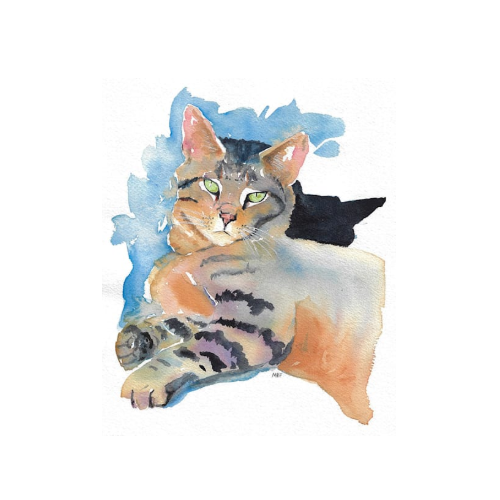
Photo credit: © Marc_Osborne via iStock/Getty Images Plus; image of watercolor “Our Wild Child” © Maureen Blaney Flietner, Inkdrop Gallery.
Disclaimer: Trends content is meant to inform, educate, and inspire by providing an array of diverse viewpoints. Any content published should not be viewed as an official stance, position, or endorsement by the American Animal Hospital Association (AAHA) or its Board of Directors.
Maureen Blaney Flietner is an award-winning writer and artist living in Wisconsin who finds that visual art lifts her spirits. The work of various artists — including her own watercolors — fill her home. Animals often become the subjects of her art and prints of some of her paintings can be found at Inkdrop Gallery.
