Client Communication
Longhorned ticks: What to know
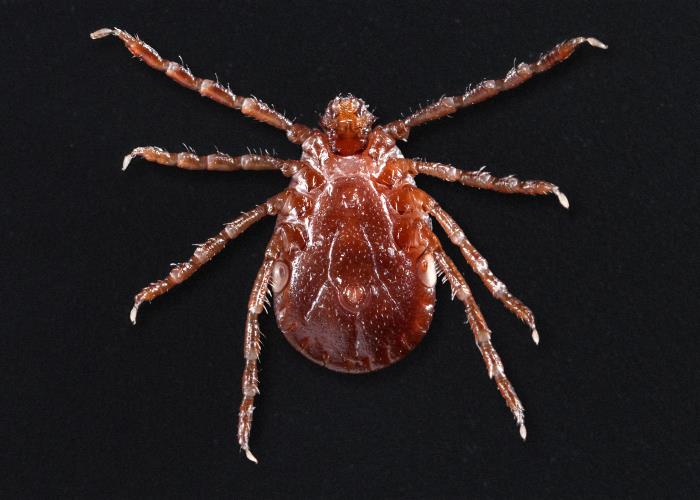
The longhorned tick has been in the news recently as a rapidly spreading invasive species. Your clients have questions, but how concerned should they really be?
Advertisement
First seen in the U.S. eight years ago, the longhorned tick, or Asian longhorned tick, (Haemaphysalis longicornis) is now present in almost half of U.S. states, from the Midwest to the East Coast.
The ticks are native to east Asia but were first detected on sheep in Hunterdon County, New Jersey in 2017. The ticks soon spread to other parts of the eastern United States as far north as Schenectady County, New York, and south to Pender County, North Carolina.
Over the intervening years, the tick has spread west into Missouri, Arkansas, and even Oklahoma, according to the U.S. Department of Agriculture’s Animal and Plant Health Inspection Service (APHIS). The latest state to be affected is Michigan, local news sources there say.
Attack of the clones
One of the concerning things about the longhorned tick is that it can reproduce parthenogenetically, meaning an individual female can lay eggs without mating, “essentially cloning herself to create the next generation,” according to APHIS. Males are apparently extremely rare.
A single female can lay up to 2,000 eggs, according to the Cornell University College of Agriculture and Life Sciences. This means that one individual can create an entire population in any given area. While the number of eggs is not that outlandish compared with other tick species, the fact that no males or mating are required means that populations could potentially explode if conditions are right.
The tick will feed on wildlife; domestic animals such as horses, cows and sheep; pets; and if available, humans.

Disease vectors, but not for Lyme
These ticks have been known to attach to cows in large numbers, and in addition to causing problems for their hosts due to extreme blood loss, the ticks can transmit bovine theileriosis to cattle and babesiosis to several domestic animal species, APHIS says. But the most worrisome tick-borne diseases (for dogs and people) do not seem to be a factor.
According to APHIS data, in laboratory settings the ticks were not found to be competent vectors for Borrelia burgdorferi (Lyme disease), Anaplasma phagocytophilum (human granulocytic anaplasmosis), or Franciscella tularemia (tularemia). However, they were found (again, in the laboratory setting) to be capable of transmitting Rickettsia rickettsi (Rocky Mountain Spotted Fever), Heartland virus (HRTV), Powassan virus (POWV), and Theileria orientalis Ikeda strain (cattle theileriosis).
While the tick is still being studied, and the population and range is growing, the U.S. Centers for Disease Control and Prevention (CDC) maintains that H. longicornis “is unlikely to contribute more than minimally, if at all, to transmission of Lyme disease spirochetes in the United States.”
Sam Telford III, Sc.D., is professor in the Department of Infectious Disease and Global Health at Tufts University Cummings School of Veterinary Medicine. He said that clients should be no more worried about this tick than any other.
“Pet owners should be concerned about any kind of tick (or flea or mite),” Telford said. “Preventives should be used during the seasons when these arthropods are expected to be common.”
When it comes to whether the tick is a danger to people, Telford said the threat to humans is low.
“Yes, the Asian longhorned tick likes to attach to dogs, and many dozens or even hundreds can attach at one time (they hang out in clusters),” Telford said. “I think the main point, once again, is to use preventives as directed by a veterinarian or by the label on the product. These ticks do not commonly bite people, or at least are not as aggressive a human-biter as the deer tick, lone star tick, or even the dog tick.”
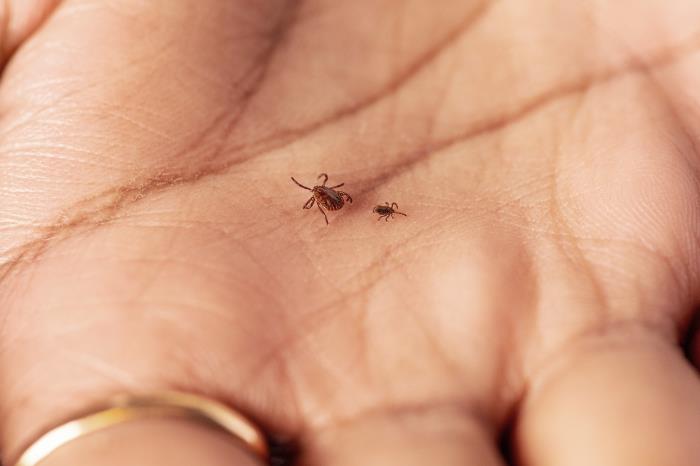
Vigilance and prevention
The longhorned tick is light brown in color and very small, about the size of a sesame seed. However, when fully engorged with blood adult females grow to the size of a pea.
Preventive measures are essentially the same as for any other tick, and veterinarians can advise clients to place any ticks they think might be the longhorned tick into a Ziplock bag and bring it to their vet’s office.
If a client brings in a tick that you think should be tested, you can send it to a diagnostic lab such as the Connecticut Veterinary Medical Diagnostic Laboratory for analysis.
While the presence of the longhorned tick is worrying due to its rapid spread across the country and its threat to farm animals (mostly bovines), your clients should not panic. As long as they are using normal tick preventive medications and measures, the longhorned tick does not seem to pose a more significant threat to pets than other tick species.
Telford re-iterated that the risk of vector-borne disease from these ticks is negligible.
“There is no evidence that Asian longhorned ticks transmit any infection to people or dogs here in the U.S.” he said. “It is a pest.”
But, with its unique ability to spawn parthenogenetically, one thing is for sure: this pest is not going away anytime soon.
Photo credits: James Gathany, CDC/Division of Vector-Borne Diseases; Lauren Bishop, CDC/Division of Vector-Borne Diseases Rickettsial Zoonoses Branch
Disclaimer: Trends content is meant to inform, educate, and inspire by providing an array of diverse viewpoints. Any content published should not be viewed as an official stance, position, or endorsement by the American Animal Hospital Association (AAHA) or its Board of Directors.
