Clinical
My feline medicine notes from VMX 2025
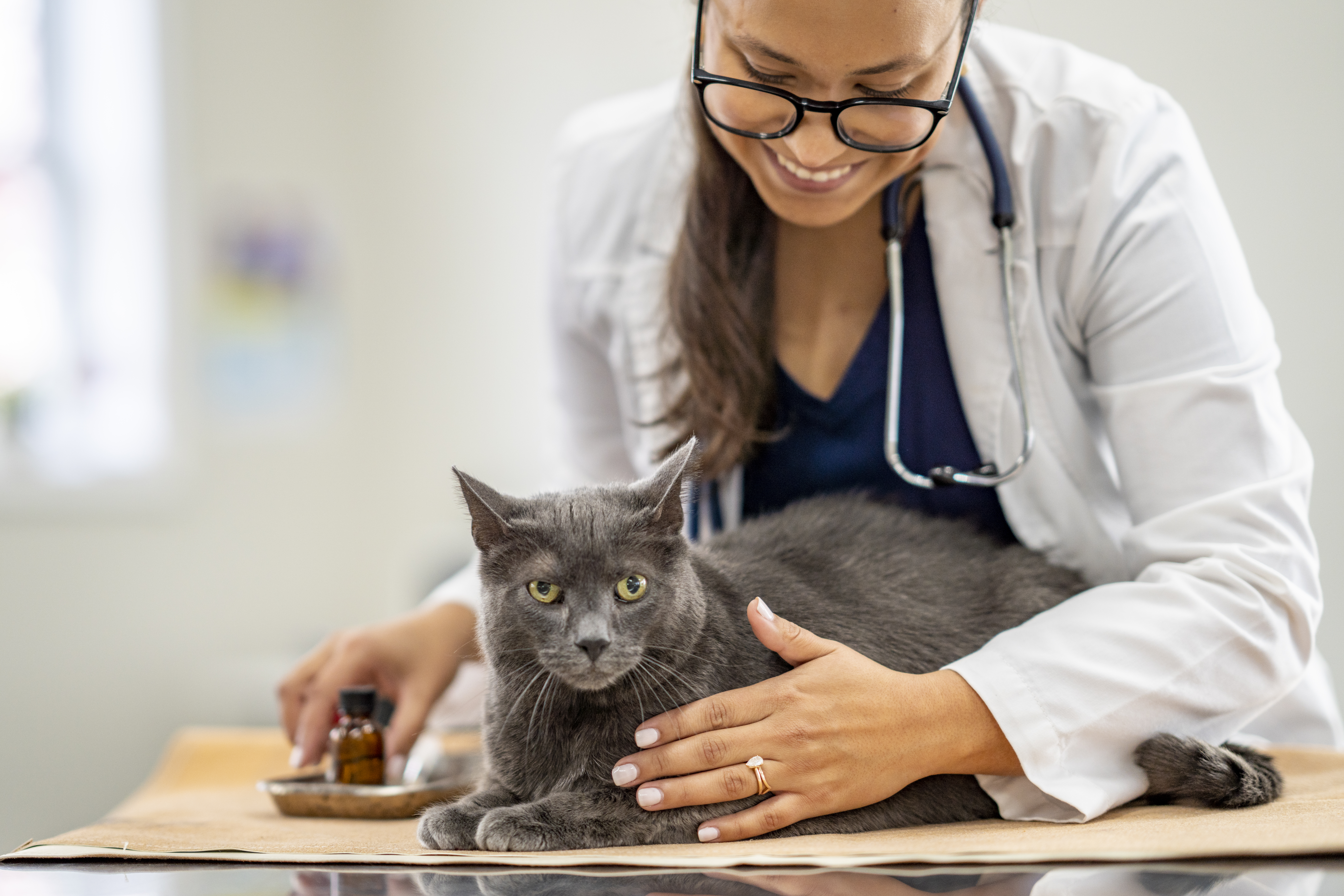
Looking for some feline medicine treatment pearls? Here’s what some of the experts who spoke at the Veterinary Meeting and Expo (VMX) conference in January 2025 had to say about ways to treat common feline diseases and keep your feline patients as healthy as possible.
Advertisement
At this years’ Veterinary Meeting and Expo (VMX), I tried to attend lectures on a variety of different subjects. I always try to work in some feline-specific lectures so that I can learn the latest from the experts. Here are some nuggets that I gleaned from my notes taken during three different lectures focused on the unique diseases and needs of cats.
Additional treatment option for hyperthyroidism
In a lecture on the treatment of feline hyperthyroidism, Susan Little, DVM, DABVP (Feline), reviewed the available treatment options (surgery, radioactive I 131 treatment, medication, and diet), including pros and cons, for this disease. As part of this, she discussed a new formulation of methimazole, Felanorm oral solution (Norbrook), which was approved in July 2024 by the FDA.
The drug website states that oral formulations may be more bioavailable than compounded transdermal formulations that can be absorbed inconsistently. Little explained that a liquid formulation allows veterinarians and cat owners to titrate a cat’s methimazole dose more precisely than a tablet form will, which can result in more consistent management of their hyperthyroidism.
This honey flavored formulation comes in a 5mg/mL concentration in both 30 mL and 100 mL bottles with a 1 mL dosing syringe. It’s meant to be dosed in 2.5 mg increments, not to exceed 20 mg per day divided into two doses. According to the drug’s website, “People administering Felanorm should wear protective single use, impermeable (e.g., latex or nitrile) gloves when administering the solution and should wash their hands with soap and water after administration to avoid exposure to the drug.”
Conditionally approved treatment for CKD-associated anemia
A lecture on weight loss in cats with chronic kidney disease (CKD) by Audrey Cook, BVM&S, Dip ACVIM, reviewed important topics such as nutrition and medication to treat conditions associated with CKD such as hyperphosphatemia, inappetence, and anemia.
Cook explained that exogenous human erythropoietin administration is no longer recommended as a treatment option for anemia secondary to CKD due to a risk of life-threatening complications in about 30% of treated cats. Instead, she recommended considering Varenzin-CA1 (molidustat oral suspension, Elanco), a drug that is conditionally approved for use in cats for the treatment of non-regenerative anemia in cats with chronic kidney disease. Cook explained that this drug stimulates a cat’s body to create its own erythropoietin.
According to the drug website, Varenzin-CA1 is dosed at 5 mg/kg by mouth once daily for up to 28 consecutive days. After a 7-day pause, the treatment course can be repeated for up to another 28 consecutive days. The drug can be given with or without food.
One major caution all Cook urges all veterinary professionals should keep in mind: as a conditionally approved drug, Varenzin-CA1 cannot be used in any extra-label fashion. This means that it cannot be prescribed or administered to dogs, and it can only be used in cats for anemia associated with CKD. Choosing to use this drug in an extra-label fashion could expose veterinarians to action against their license, Cook added.
Updated heartworm guidelines
Lindsay Starkey, DVM, PhD, DACVIM (Parasitology), reported in her lecture on feline parasitology that the American Heartworm Society (AHS) has updated their recommendations for cats. The 2024 American Heartworm Society Feline Guidelines for the Prevention, Diagnosis, and Management of Heartworm (Dirofilaria immitis) Infection in Cats now recommend annual heartworm screening for all cats. According to the guidelines, this screening should involve testing for both heartworm antigen (HW Ag) and heartworm antibodies (HW Ab).
According to the AHS, cats are at risk for heartworm infection anywhere that dogs are, which now includes all 50 U.S. states. Changes in climate, movement of animals, and the creation of “heat islands” in urban areas have all increased the risks of heartworm transmission during colder months during which the risks were previously much lower. For these reasons, AHS recommends that all cats, even indoor cats, be on year-round heartworm prevention as well.
While the AHS clarifies that it is not necessary to perform heartworm testing in cats prior to initiating heartworm prevention (as is often the recommendation in dogs), heartworm testing in cats is still “highly recommended” in general. Also, unlike the case in dogs, a heartworm antigen test alone is not always sufficient to make a diagnosis of heartworm disease in cats. Therefore, AHS recommends performing a heat-treated HW Ag test and a HW Ab test. When both tests are performed, the results should be recorded as positive, no antigen detected (NAgD), or no antibody detected (NAbD).
Apart from surgery in cases where adult worms are identified, treatment options for heartworm disease in cats include the use of prednisolone, doxycycline, and other supportive therapy such as oxygen, bronchodilators, and fluids. Melarsomine should not be administered to cats, the guidelines clarify, due to a low threshold for toxicity.
Photo credit: FatCamera/iStock via Getty Images
Disclaimer: Trends™ content is meant to inform, educate, and inspire by providing an array of diverse viewpoints. Any content published should not be viewed as an official stance, position, or endorsement by the American Animal Hospital Association (AAHA) or its Board of Directors.
