Practice Management
OPINION: The reluctance of new vet school graduates to perform surgery is not what you think
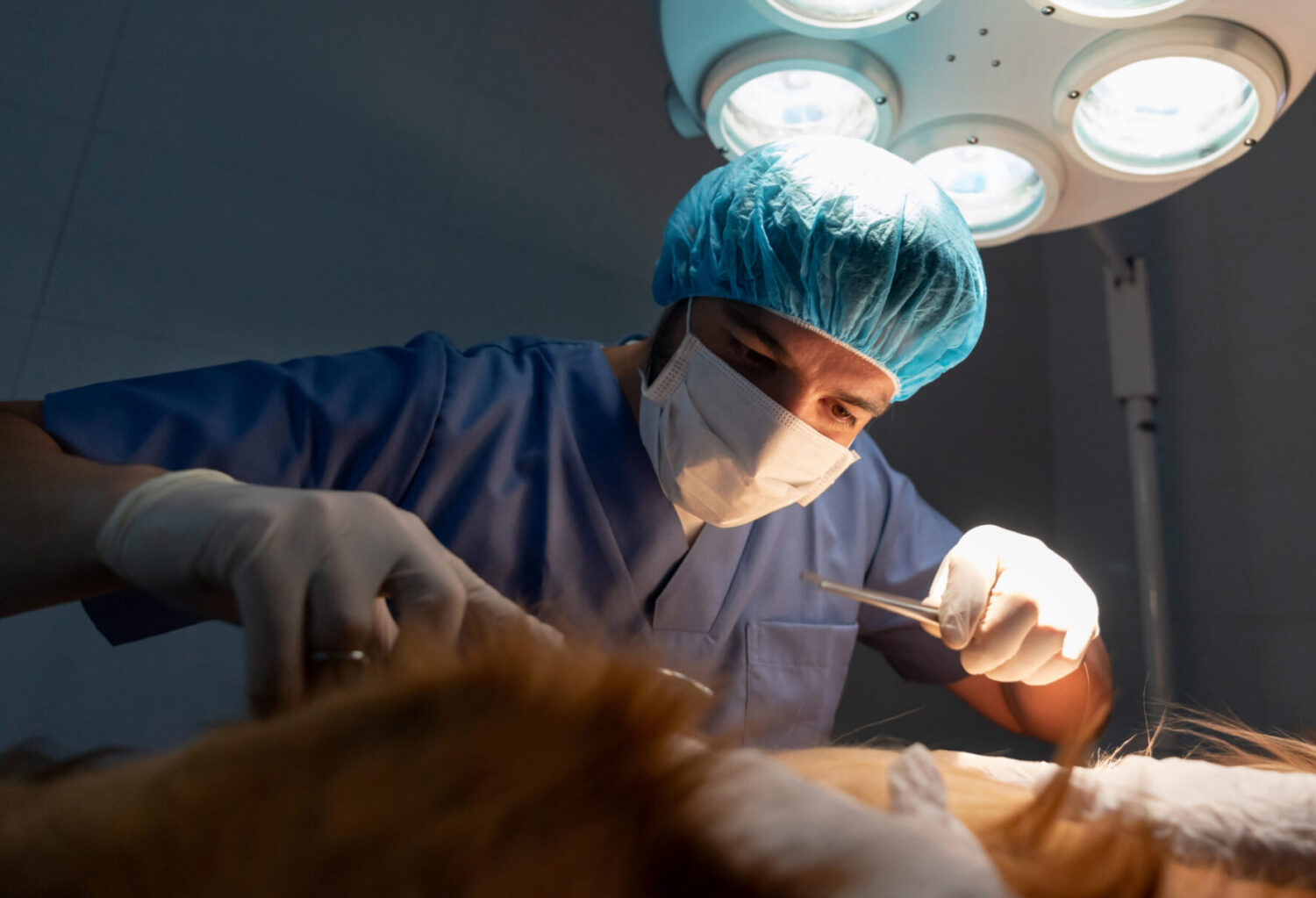
Why are new vet school graduates reluctant to perform surgeries? Current vet school student Jeremiah Pouncy explains.
Advertisement
“I don’t think I could do that.”
“I’m just not prepared enough to do surgery.”
I hear these words constantly from classmates who are smart, hardworking, genuinely excellent students.
And then from practice owners, I hear the flip side just as often: Why aren’t new grads eager to do surgery? Why can’t I find someone who wants to get in there like I did?
Both sides are frustrated. Both sides feel misunderstood.
Yet, here’s what nobody’s saying out loud… This problem was baked heavily into the curriculum years before any of us even got into veterinary school.
We’ve learned a lot of advanced surgical procedures in lecture, but our surgery handling skill and opportunity to practice those learned techniques are very limited.Neena Lynton
3rd year veterinary student
What vet school actually looks like (from inside it today)
Most pre-clinical vet students spend 6-9 hours a day in a lecture hall, eight months out of the year, for three straight years. Passive learning. Absorption. Some schools, mine at Cornell included, have shifted more toward a more case-based & problem-based learning. Now, this truly is real progress and a few other veterinary schools are doing the same too! But that’s not every class, and it’s not every school.
Standing in an OR with a scalpel in your hand is not only a physical, but also an emotional, experience that no slide deck could ever even imagine getting you ready for. You need REAL reps. You need to make small mistakes in low-stakes environments, get feedback, and do it again. However, I can tell you as a current 3rd year veterinary student, that we don’t get that before rotations. So, when someone hands you a blade for what might as well be the first time, every alarm in your body goes off: I’ve never actually done this. What if I hurt this patient? What if the unthinkable happens?
And yes, that’s a rational response to not having done it before.
Neena Lynton, a third-year veterinary student at Iowa State, said it as plainly as I’ve heard anyone say it:
“I don’t feel prepared to perform surgery after graduation without a mentor by my side,” Lynton said. “We’ve learned a lot of advanced surgical procedures in lecture, but our surgery handling skill and opportunity to practice those learned techniques are very limited. My confidence is linked to the opportunity to practice, before being asked to do it alone and to completion.”
That’s an honest account of what the curriculum has actually delivered, and within this lies a gap.
However, here’s the proof that it doesn’t have to be this way. JC Alvarado Colon, another third year veterinary student, told me his school started surgical labs as part of the curriculum as early as first year—and he feels genuinely confident going into soft tissue surgery as a result.
“The key is exposure,” he said. “I am grateful to have worked as a veterinary assistant before vet school and found opportunities to do surgery during 1st and 2nd years… Our knowledge will help us, experience will take that knowledge even further.”
One surgery in four years gives you one data point, and you don't build a skill set on a single data point.
One surgery. One year. That’s the standard.
Most vet students share basically the same surgical experience going into clinics: third-year surgery. How it works now is that we get lectures and practice on models during our third year, and then we get a chance to do a cat spay. Most schools have it so that us students are broken into teams of three and we each have a chance at being the Primary Surgeon, Assistant, or the Anesthetist.
This is the highlight of third year for many of us. It really is a phenomenal experience and I mean that genuinely. However, with that being said, one surgery in four years gives you one data point, and you don’t build a skill set on a single data point.
When we get to fourth year and begin our clinical rotations, then specific rotations might offer more hands-on time… or they might not. A lot of clinical exposure is still standing and watching; essentially shadowing and doing mundane tasks.
The broader point still holds: there’s no consistent floor for how much surgical experience a student actually gets before they graduate. Some students reach graduation having touched a blade once. That’s a curriculum design problem, full stop.
Lynton put her finger on a specific gap that comes up more than people realize:
“I think the biggest flaw is that we don’t have the opportunity to perform a dog spay during our junior surgery class,” she said. “How else are we supposed to learn to be efficient and taught gold standard care, unless we are able to learn while we are still students?”
Dogs make up a huge share of the caseload in general practice. So, graduating without ever operating on one is a real gap that shows up immediately on the job.
New grads feel it too. Margaret Whittington, DVM, put it plainly. She said her veterinary education did not prepare her well for surgery post-graduation. Specifically, she wished her training had covered anesthetic complications—how to recognize and mitigate them—drug combinations, and TIVA. These aren’t fringe skills. These are the situations that decide outcomes.
More surgical experience in school. More of a consistent standard. That’s what this comes down to.
The externship option isn’t available to everyone
Students who want more can pursue externships, shadow a surgeon, and get actual hands-on experience off-campus.
That works if you’re comfortable cold-calling practices, connected enough to find the opportunities, and financially stable enough to travel somewhere unpaid for a few weeks. A lot of students aren’t all three of those things at once though.
I’ll be real; I’m an extrovert. Building relationships and making connections is my thing, however a lot of veterinary professionals are introverted. So, this works against out of our favor.
There are programs like FARVets (Feral, Abandoned, & Rescued), through Cornell, and it was a genuinely transformative experience for us students as we were able to be primary surgeons on cat & dog spays & neuters. But not every school has a FAR Vets equivalent, and not every student has a travel budget. Additionally, HBCUs, like Tuskegee and the upcoming new veterinary school University of Maryland at Eastern Shore, are chronically underfunded relative to peer institutions, and that shows up directly in what students can access.
Getting surgical experience outside of school requires the right network, the right finances, and the right geography. Most students don’t control all three of those at once. That’s the actual barrier and it keeps re-selecting for students who already had more going in.
What practices actually need (and why it lines up)
The needs of a veterinary practice are as real as the concerns on the student-end of things.
Dentals are a significant revenue driver for most small animal practices. Surgical capability is production. Practice owners who want new grads who can operate aren’t asking for something unreasonable. The practice owners who I’ve interviewed are simply trying to build a team that functions, and they’re trying to give new grads a faster path to better compensation. A new grad who can do more procedures will earn more. That’s not a difficult equation.
For practice owners who want to slow down, step back, or shift their role, a new grad who’s comfortable in the OR is even a possible succession plan. The desire is there on both sides, but what’s missing is the bridge.
What would actually help
Surgery bootcamps at the practice level. Cy-Fair Animal Hospital does this for their new hires, and it works. Structured mentorship—not a full internship, which many students genuinely can’t afford financially or otherwise—but a real, hands-on ramp before anyone’s expected to produce.
Schools looking honestly at their surgical training. One experience is a box checked, however, access to externships should be a solved problem across institutions, not something that depends on who you know or what your school has. And as Whittington pointed out, shelter and GP settings are underused training grounds. High-volume, real-world, and far more accessible than a referral center. Schools should be leaning into those partnerships.
Teaching students that not knowing everything is fine. You will walk into your first job not feeling fully ready. That’s normal. You will rely on your team, grow into the role, figure it out.
The hesitation coming from new grads is a reasonable response from people who didn’t get enough reps. Help us students by providing a supportive environment with more reps. It’s all a matter of building the bridge, because the willingness from both sides is already there.
Jeremiah Pouncy is a DVM student at Cornell University College of Veterinary Medicine, Class of 2027.
Photo credit: © andresr via Getty Images Plus
Disclaimer: Trends content is meant to inform, educate, and inspire by providing an array of diverse viewpoints. Any content published should not be viewed as an official stance, position, or endorsement by the American Animal Hospital Association (AAHA) or its Board of Directors.
