Clinical
Study reveals shared biology with plants may be key to new toxoplasmosis treatments
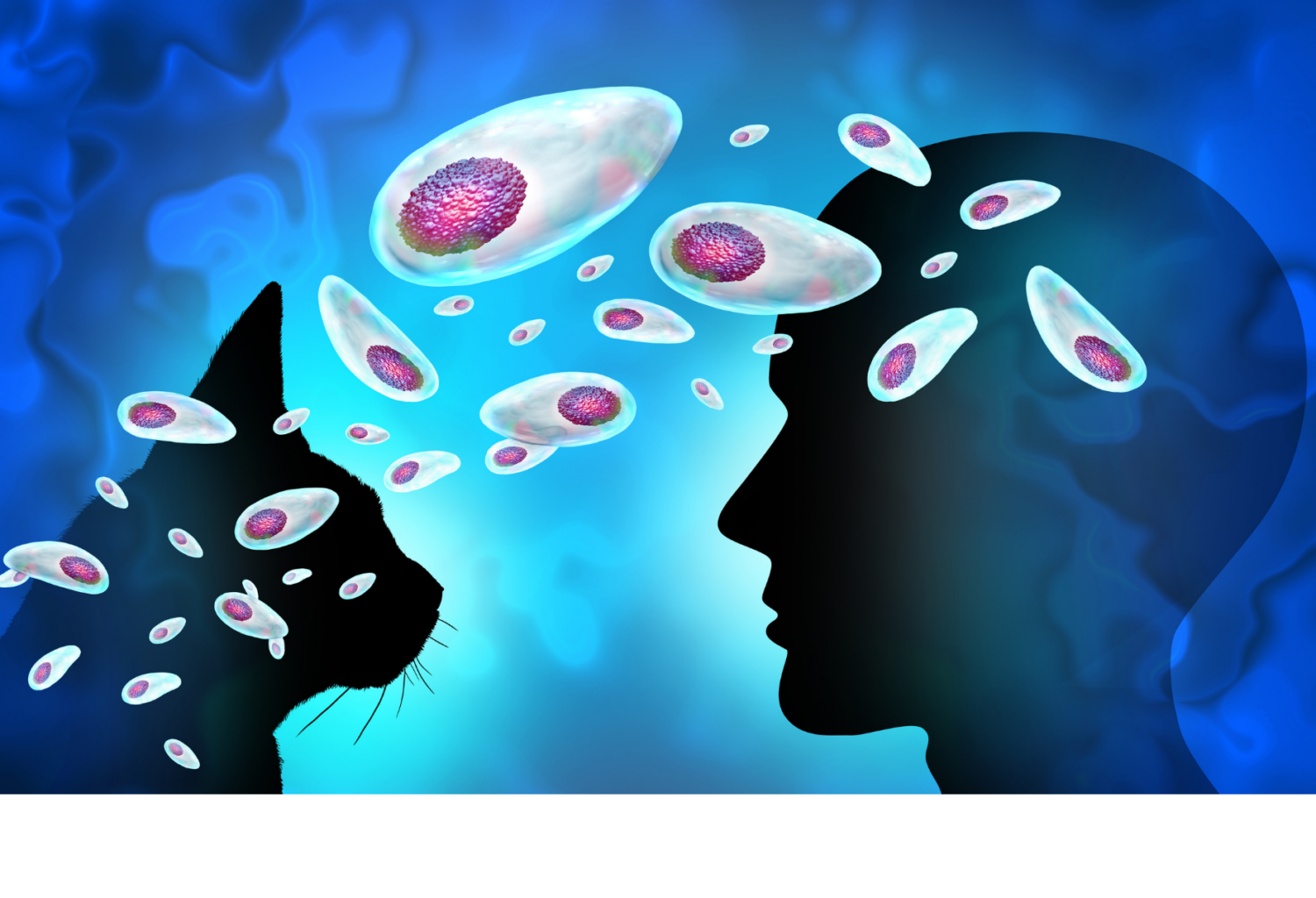
Researchers are exploiting Toxoplasma gondii‘s shared biology with plants to discover new treatment options for chronic toxoplasmosis in humans and animals.
Advertisement
A new research study looking at the role proteins play in the virulence of protozoan parasites shows how some pathogens’ shared biology with plants may be key to developing new targeted therapies.
Raj Gaji, BVSc, MVSc, PhD, Assistant Professor of parasitology at the Virginia Maryland College of Veterinary Medicine, has been studying different apicomplexan protozoa, a phylum spore-producing parasites such as Toxoplasma gondii, Neospora spp., Cryptosporidium spp., Sarcocystis spp., and Plasmodium spp. for years. His research has focused on ways to exploit these organisms’ unique biology to create new targeted treatment options.
Apicomplexan protozoa are “closely related to plants,” he said, referring to the presence of an organelle called an apicoplast, which is a remnant of the chloroplast in plants. “It is not involved in photosynthesis,” he explained, “but it is essential for lipid biosynthesis in the parasite.”
Gaji said that apicomplexan protozoa require certain proteins, including kinases and transcription factors, to complete their life cycles. “These proteins are quite unique to the parasite and plants, but they’re not present in humans or animals,” he said. “That allows us to target those proteins.”
About toxoplasmosis
Toxoplasmosis represents a significant health risk to both humans and animal species. While the parasite may not ever cause clinical disease in otherwise healthy patients, it can prove deadly when any conditions that cause immunosuppression exist.
In humans, these conditions can include HIV infection, taking immunosuppressive drugs including chemotherapy, and the risk of adverse pregnancy outcomes with infection during pregnancy. Immunosuppressed cats, including those infected with feline leukemia virus or feline immunodeficiency virus, can be at increased risk for developing clinical disease following Toxoplasma infection as well.
According to Gaji, it is estimated that about one third of the global human population is infected with toxoplasmosis, many without knowing it. Once a person or animal is acutely infected, the parasite travels via the bloodstream to the brain and muscles, where they encyst and remain throughout the life of the infected host, likely without causing any clinical disease in healthy individuals.
In cases where immunosuppression is present, however, the parasite can reactivate in the brain and divide uncontrollably, leading to clinical disease that can be fatal.
Treatment options exist for individuals in the acute infection stage (before the organism has encysted in the brain). But there are currently no known treatment options for chronic Toxoplasma infection.
2025 AAHA One Health guidelines: Navigating Cross-Disciplinary Partnerships
The 2025 AAHA One Health Guidelines: Navigating cross-disciplinary partnerships provide expert insights and detailed roadmaps to help veterinary professionals work seamlessly with other healthcare professionals within a One Health System. Read up on common scenarios, case studies, and more.
The study
Gaji said the goal of this research study was to identify and characterize some of the proteins that are required for division and replication of Toxoplasma, two necessary steps for the development of clinical disease.
His lab has focused on a specific family of proteins called tyrosine kinase-like (TKL) kinases that are unique to apicomplexan protozoa and essential for these parasites to infect and replicate inside their host.
In previous studies, he determined that deleting one of these kinases, TgTKL1, interfered with the virulence of Toxoplasma organisms. “Our hypothesis is that TgTKL1 phosphorylates transcription factors in the parasite and these transcription factors then bring about expression of virulence genes in the parasite,” he explained.
In this new study, the Gaji’s team began by deleting one of these transcription factors, TgAP2X-7, to study its contribution to parasite growth and development. In their experiment, they noted that loss of this transcription factor led to parasite death.
The research team was also able to identify a specific virulence gene in the organism that no longer is expressed when TgAP2X-7 is deleted.
Using mice as the animal model for human infection, Gaji was then able to show that whereas mice inoculated with the wild-type parasite typically succumbed to infection within 10 days, mice inoculated with the parasite without TgAP2X-7 showed no signs of disease. “Even if you inject thousands of those parasites, the animal is still fine, suggesting that the parasite completely loses its virulence in the animal model,” he said.
Future research
Because TgAP2X-7 is both essential for parasite division and only found in plants and protozoa, it is an attractive target for future anti-Toxoplasma drugs that could be developed to kill the parasite without having any effects on animal cells.
Gaji identified several areas of future research that will be needed before a potential drug can be identified and tested. This includes determining if other transcription factors are similarly affected by the deletion of TKL kinases.
His team also wants to have a better understanding of the structural biology of TgAP2X-7 and which amino acids are responsible for its interaction with virulence genes. “That will be very important because when we design down the line, we could specifically target those amino acids within this protein that could be important for binding to the promoters in the parasite genes,” he explained.
“Another thing that we need to also study is how significant this particular transcription factor is during the chronic form of the disease,” he added, as this is the form of the disease for which new treatment options are currently lacking.
Gaji also sees opportunities to study similar interactions in other members of the apicomplexan phylum, which also include Eimeria spp. and Cystoisospora spp., causes of coccidiosis in animals and humans.
“We don’t have molecular genetic tools to study the cell biology of those parasites,” he said. “But these proteins are conserved across the apicomplexan phylum, so they could be targeted as well.”
Further reading:
CDC information about Toxoplasmosis
Photo credit: wildpixel/iStockGetty Images Plus
Disclaimer: Trends™ content is meant to inform, educate, and inspire by providing an array of diverse viewpoints. Any content published should not be viewed as an official stance, position, or endorsement by the American Animal Hospital Association (AAHA) or its Board of Directors.
