Partner Content
The strategic role of credit card surcharging for veterinary practices
The veterinary industry is navigating a complex economic landscape defined by rising operational costs and shifting consumer behaviors.
Sponsored Content by Scratch Financial
As practices face increasing pressure to maintain profitability without compromising the high standard of care their patients deserve, many are turning to innovative financial strategies. One such strategy gaining significant traction is credit card surcharging—a method of passing processing fees directly to the clients who choose to use credit cards.
The Economic Drivers of Surcharge Adoption for Veterinarians
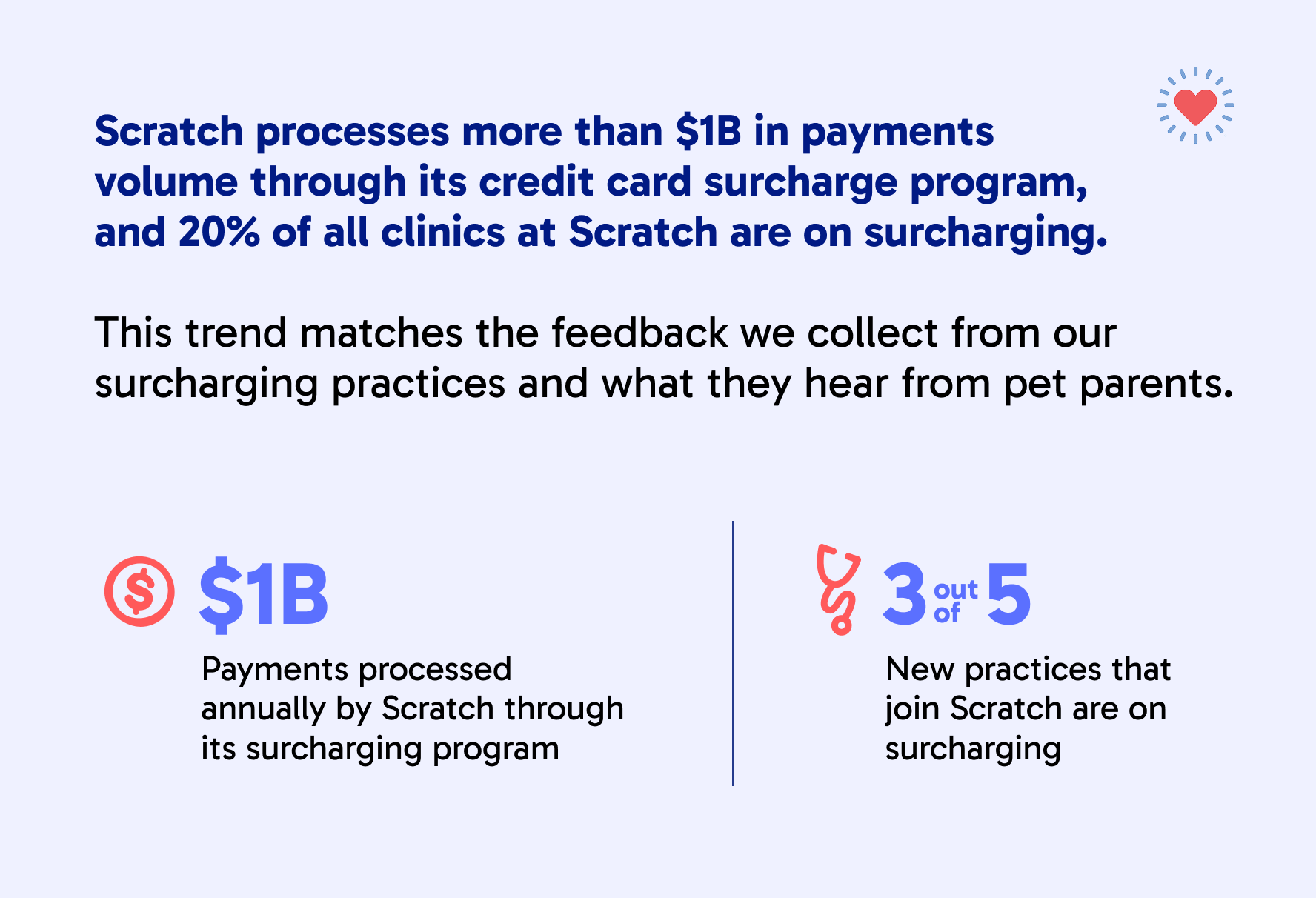
Recent data indicates a dramatic acceleration in surcharge adoption within veterinary hospitals. In 2025, 55% of new practices joining the Scratch platform opted for surcharging, a sharp increase from just 15% in 2024. This shift is largely driven by the rising cost of “swipe” fees. Estimates suggest that 92% of all U.S. credit card purchase volume is now conducted on rewards cards, which often carry higher interchange fees—sometimes reaching 3% of the purchase price. These fees, set by card networks and funneled to issuing banks, directly cut into a practice’s profit margins.
By implementing a surcharge, typically around 3%, practices can recoup the exact expenses incurred in processing credit transactions. For a clinic processing $2,000,000 annually, switching to a payment processor with a surcharging option can save approximately $30,000 in annual fees.*

Impact of Surcharging on Patient Visits and Veterinary Practice Revenue
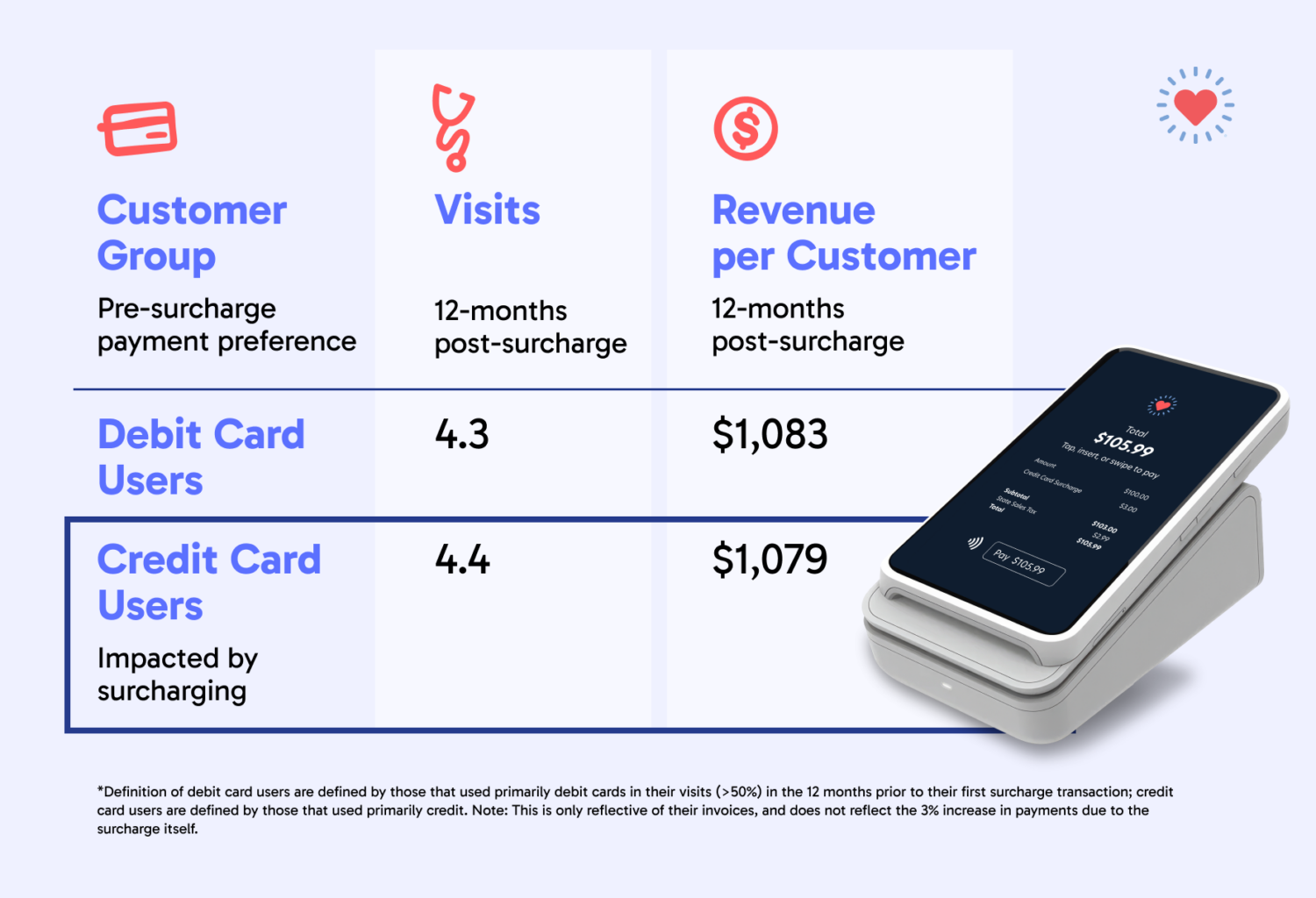
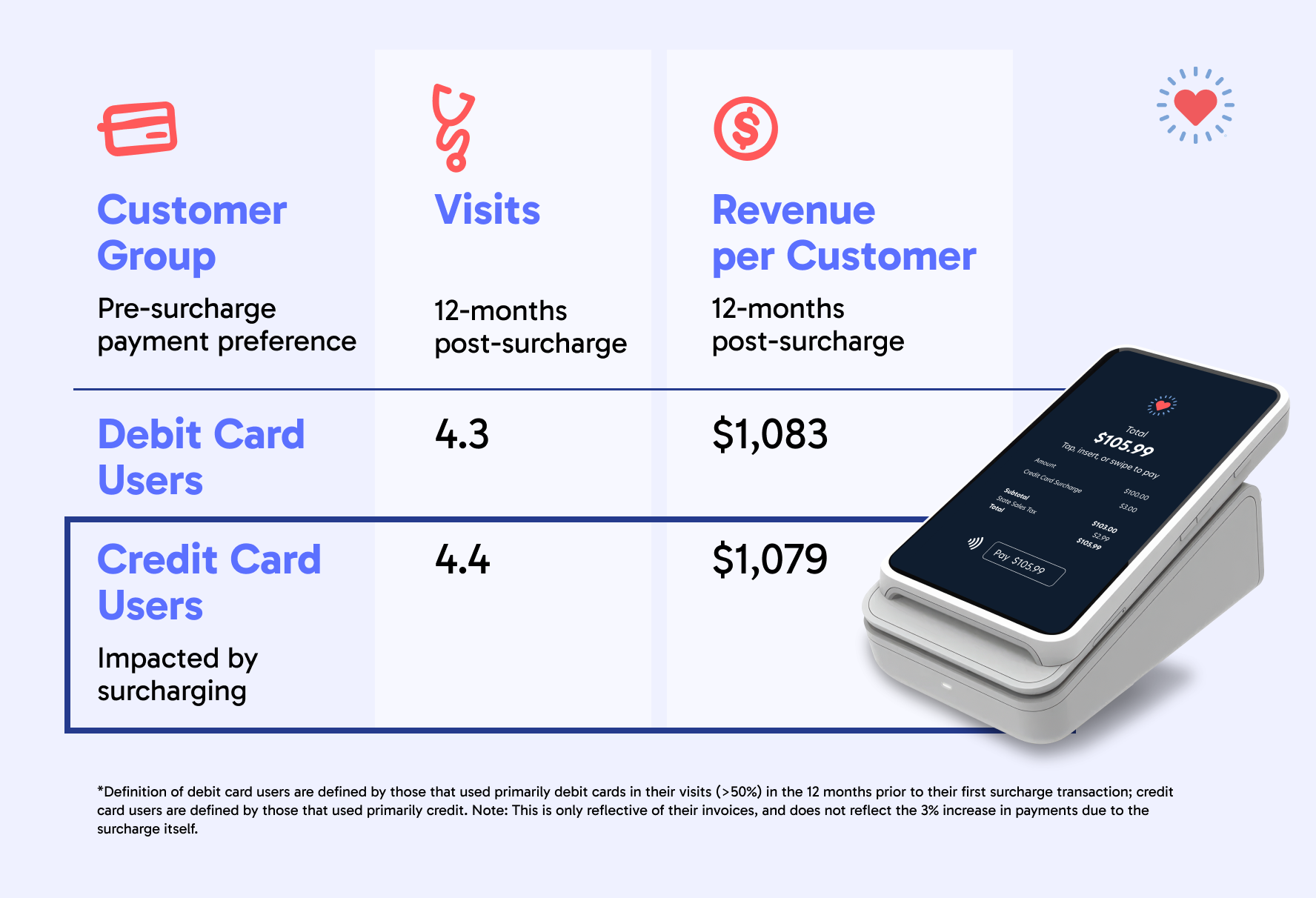
A primary concern for veterinary practices is whether introducing a surcharge will alienate clients or drive them to competitors. However, analysis of over 1,000 veterinary hospitals shows that these concerns may be unfounded. In the 12 months following surcharge implementation, revenue and visits per customer remained stable when compared to non-surcharged control groups.
Scratch’s data reveals that both debit card and credit card users maintained consistent visit frequencies and spending habits after a surcharge was introduced:
- Debit Card Users: Averaged 4.3 visits and $1,083 in revenue per customer.
- Credit Card Users: Averaged 4.4 visits and $1,079 in revenue per customer.
This data suggests that when implemented thoughtfully, surcharging does not negatively impact the long-term bond between the pet parent and the clinic.
Best Practices for Implementation of Surcharging at Veterinary Practices
Successful integration of a surcharge program at a veterinary clinic requires careful planning and a minimum 30-day notice period to remain compliant with regulatory requirements. There’s several things that you should consider when implementing surcharging to ensure a smooth rollout:
1. Proactively Communicate to Clients
Transparency is the cornerstone of client trust. Practices should use email, SMS, and social media to educate clients on why the surcharge is being implemented. By framing the surcharge as a means to maintain service standards and ensure continued access to quality care, practices can mitigate potential objections. Pre-appointment reminders are an ideal time to disclose these policies so there are no surprises at checkout.
2. Educate and Empower Staff
Front-desk staff must be empowered with the knowledge to explain the policy accurately. Training should focus on how the technology differentiates between credit, debit, and prepaid cards to ensure only the appropriate transactions are surcharged.
3. Choose the Right Payment Partner
A reputable payments partner should provide more than just hardware. Look for a veterinary surcharging provider that offers:
- Industry Knowledge: Seek a partner with a proven track record in serving veterinary practices, offering tailored solutions and proactive support.
- Technological Innovation: Evaluate technological capabilities, security measures, and support for emerging payment methods.
- Transparency and Pricing: Opt for partners with transparent pricing models to avoid hidden fees and ensure fairness.
- Compliance Support: Prioritize partners that keep track of changing credit card surcharging regulations for compliance, and offer proactive guidance.
Understanding the Regulatory Landscape
In the United States, the legality of credit card surcharging is determined at the state level, leading to variations in permissions and restrictions on its application. Some states prohibit surcharging altogether, while others impose specific requirements on surcharge practices. Even in jurisdictions where surcharging is permitted, strict guidelines typically apply to ensure transparency and fairness in surcharge implementation.**
- Permitted States: Surcharging is currently permitted in 47 U.S. states.
- Prohibited States: Surcharging is not currently available in Connecticut (CT), Massachusetts (MA), and Maine (ME).
Even where permitted, strict guidelines may apply regarding transparency and fairness. Strategic planning ensures your surcharging program remains fully compliant and transparent. Taking the time to prepare allows for clear client communication and ensures a smooth technical transition within your current payment workflows. Additionally, it is critical to distinguish surcharging from other fee structures such as:
- Surcharge vs. Cash Discount: Surcharging passes fees to credit users, while cash discounting offers a lower price to those paying with cash or debit.
- Surcharge vs. Convenience Fee: Surcharges apply to all credit transactions (omni-channel), whereas convenience fees are typically reserved for card-not-present transactions, such as those made over the phone or online.
Conclusion
Embracing credit card surcharging is a strategic opportunity for veterinary practices to navigate modern financial hurdles while upholding their commitment to animal health. By prioritizing transparent communication, ensuring strict regulatory compliance, and selecting a knowledgeable partner, practices can protect their profit margins and invest those savings back into the quality of care they provide.
About Scratch
Scratch has helped thousands of veterinary clinics successfully adopt surcharging. For more information on surcharging adoption trends in the veterinary industry download the Scratch State of Surcharging Whitepaper or Book a Demo with the Scratch team.
Disclaimers & Notes:
*Calculated based on fee savings compared to standard pricing for an average hospital with $2M annual revenue at a 2.40% effective rate. Actual results vary by payment mix, current fee structure, and processing volume.
**This article should not be seen as providing legal advice of any kind. It is recommended that all businesses consult with their own legal counsel on the advantages and disadvantages around surcharge fees and convenience fees (as well as requirements imposed by different states).
