Culture and People
The student who changed my teaching forever: Lessons in inclusion, education, and trusting your gut — Guest post
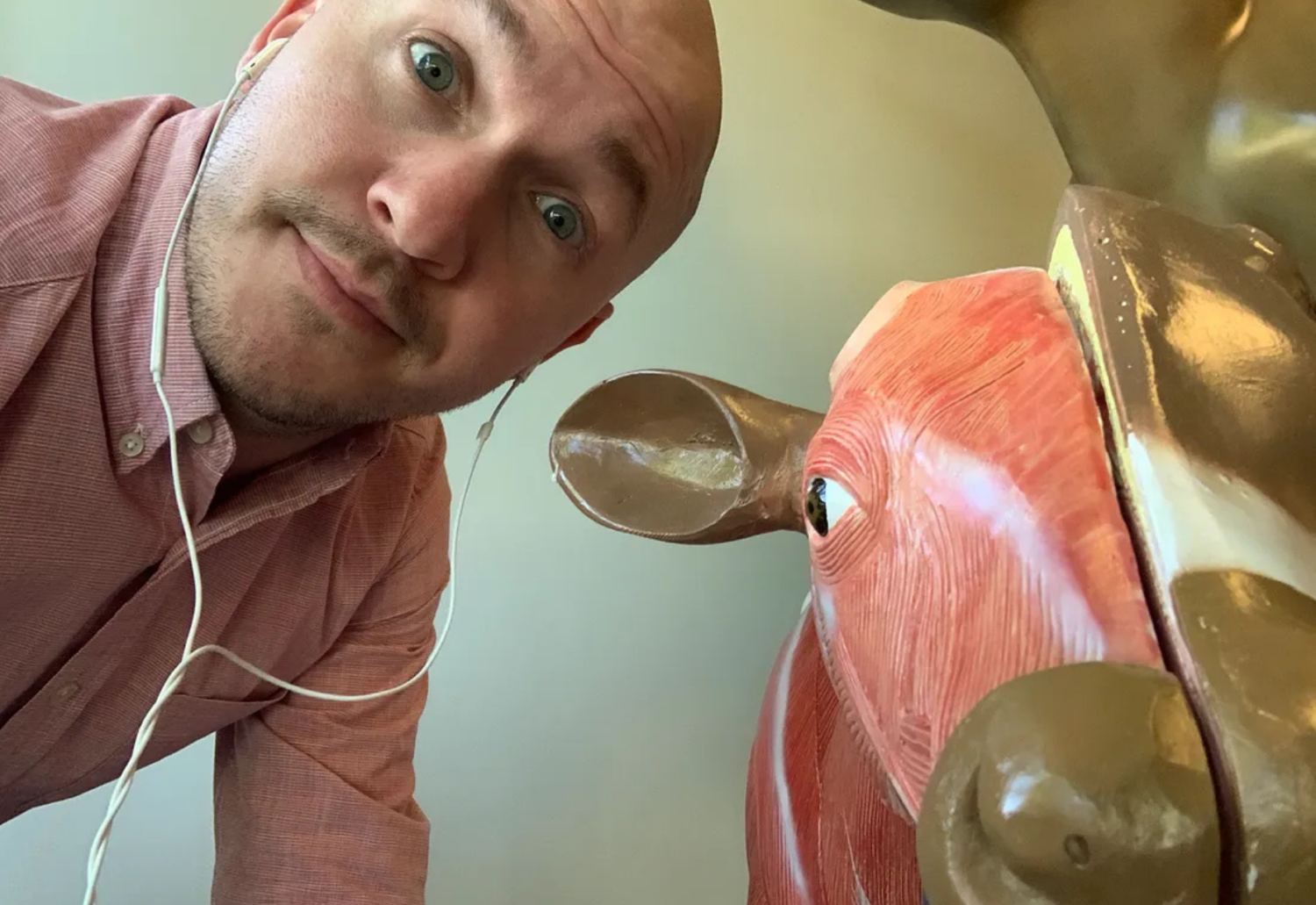
Teacher Appreciation Week is May 5-9. To celebrate, AAHA is featuring a guest post from Dj Cannon, AAHA learning strategist and Ph.D candidate who shares his insight from the classroom.
Advertisement
AAHA learning strategist, Dj Cannon, shares his impactful story from the classroom for Teacher Appreciation Week. Cannon reminds us that inclusion can change the lives of students in vet med and beyond.
Three weeks before the semester started, I got a call that would change my career trajectory. A well-respected professor and former director of a veterinary technology program reached out with an opportunity: teaching a clinical skills lecture and laboratory for 35 students at a higher education institution.
I had the degrees, the credentials, and the experience — an associate’s in animal science, a bachelor’s in education and preventive medicine, and a master’s in public health with a focus in epidemiology and biostatistics. I had worked in zoo medicine, emergency and critical care, advanced companion animal anesthesia, and infectious disease research at the NIH’s NIAID. But stepping into the classroom as an assistant professor was new. This was a dream, but also a challenge.
I accepted without hesitation, despite knowing I had only three weeks to prepare. What I didn’t expect was to receive my materials — including the syllabus — just 20 minutes before my first class. Standing in the hallway, waiting for the previous class to wrap up, I had a choice: panic or adapt.
I chose to adapt.
Meeting “Gary”
As students lined up outside the classroom, I struck up conversations, getting to know their names, their interests, and their nerves. Then, one particularly anxious student approached me. Let’s call him Gary.
He asked what he needed for class that day. His voice was tense, his hands fidgeting.
“Just listening ears,” I told him. “And a willingness to share a little about yourself.”
I explained that I wanted to understand how they learned, how they processed information, and what they needed from me when they felt overwhelmed. That’s when Gary handed me a letter from his mother.
It was a formal accommodation request. Gary had autism.
I had never taught a student with autism before. I had no additional training, no guidebook on how to “handle” accommodations in a veterinary nursing program. But I followed my gut: treat him like any other student, while being flexible to meet his needs within the law, the program’s expectations, and what he told me himself.
Teaching without bias
Gary showed up prepared, engaged, and ready to learn. He asked questions — sometimes blurting them out before I finished a slide, afraid he’d forget them. At first, I considered redirecting him, but then I saw how invested he was. His questions weren’t disruptive; they were thoughtful, and they made the class better.
His classmates embraced him, never making him feel different. I made sure to model respect and direct communication, and they followed suit.
What I didn’t know at the time was that Gary had failed this course the previous year.
A shocking conversation
Weeks into the semester, I sat down with the professor who had taught the course before me. She had decades of experience, was well-respected in veterinary medicine, and had been somewhat of a mentor. I asked for her insights, specifically about accommodations and teaching strategies.
When I mentioned Gary, she sighed.
“He failed my class last year,” she said flatly. “And I don’t think he’ll succeed this time either.”
I was stunned.
“He has no place in veterinary medicine,” she continued. “Someone with autism can’t handle CPR on a patient or communicate with a stressed owner in an emergency.”
I was floored. Not just by the assumption, but by the certainty with which she said it.
I pushed back: “There are so many roles in veterinary medicine. Labs, quality control, anesthesia monitoring, research. Not every veterinary professional has to work in the ER or client-facing practice.”
She shrugged.
That conversation solidified something for me: I would never assume a student’s limits.
What education should be
Gary proved every assumption wrong.
He became one of the top students in my class. He engaged, studied, and showed up early to check in about assignments. His sticky-note system worked perfectly — before and after class, we’d review his checklist to ensure he was on track.
When final grades were posted, he had one of the highest scores. His parents wrote me a heartfelt letter thanking me for “making the class a safe place” for their son.
But here’s the thing — I didn’t “make it easier” for him. I didn’t adjust expectations. I simply communicated clearly, provided structure, and treated him like any other student.
That shouldn’t be special. That should be the standard.
Lessons that transcend the classroom
Six years later, I think about Gary often. He reminded me of the responsibility we have as educators — not just to teach, but to challenge our own biases, to advocate, and to create spaces where students are seen for what they can do, not what others assume they can’t.
His story is bigger than veterinary medicine. It’s about what’s possible when we remove arbitrary barriers in education, in public health, in clinical practice, and in life.
So, if you’re an educator, a mentor, or someone in a position to guide others, remember:
- Trust your gut. Sometimes, the best teaching strategies aren’t in a manual.
- See potential, not limitations. Intelligence and ability don’t always look the same.
- Lead with communication and respect. Your example sets the tone.
And most of all, never assume who belongs where.
Because six years ago, an “unlikely” student proved that he belonged exactly where he was.
And he wasn’t the only one who learned something.
Photo credit: Dj Cannon
Disclaimer: Trends content is meant to inform, educate, and inspire by providing an array of diverse viewpoints. Any content published should not be viewed as an official stance, position, or endorsement by the American Animal Hospital Association (AAHA) or its Board of Directors.
