Culture and People
Understanding humane education
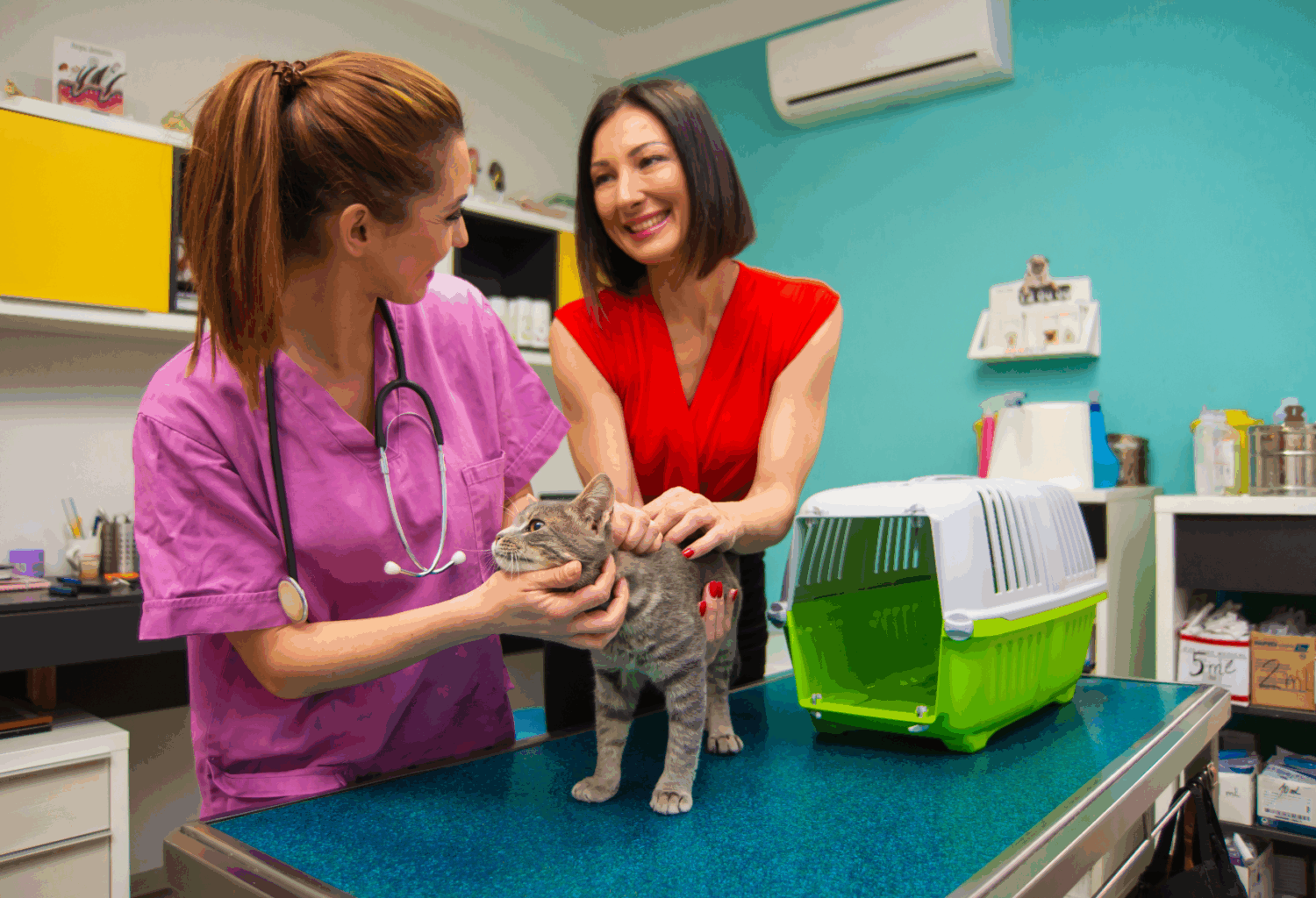
In a veterinary context, humane education involves intentionally integrating animal welfare, empathetic client communication, and environmental awareness into everyday practice. It is about looking beyond the clinical outcome to consider the broader ethical picture, helping to shape a more compassionate community in the process. And while it’s something you’re probably already practicing every day, understanding what it is and how it can impact your patients, clients, and community can make a big difference.
Advertisement
Humane education might sound like a fancy term, but the truth is, most veterinarians are already practicing it without realizing it. Every time you help a family facing housing insecurity find pet-friendly resources, explain how improper antibiotic use impacts both a pet’s health and public health, or just treat an animal with kindness to model compassion for a client, you are acting as a humane educator.
So, what exactly is humane education?
In a veterinary context, humane education involves intentionally integrating animal welfare, empathetic client communication, and environmental awareness into everyday practice. It is about looking beyond the clinical outcome to consider the broader ethical picture, helping to shape a more compassionate community in the process.
Formal study, practical mindset
Humane education is a formal field of study, but also a practical mindset. While you can pursue advanced training in it, you do not need a certificate to start applying its principles.
The Institute for Humane Education outlines four key elements that help transform this concept into a practical tool for the clinic. Let’s look at them through a veterinary lens:
- Acquiring accurate knowledge: This goes beyond continuing education credits. It is about critically evaluating evidence-based information on challenges like zoonotic disease risks, vaccine protocols, or ethical sourcing of puppies.
- Thinking deeply: This is the heart of clinical judgment. It means using critical and creative thinking to solve problems, like balancing a client’s financial challenges with the best possible welfare outcome for their pet.
- Making compassionate choices: This translates to reducing fear in animals through gentle handling, reducing stress for clients with empathy, and reducing your clinic’s environmental footprint where possible.
- Focusing on solutions: In practice, this can look like collaborating with a client to design a realistic treatment plan for a chronic condition like diabetes or implementing and improving a new pain assessment protocol for the entire clinic.
The veterinary team as humane educators
This is not about adding another item to your workload. It is about seeing the work you already do in a new light. Think of humane education as a lens that brings your everyday interactions into sharper focus. By recognizing the powerful teaching role your team already plays, you can start to apply these principles more consciously and consistently.
You and your staff might not have teachers’ certificates, but in practice, every conversation is a chance to educate. A foundation in humane education gives your team the framework for these moments. It equips them to explain the critical role of animal welfare, not just for the animals themselves, but for public and environmental health, and to confidently navigate complex ethical dilemmas.
So, when a technician translates an animal’s body language, discusses the importance of proper waste disposal, or a veterinarian guides a client through a difficult treatment decision, your team is doing much more than sharing facts. They are actively shaping their clients’ understanding and participating in creating a more compassionate community. This is the heart of humane education in action.
Real examples of humane education
Humane education can appear in many forms in a veterinarian’s everyday work in the clinic. Talking a client out of declawing their cat, explaining why a pet rabbit may be biting, or helping someone think through which breed fits their lifestyle are all excellent examples of the way humane education changes perceptions and human behavior.
Alex Lesniak, BS, MA, MRCVS, DVM, MA in Humane Education, FFCP, CPEV, is a veterinarian at Western Veterinary Clinic. She explains that she frequently tells clients how a macaw’s intelligence demands mental stimulation, and that improving their welfare can increase their lifespan.
She now approaches these conversations using the principles of humane education. “It’s educating them but also making them excited about their animals’ care as well,” she said.
Beyond the one-on-one
But one-on-one conversations are not the only way to provide humane education in your clinic.
Simple tools like posters or handouts can spread these messages without taking up appointment time. Digital resources, whether a newsletter, social media post, or a quick webinar, can help clients feel supported and give them (and the wider community) easy ways to learn about responsible animal care.
And don’t be shy about getting the team involved. Team members who enjoy client education can also run short sessions (virtual or in-person) on topics like the importance of spaying and neutering or puppy socialization.
The payoff for practices and staff
These activities are not just good for animals and communities; they also bring significant benefits back to the practice itself.
For one thing, clinics that make animal welfare a visible priority stand out. Many owners will travel a considerable distance for a vet whose values match theirs, creating loyalty and building reputation.
Staff retention is another benefit. Veterinary teams frequently experience high turnover due to overwork, stress, or ethical concerns. However, according to a 2021 study, teams participating in community engagement programs, which are at the core of humane education, often report increased sense of purpose and wellbeing.
On a broader scale, humane education strengthens the community’s perception of veterinary medicine as a compassionate and ethical profession. Clients and the public start to see veterinarians not just as medical providers, but as advocates for animal welfare and social responsibility.
Educational outreach
Clare Thomas-Pino, PhD, a senior lecturer at Hartpury University for the master’s program in Animal Assisted Counselling and Psychology and the BSc (Hons) degree in Human-Animal Interaction with Psychology, has expertise in anthrozoology as well as years of teaching pre-veterinary and animal behavior courses at the University of Maine System and Unity College.
She recalled a tangible example of humane education benefiting veterinarians in practice.
“One of the graduates from my program became an equine dental vet. She would come to a tack shop and do a talk, which was free. She would demystify things,” she said.
By explaining that sedation was an affordable, safe, and standard option to manage pain and a horse’s behavior during floating, she directly addressed the fears and bad experiences that had caused many to avoid this essential procedure.
This educational outreach changed how clients felt about equine dental care by showing them that it could be less stressful and more affordable than they’d realized.
According to Thomas-Pino, the time investment was minimal compared to the results. “It cost her probably two hours of her time once every six months… And I know from talking with her that actually generated over 150 clients.”
Ripple effects in the community
Humane education does not stop at the clinic door, or even with the veterinary team itself. The way veterinarians talk to clients and the example they set often ripples out through families, schools, neighborhoods, and even online.
For example, veterinarians and the organizations they work with often teach children at schools, give talks, or help with community events. This strengthens the public’s view of veterinarians as experts in animal health and welfare, and so their voices are pivotal in changes to law and policy that can protect animals and raise their status in society.
A powerful example lies in the way children absorb and share these lessons. Thomas-Pino observed this in her own son, who learned about topics like toxoplasmosis from accompanying his family to veterinary appointments. This foundational knowledge empowered him to become a messenger for safe practices himself.
”He knew that if he touched the cat, he should wash his hands,” she said. This led him to make sure his teacher, who was pregnant, knew that if she had a cat, she needed to have someone else change the litter or use gloves when she changed it. “He was keen to educate her about the risk for her baby,” she continued. “I think children can become educators if we provide them with those opportunities, and that outreach is essential, because it’s by outreaching that we stop that sense of fear and that sense of a hierarchy between those in the know and everybody else.”
This story underscores a core point for veterinary teams that the information you share with a family does not just improve one pet’s welfare. It equips the next generation with the knowledge to advocate for animal and human health in their own circles, multiplying the impact of that single clinical interaction.
When veterinarians understand what their community actually needs and help people who do not have easy access to veterinary care, the results go beyond healthier pets. Access to care and simple welfare education often changes how people see and treat their animals, making the human-animal bond stronger and relationships safer. When pets are cared for, life improves for the people around them, too.
This also has an impact on the profession as a whole. Veterinarians who volunteer in sterilization clinics, lead community outreach, or support animal welfare initiatives demonstrate what humane education looks like in practice. That example sticks with students and new graduates, giving them a picture of a career built on compassion as much as medicine.
Humane education and societal change
Humane education can and does influence legislative and cultural change. Over time, it can change the way whole communities, and even laws, treat animals.
Veterinarians have a unique role here because people trust them when it comes to welfare issues. That trust matters when there are public debates and new policies being developed that affect animal welfare, such as breed specific legislation, shock collars, or pets in housing. By explaining the nuances of these issues to clients, talking with community leaders, or giving their input to lawmakers, vets can push conversations in a direction that values both animals and the bond people share with them.
The impact of veterinarians participating in humane education is not always fully appreciated. Barbara Hodges, DVM, MBA, Program Director of Advocacy and Outreach for HumaneVMA since its founding in 2008, explained how humane education can contribute to long-term change.
“Changing minds is humane education. Dispelling myths is humane education. Fighting tradition is humane education. Displaying empathy is humane education,” she said. “Lobbying, which we do a lot of in my line of work with Humane VMA, —lobbying and advocating is education.”
Humane education gives people the chance to think differently about animal care. It opens the door to talk about old habits, question assumptions, and find better ways forward. With their knowledge and sense of responsibility, veterinary professionals can guide communities toward practices that are backed by evidence and rooted in compassion for animals and the people who care for them.
Resources for getting started
For Lesniak, humane education is best understood not as a rigid protocol, but as a guiding philosophy. This perspective was shaped in part by a key text from her studies. “One of my favorite things is a book that we read in the [humane education] program called Most Good, Least Harm,” she says.
The book, by Institute for Humane Education co-founder Zoe Weil, takes practical and balanced approach. “The whole idea is, we are not perfect in any sense of the word, especially when it comes to doing humane education, whether it’s human, animal, or environment,” Lesniak explains. “You find your priority, what your heart speaks to the most, and you’re doing the most good and least harm you can.”
For Lesniak, the owner’s situation, the animal’s personality, and the veterinarian’s own judgment are all critical when applying humane education principles. She summarizes it like this: “You’re taking the human aspect of do no harm and you’re doing the best you can for that animal with the owner’s situation, with, the animal’s behavior, personality, those kinds of things. And you’re just trying to do the best thing for everyone involved.”
For those inspired to learn more, a wealth of resources exists:
- Formal training: Organizations like HumaneVMA run workshops for veterinary professionals. For a deeper dive, graduate programs are offered by the Institute for Humane Education at Antioch University.
- Professional networks: The Association of Professional Humane Educators (APHE) provides networking, resources, and professional development for those interested in learning more about fostering empathy toward people, animals, and the environment.
- Foundations and programs: The Latham Foundation for the Promotion of Humane Education, founded in 1918, offers grants and educational materials. The Academy for Prosocial Learning offers credentialed courses and consulting for educators, businesses, and organizations.
- Recommended reading: To grow your understanding, consider books like Zoe Weil’s The Solutionary Way, Donald Phillip Verene’s The Art of Humane Education, and Anna C. Briggs’ For the Love of Animals.
You can take the first step by talking with a colleague about the work you already do. You can explore how the principles of humane education are already making a difference in your clinic and how embracing them can make your work even more impactful.
Photo credit: Slavica/E+via Getty Images
Disclaimer: Trends™ content is meant to inform, educate, and inspire by providing an array of diverse viewpoints. Any content published should not be viewed as an official stance, position, or endorsement by the American Animal Hospital Association (AAHA) or its Board of Directors.
