Behavior
Understanding reactive dogs
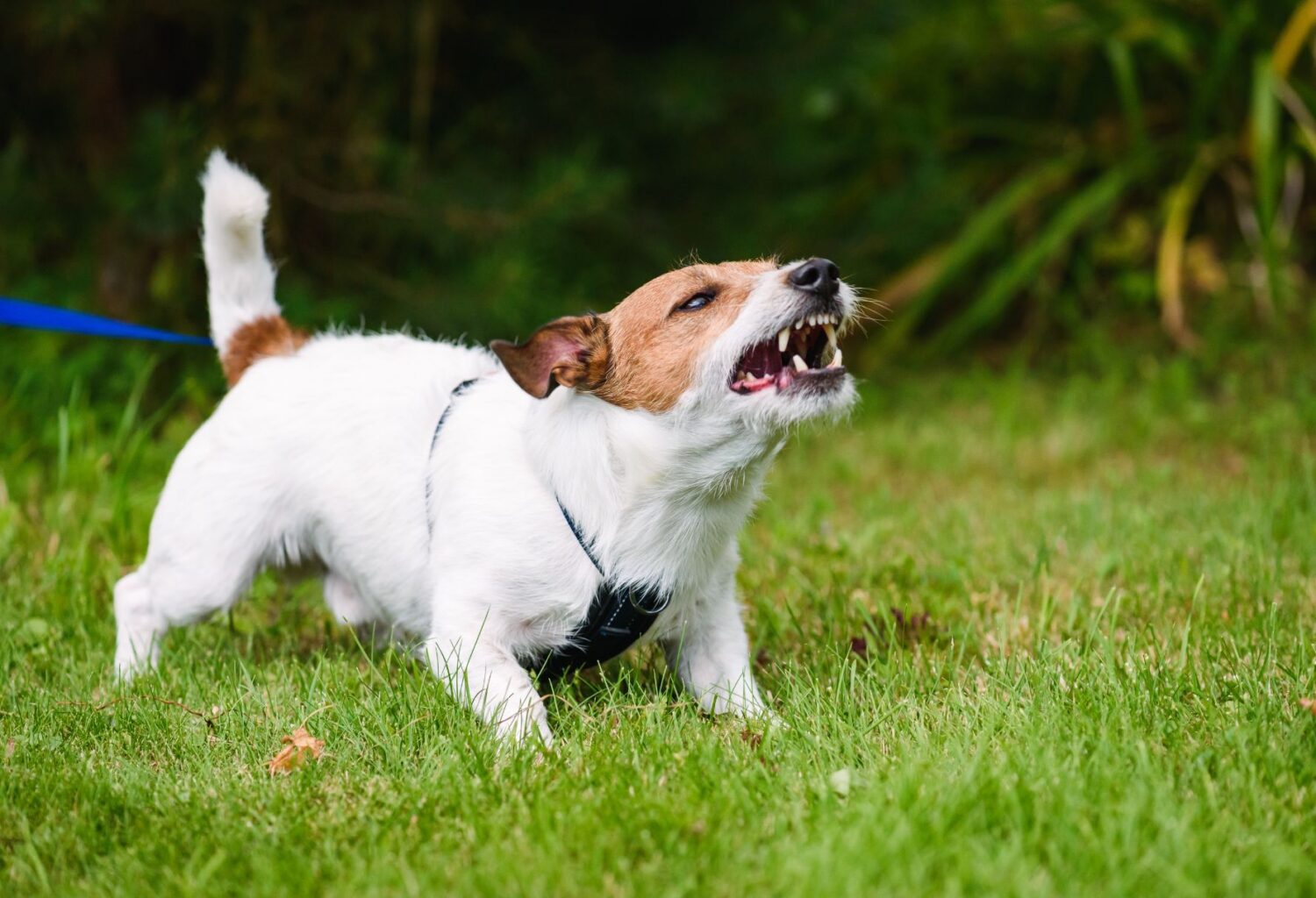
Not every reactive dog presents the same risk. Here, we dig into a recent study looking at what behaviors indicate higher escalation risk, as well as tools veterinary professionals can use with their clients to better understand how likely their dog may be to escalate to an oral attack.
Advertisement
Most veterinary teams will regularly encounter pet parents struggling with dogs that lunge and bark at other dogs. These caregivers are often embarrassed and apologetic, and their dogs are often labeled as reactive.
But not all reactive dogs are the same, and that distinction is especially important when you are assessing risk and advising on management. Recent research from the University of Lincoln has clarified what reactivity really looks like in dogs. The findings identify four distinct types, each with different risk profiles and management strategies.
What reactivity really means
Himara Van Haevermaet, BVMS, MSc, MRCVS, Resident in Veterinary Behaviour (ECAWBM) and lead researcher on a recent University of Lincoln study into reactive dogs, felt it was important to define reactivity more clearly. “The term ‘reactivity’ is already widely used by owners, behaviorists, and other professionals, but without a clear behavioral definition. As a result, people may be using the term ‘reactive’ dog to describe very different behavioral presentations.”
To address this, Van Haevermaet’s team surveyed people who used the term “reactive” to describe their dogs, asking how they would recognize one and what the term meant to them. From those responses, they developed a working definition: A reactive dog was one exhibiting one or more of the following behaviors in response to another dog: barking, growling, snarling, lunging, snapping, nipping, biting, whining, or a stiff posture with raised hackles and intense staring.
While the definition and the four risk clusters it underpins are specific to dog-to-dog reactivity, the researchers also examined whether dogs reacted to other stimuli including children, men, women, sounds and vehicles.
Having a clear definition was necessary as a starting point for this research. Van Haevermaet explained, “From a research perspective, having a working definition also made it easier for us to study the population. It allowed us to explore whether there were identifiable subtypes based on observable behavioral patterns and helped us consider these dogs within a broader ethological and agonistic behavior framework.”
The data underpinning these findings came from owner-reported questionnaires, with owners confirming their dog displayed at least one of the nine behaviors before completing the survey. While owner-reported data has inherent limitations, previous research has found significant correlations between owner-reported behavior and independently conducted behavioral assessments, suggesting that owner reports can provide a reasonably reliable reflection of behavioral tendencies. With 1,360 complete responses, the sample size is large enough that random variation in reporting is unlikely to have significantly affected the findings.
The three components of reactivity
Understanding how these behaviors cluster together is useful both for veterinarians in general practice and those working in behavior and training. It informs risk assessment and handling decisions for veterinary teams while pointing those addressing behavior, specifically, toward more targeted treatment approaches.
The nine reactive behaviors identified in this survey fit clearly into three categories, each reflecting different psychological and biological drivers.
Oral attack
Includes snapping, nipping, and biting. These are the contact behaviors that cause actual injury. They are more energetically costly than other behaviors and carry higher risks of retaliation, so they are less common overall. In the study population, biting occurred in only 24% of reactive dogs.
Frustration
Includes barking, lunging, and whining. These high-arousal behaviors seem to occur most often when a dog’s access to another dog is blocked, such as when restrained by a leash or held back by their handler. This component revealed something of real interest. Dogs with significant frustration do not necessarily escalate to contact behaviors.
Posturing
Includes growling, snarling, and a stiff posture with piloerection (raised hackles). These are threat displays that indicate heightened arousal and agonistic intent. The fact that 79% of the dogs in the study showed piloerection suggested that they were experiencing genuinely high physiological arousal.
Clinical implications
In general practice, the practical takeaway is that a highly vocal, lunging dog is not automatically the highest risk, but caution should always be the default. Understanding which behavioral components are driving the reaction can help veterinary teams make more informed decisions about handling and risk, rather than solely basing that on how loud or dramatic the presentation appears.
Van Haevermaet sees direct clinical value in understanding these distinctions.
“For veterinarians in practice, this is important because it can support a more detailed assessment of the behaviors being shown, the likelihood of escalation, and the factors that may be driving those responses,” she said. “It may also help vets communicate more clearly with owners about management expectations, and why dogs described under the same label of ‘reactive’ may require very different treatment approaches.”
One example was that some dogs in the study showed moderate levels of posturing with relatively low levels of oral attack behaviors, while others showed a much greater tendency towards rapid escalation and making contact, she explained. “Those differences may have important implications for risk assessment, management, and referral decisions.”
Four clusters identify the risk hierarchy
When the researchers looked at how dogs scored across the three categories, four distinct groups emerged. Together, they formed a clear hierarchy of escalation risk.
Cluster 1
Low risk signalers (40%): These dogs show moderate frustration and posturing but very low oral attack behaviors. They were barking and posturing but not trying to make contact.
Management for these dogs focuses on avoiding known triggers where possible and teaching the dog alternative responses, such as disengaging from the stimulus and looking to the pet parent instead.
Cluster 2
Frustrated escalators (18%): These dogs display very high frustration alongside high posturing but only low-to-moderate oral attack. These dogs are clearly struggling with being restrained or prevented from reaching other dogs.
Management focuses on avoiding situations that increase arousal while using counterconditioning and desensitization to teach new behaviors and change associated emotions. While the risk of contact is lower than in the higher clusters, the intensity of their frustration means they can appear more dangerous than they actually are, and pet parents often find them difficult to manage.
Cluster 3
Impulsive escalators (32%): These dogs show moderate frustration but high posturing and moderate oral attack. This group of dogs were willing to make contact without necessarily being in a state of high frustration. They appeared to show less inhibition which could be linked to impulsivity.
Management for these dogs requires focusing on early risk management and preventing situations where rapid escalation is likely. Longer-term behavior modification strategies will be necessary.
Cluster 4
Risky rapid escalators (10%): These dogs score high in frustration, posturing, and oral attack. They are the highest risk category. They escalate quickly and follow through, which makes them dangerous to other dogs.
Because of the severity of their behavior, referral to a behavior specialist is essential. Risk management must be the immediate priority, with long-term work focused on reducing frustration.
Van Haevermaet is clear about what these clusters mean for veterinary professionals: “Clinically, this is important because different reactive dogs may present very different levels of practical risk in a veterinary setting. Behaviors such as snapping, nipping, and biting are particularly relevant when assessing immediate handling risk, but intense posturing behaviors such as stiff posture, piloerection, growling, and snarling may also indicate heightened arousal and greater potential for escalation depending on the context.
“We also found that frustration-related behaviors, such as barking, lunging, and whining, formed a somewhat separate component,” she continued. “That suggests that high arousal alone does not necessarily predict the same level of escalation risk.”
Recognizing these different reactive response styles can help team members in a variety of ways, she added, like “support[ing] decisions around handling strategies in the presence of other dogs, environmental management, appointment timing to avoid busy periods, hospitalization location, and other safety measures.”
What predicts a dog’s risk level?
A dog’s sex, sterilization status, age, or body size had no association with which cluster a dog fell into. That was a particularly significant finding because it dispels many myths about the dogs most likely to be reactive.
The factors that did predict higher risk were where and how a dog was obtained and raised, and whether the dog reacted to stimuli beyond other dogs.
Dogs acquired from breeders and raised in a home environment from puppyhood were significantly less likely to fall into the higher-risk clusters, pointing to the importance of early socialization and environment during the critical developmental period.
Dogs who also reacted to people, sounds, vehicles, and other environmental triggers were more likely to belong to the higher-risk clusters, suggesting a more generalized reactivity or anxiety rather than a response specific to other dogs.
Dogs who reacted to children were almost twice as likely to belong to Cluster 4.
This has real implications for safety planning and client counselling.
The frustration factor
One of the most clinically significant findings is that frustration emerged as a separate behavioral component from the threat behaviors of posturing and oral attack. When a reactive dog arrives at a clinic and the cause of that reactivity is not yet known, identifying the primary driver makes a real difference to how the case is managed.
That is why collaboration with behaviorists is so valuable. Where frustration is at the root, adjusting the clinical approach accordingly can improve the experience for the dog, strengthen the relationship with pet parents, and support better long-term outcomes.
Van Haevermaet discusses how this can change the way dogs are perceived and managed in clinical settings.
“The distinction is important because frustration and threat-related behaviors may arise from differing underlying emotional processes. High arousal and frustration do not necessarily mean a dog intends to escalate to contact,” she said. “In some dogs, behaviors such as barking and lunging may reflect frustration associated with thwarted social interaction, lead restraint, or blocked access or escape, rather than purely agonistic intent. Recognizing frustration as a separate component may help professionals tailor management and treatment more appropriately, rather than treating all dog reactive dogs as though they present the same type of risk.”
Frustration and related behaviors cannot be looked at in isolation. A dog can be experiencing significant frustration without being immediately dangerous to other dogs, and conversely, a dog can be dangerous to other dogs without experiencing particularly high frustration. Determining where a dog falls within these clusters can inform intervention strategies with a more nuanced approach to identifying risk.
The research team has developed the Dog Reactive Dog Cluster Tool to help pet parents estimate their dog’s cluster type. This could be useful when identifying risk in a clinical setting and counselling clients about their dog’s reactivity.
While Van Haevermaet stresses that it is not a validated diagnostic tool, she does believe it is a useful starting place for conversations with clients. “It may help identify reactivity patterns more quickly, guide discussions around escalation risk, and support decisions relating to handling, environmental management, and referral.”
Better understanding leads to better outcomes
Understanding the diversity in reactive dogs can improve how veterinary teams assess risk and advise clients. Dog reactivity is a spectrum of behaviors that reflect different underlying motivations, learning histories, and levels of impulse control. “Reactivity,” as an umbrella term, may be missing the level of risk and the type of support that different clients may benefit from.
Consider this
Consider two dogs arriving at a clinic, both barking and lunging at every dog they pass in the waiting room. To the veterinary team, they may look identical. But one is a Cluster 2 Frustrated Escalator, highly aroused and struggling with restraint, but with no history of making contact. The other is a Cluster 4 Risky Rapid Escalator with a history of snapping and biting. The presenting behavior may look the same, but the risk is not.
This is where a brief conversation with the pet parent before the appointment is valuable. Asking specifically about the dog’s history of snapping, nipping, or biting, how they respond when restrained, and whether they react to people as well as other dogs, can change the approach to managing a reactive dog significantly. That information, framed within the cluster model, helps take an assessment beyond how the dog may look in the moment and provide a more accurate picture of what the team is actually dealing with.
Encouraging pet parents to use the Dog Reactive Dog Cluster Tool before their appointment could help be better prepared to answer those questions.
This research provides a framework for understanding not just what behaviors dogs are presenting, but why those behaviors might be happening and what that tells veterinary teams about risk and realistic management options.
For veterinarians, this will allow for more informed conversations with clients, better risk assessment, and targeted advice about the kind of behavioral support their dog really needs.
Photo credit: alexei_tm/iStock via Getty Images Plus
Disclaimer: Trends™ content is meant to inform, educate, and inspire by providing an array of diverse viewpoints. Any content published should not be viewed as an official stance, position, or endorsement by the American Animal Hospital Association (AAHA) or its Board of Directors.
