Culture and People
Following Hurricane Helene, volunteers help area return to “normal”
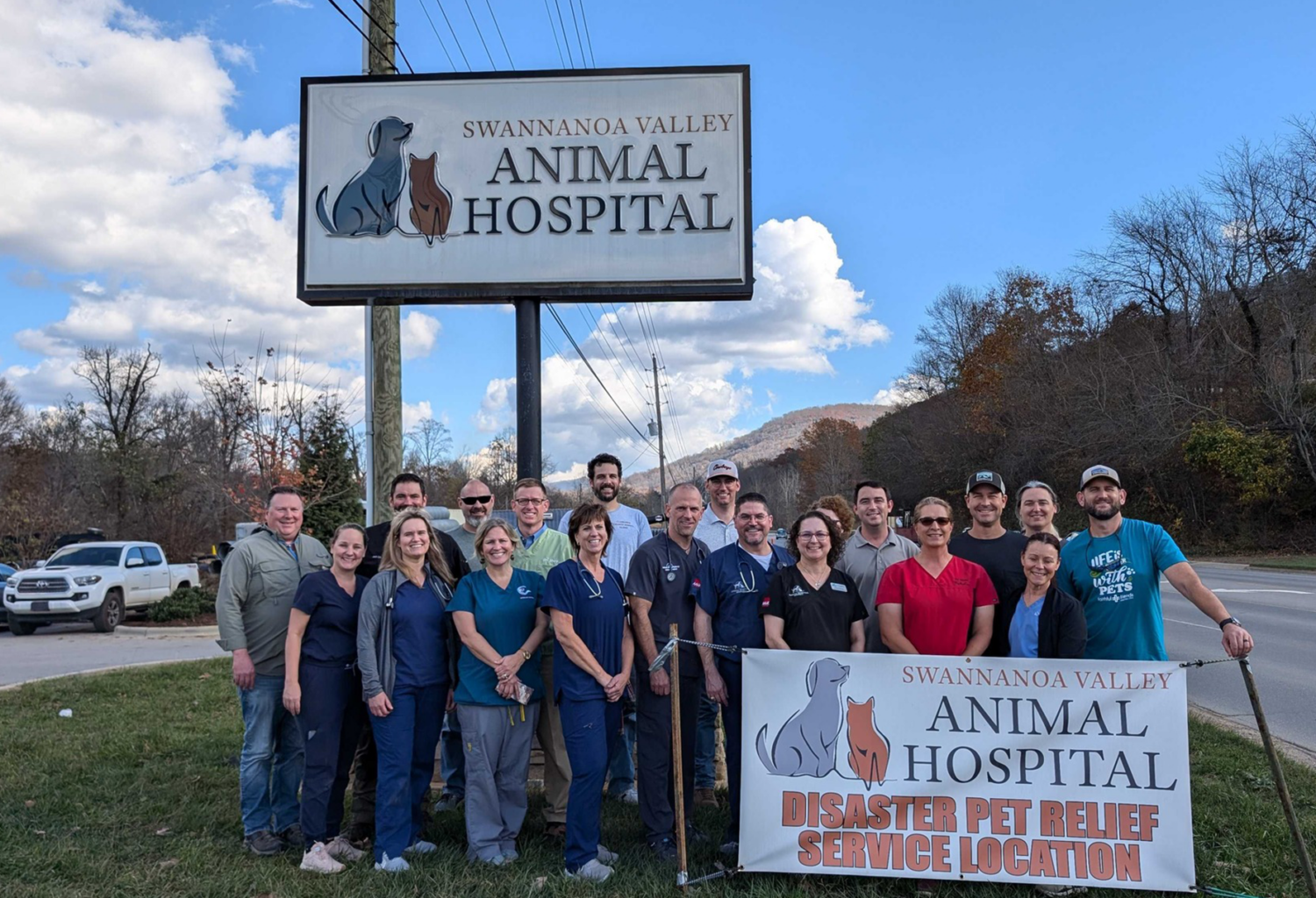
More than two months after Hurricane Helene devastated parts of Western North Carolina, many groups are still trying to find a new “normal.” Recently, one group of volunteers spent time at one of the first animal hospitals to open after the storm to help rebuild.
Advertisement
Hurricane Helene’s trail of devastation made national headlines in late September after the storm tore through several states. Many western North Carolina towns and cities, including Asheville, bore the brunt of the disaster. Now, more than two months later, the area is still not back to normal.
AAHA Board President Scott Driever, DVM, witnessed that firsthand during a recent trip to the area as part of the Veterinary Management Group’s (VMG) fall meeting. He, along with a group of 25 other volunteers, spent time at the Swannanoa Valley Animal Hospital last month as part of an effort to lighten the load of those who work there and live nearby Helene’s recent path of destruction.
The decision to do more post-Helene
Meeting in North Carolina was in the works long before Helene hit. Nearly two years prior, VMG had decided to hold their fall meeting there, but with the extent of the damage post-storm, the trip called for more than a meeting.
“If we were going to go to an area like that, we wanted to do something. Whether it was [time] donated to an animal shelter or what, we wanted to do something,” said Scott Driever, DVM.
Driever and five others obtained temporary North Carolina veterinary licenses and got in contact with Otto Sharp, DVM, the owner of the Swannanoa Valley Animal Hospital, located in one of the many areas around Asheville still recovering from the storm. His practice has been working around the clock since Hurricane Helene hit to stay open and provide care to the community.
“He was like, ‘Come on!’ Which is amazing,” noted Driever. “I think they were glad to have us, just to kind of take some of the workload off of them.
Sharp, whose available hospital staff worked around the clock to make sure all their clients were still able to get their essential medicine, said the help and support was needed. Many of the staff and patients still are rebuilding.
“Day by day, slowly, we just get a little bit better,” Sharp said. However, about nine weeks out, there is still a lot of work to do.
Lightening the physical and mental load
Driever‘s hospital, Animal Hospital Highway 6, is on the outskirts of Houston, so he has seen the impact of hurricanes in his area and mentioned that the toll that’s left behind is often much more than the visual damage. Hurricane Helene is no exception.
“Trying to get back to normal takes time. And even when the water goes away, and even though all that stuff looks normal, people aren’t normal for quite some time” he noted.
That “normal” is still a long way off, Sharp emphasized. But VMG’s trip to the area, along with other donations of time and money to his practice, has helped both the mental and physical battles facing the teams working in the area.
“We had [VMG volunteers] inside treating pets. We had them digging flowers and hauling mulch and stuff,” Sharp recalled. “That was a fun day.”
During his time in Asheville, Driever noted that many of the clients who came through the doors were still recovering themselves.
“The clients that we saw that day were either very well off and didn’t seem affected, or they had lost everything and had zero money, and there was nothing in between,” he said. “I mean, there was no middle clientele.”
But it wasn’t only the clients feeling the post-storm strain. The staff often must put on a brave face as they handle day-to-day operations, which Driever noted can be taxing. While the team was able to spend time doing everything from appointments to landscaping, the ability to help make small decisions here and there helped with the fatigue of working in an area devastated by Hurricane Helene.
“There is no routine. There is no muscle memory. Every single decision is taxing,” Driever added. “It’s simple as, ‘Well, what do you want for dinner?’ You’re just like ‘I can’t. I physically cannot make another decision.’”
An area still recovering following Helene
While his group’s work was focused on the Swannanoa Valley Animal Hospital, Driever did get to see some of the areas still devastated in Asheville and witnessed first-hand the lasting impacts of Hurricane Helene on area businesses.
“I’ve seen a lot of natural disasters in my day; I’ve seen a lot of flooding, tons of flooding. I have never seen buildings being driven into other buildings,” he said. “When we were driving to the Animal Hospital, I mean there were gas stations that … had been literally uprooted and driven into the taco shop hundreds of feet downstream … Six weeks later there was still a car about 30 feet up in a tree.”
With tourism being a large part of the Asheville economy, the lack of people coming to the area has taken a toll. Many local businesses are still recovering or still remain closed. Driever noticed that at the hotel they were staying at, the skeleton crew on staff were working many jobs. From the airport to the hotel, he noticed there was still no potable water, and all the hotels had cisterns outside that would constantly be refilled so people could shower. Even when eating, they noticed the impact of the lack of potable water following Helene’s destruction.
“Everything was paper plates and plastic silverware, not just at the hotel, but downtown Asheville. Six weeks later. Just because they didn’t have enough water to do dishes,” he added.
But he also noticed the resiliency of the people who were still working and the enthusiasm they had to welcome people back to the area in addition to those determined to restore the area to its pre-Helene glory.
“The [businesses] that were open were so thankful we went there. They weren’t like, ‘Oh my goodness, tourists. What are you all doing here?’” he recalled. It was more along the lines of, “Please, we are so glad to see you, please come and spend money.’” “Tourism is huge for that whole area and when you go months without, that’s going to be hard to come back from.”
Sharp also noted that the recovery efforts will take time, but the support the area has received so far gives him hope not only for his practice but for the area.
“We’re going to make it, so I’m super happy with that,” Sharp said.
Photo Credit: Animal Hospital Highway 6
Disclaimer: The views expressed, and topics discussed, in any NEWStat column or article are intended to inform, educate, or entertain, and do not represent an official position by the American Animal Hospital Association (AAHA) or its Board of Directors.
