Section 2: The Need for a One Health Family-Centered System
Top 3 Takeaways
- The human-animal bond is more important than ever, yet millions of pet caregivers struggle with access to veterinary care.
- Veterinary and human health professionals occupy integral roles in a One Health system by providing inclusive, equitable, and holistic health care for families and by promoting positive social, economic, and environmental determinants of health.
- Transitioning to a One Health system presents several short-term and long-term challenges that must be addressed to achieve an integrated approach to human and animal health care.

Veterinary Medicine and the Human-Animal Bond
Today, animals are regarded as cherished members of families. 1,2,3 A recent Pew Research Center survey revealed that nearly all respondents (97%) consider their companion animals to be a part of their family, with about half (51%) viewing them as equivalent to a human member. This sentiment was particularly strong among women, individuals with lower family incomes, and those living in urban areas.4 These strong familial ties support the need for a One Health family-centered system, where the health of both animals and their human caregivers are addressed comprehensively (Figure 2.1).
Humans and animals experience benefits from interspecies relationships, particularly if they enjoy access to necessary resources and support (Table 2.1). Both adults and children may experience mental and physical health benefits in the short and long term from healthy relationships with animals. 5,6 According to a report commissioned by the Human Animal Bond Research Institute (HABRI), animal family members save the U.S. health care system an estimated $22.7 billion annually. 7 Savings result from fewer doctor visits, reduced obesity rates, lower infection rates, and improved mental health outcomes for children, seniors, and veterans.
Despite the bonds people share with their companion animal family members, millions of pet caregivers struggle to access and provide their pet(s) with health care. 8,9 Obstacles that impact determinants of human health—such as education, employment, and housing—can limit access to health care services including veterinary care. As a result, both human and veterinary health care professionals must confront and address financial constraints, language and health literacy barriers, geographic and transportation challenges, and other factors that influence care delivery. 10
Family members face similar risks in shared environments and ecosystems, including communicable and noncommunicable diseases, malnourishment and lack of physical activity and related diseases, and toxins or other environmental exposures. 11,12 A rapidly changing climate and related health risks such as natural or weather disasters and heat exposure may exacerbate challenges for vulnerable families. Health professionals within the One Health framework must address violence within the home from a holistic perspective considering the well-established links between violence against animals, children, and vulnerable adults. 13 In addition, humans and animals in families may need grief support following the loss of a family member 14,15 as well as during an illness due to caregiver burden. 16
A One Health approach enriches veterinary services by addressing the social, emotional, and environmental factors that influence both pet and client well-being. This includes recognizing and responding to mental or physical health issues, transportation limitations, and financial barriers clients face, which significantly impact the care provided to animal patients. Animal and human patients can benefit from this approach, and veterinary and human health professionals may also benefit from cross discipline learning. A supportive One Health system may reduce moral distress, burnout, and compassion fatigue among health professionals caring for families.
FIGURE 2.1: The One Health System
Source: Image reprinted from One Health High-Level Expert Panel (OHHLEP), Adisasmito WB, Almuhairi S, et al. One Health: A new definition for a sustainable and healthy future. PLoS Pathog 2022;18(6):e1010537. The work is made available under the Creative Commons CC0 public domain dedication.
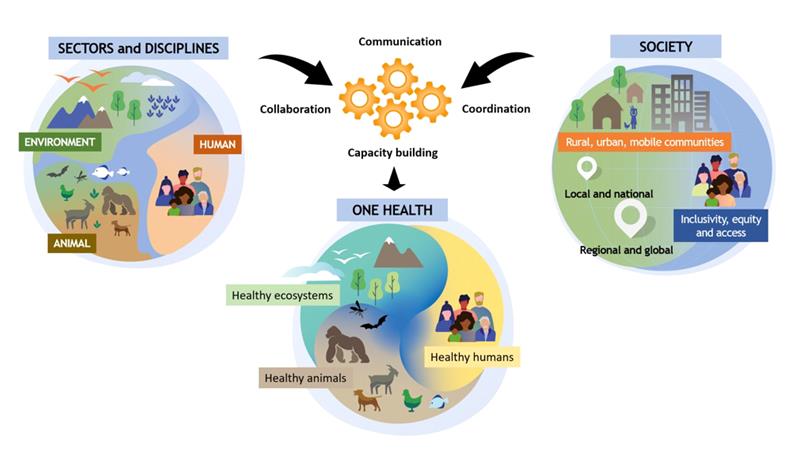
TABLE 2.1: Benefits of the Human-Animal Bond 17
| Physical |
|
| Emotional |
|
Challenges in Achieving a One Health Family-Centered System
A One Health system requires a team-based approach, including the participation of veterinary and human health care professionals, policymakers, and others helping to provide comprehensive and personalized services. However, achieving this integrated approach faces both short-term and long-term challenges (Table 2.2), primarily due to the current segmentation and siloed nature of health care systems and the traditionally independent structures of veterinary and human health care. Addressing these challenges requires a concerted effort from policymakers, health care providers, and the community to create a sustainable and effective One Health system. 18
TABLE 2.2: Challenges in Achieving a One Health System
| Short-Term Challenges | Integrated Information Gathering and Outcomes: Ensuring records incorporate questions related to One Health issues such as zoonoses, travel, occupation/activities, and safety. |
| Willingness to Embrace Change: Adopting new roles and embracing interprofessional collaborations, e.g., expanding the role of social workers in veterinary health teams. | |
| Solutions to Time Constraints: Developing solutions to the time demands veterinary professionals face to allow for implementation of One Health protocols. | |
| Long-Term Challenges | Commitment to Integrate: Achieving support for building a unified One Health strategy across health disciplines, academia, private sector, and government requires long-term commitment. |
| Evolution of Information Exchange and IT Systems: Developing robust, secure IT systems for seamless information exchange between human and veterinary health services where needed and as appropriate that comply with legal standards across health care domains. | |
| Education: Enhancing public health education and training for a variety of roles in veterinary medicine, including more robust training for credentialed veterinary technicians (CrVTs). | |
| Holistic Treatment Approaches: Establishing veterinary guidelines and protocols for treating families holistically, considering both human and animal health. | |
| Financial Support and Assistance: Developing financial support mechanisms to make veterinary and human health care affordable and accessible, especially for underserved communities. |
The AAHA One Health Guidelines are generously supported by Merck Animal Health.
Citations
- The Harris Poll. More than ever, pets are members of the family. Prnewswire.com. July 16, 2015. Available at: https://www.prnewswire.com/news-releases/more-than-ever-pets-are-members-of-the-family-300114501.html. Accessed July 9, 2024.
- Brown A. About half of U.S. pet owners say their pets are as much a part of their family as a human member. Pew Research Center. July 7, 2023. Available at: https://www.pewresearch.org/short-reads/2023/07/07/about-half-us-of-pet-owners-say-their-pets-are-as-much-a-part-of-their-family-as-a-human-member. Accessed July 9, 2024.
- Megna, M. Pet ownership statistics 2025. Forbes. com. January 2, 2025. Available at: https://www.forbes.com/advisor/pet-insurance/pet-ownership-statistics/. Accessed August 11, 2025.
- Brown A. About half of U.S. pet owners say their pets are as much a part of their family as a human member. Pew Research Center. July 7, 2023. Available at: https://www.pewresearch.org/short-reads/2023/07/07/about-half-us-of-pet-owners-say-their-pets-are-as-much-a-part-of-their-family-as-a-human-member/. Accessed July 9, 2024.
- Groenewoud D, Enders-Slegers MJ, Leontjevas R, et al. Children’s bond with companion animals and associations with psychosocial health: A systematic review. Front Psychol 2023;14:1120000.
- Scoresby KJ, Strand EB, Ng Z, et al. Pet ownership and quality of life: A systematic review of the literature. Vet Sci 2021;8(12):332.
- Human Animal Bond Research Institute (HABRI). Pet ownership saves $22.7 billion in annual health care costs. May 23, 2023. Available at: https://habri.org/pressroom/20230523. Accessed July 10, 2024.
- Access to Veterinary Care Coalition. Access to veterinary care: Barriers, current practices, and public policy. December 17, 2018. Available at: https://trace.tennessee.edu/utk_smalpubs/17/. Accessed July 9, 2024.
- Wise C. Pets are part of the family. PBS NewsHour. March 20, 2023. Available at: https://www.pbs.org/newshour/nation/pets-are-part-of-the-family-that-makes-it-harder-when-veterinary-care-is-out-of-reach. Accessed July 9, 2024.
- Blackwell MJ, O’Reilly A. Access to veterinary care–A national family crisis and case for One Health. Adv Small Anim Care 2023;4(1):145–57.
- Day MJ. Human-animal health interactions: The role of One Health. Am Fam Physician 2016;93(5):344–6.
- Pinello KC, Palmieri C, Ruiz J, et al. Risks and benefits of the interaction with companion animals. In: Prata JC, Ribeiro AI, Rocha-Santos T, eds. One Health: Integrated Approach to 21st Century Challenges to Health. Academic Press; 2022:113–53.
- Jegatheesan B, Enders-Slegers MJ, Ormerod E, Boyden P. Understanding the link between animal cruelty and family violence: The bioecological systems model. Int J Environ Res Public Health 2020;17(9):3116.
- Lagoni L, Butler C. The Human-Animal Bond and Grief, 1st ed. Philadelphia: Saunders; 1994.
- King B. How Animals Grieve. Chicago: University of Chicago Press; 2013.
- Spitznagel MB, Hillier A, Gober M, et al. Treatment complexity and caregiver burden are linked in owners of dogs with allergic/atopic dermatitis. Vet Dermatol 2021;32(2):192-e50.
- Wein H, ed. The power of pets. NIH News in Health. March 6, 2018. Available at: https://newsinhealth.nih.gov/2018/02/power-pets. Accessed January 10, 2023.
- Kahn LH. Confronting zoonoses, linking human and veterinary medicine. Emerg Infect Dis 2006;12(4):556–61.