Section 1: Referral Roles and Key Concepts

Top 3 Takeaways
- There are three types of referral collaborations: general collaborative conversations, professional-to-professional consultations, and hands-on referrals.
- By adhering to collaborative care and family-centered practice, veterinary teams can keep the patient and client at the center of the referral process.
- Family-centered veterinary practitioners recognize that client and pet well-being are interconnected and aim to provide comprehensive, coordinated care.
When referring a patient for specialized care, the PCT and SCT can work together to make the process as smooth as possible for the pet and client. By adhering to collaborative care and family centered practice concepts, veterinary teams can keep the patient and client at the center of the referral process to ensure the care received supports the physical and emotional well-being of pets and their caregivers.
Collaborative care (Figure 1.1) means sharing care for a patient and client between veterinary professionals across different institutions and organizations. The combined efforts of primary care and specialty practitioners and their teams bring comprehensive diagnostic and treatment options to some instances. Depending on the type of case or the client’s location, primary care practitioners can choose from several types of veterinary referral collaborations, including telehealth consultations (Table 1.1).
Figure 1.1: Veterinary teams and collaborative care
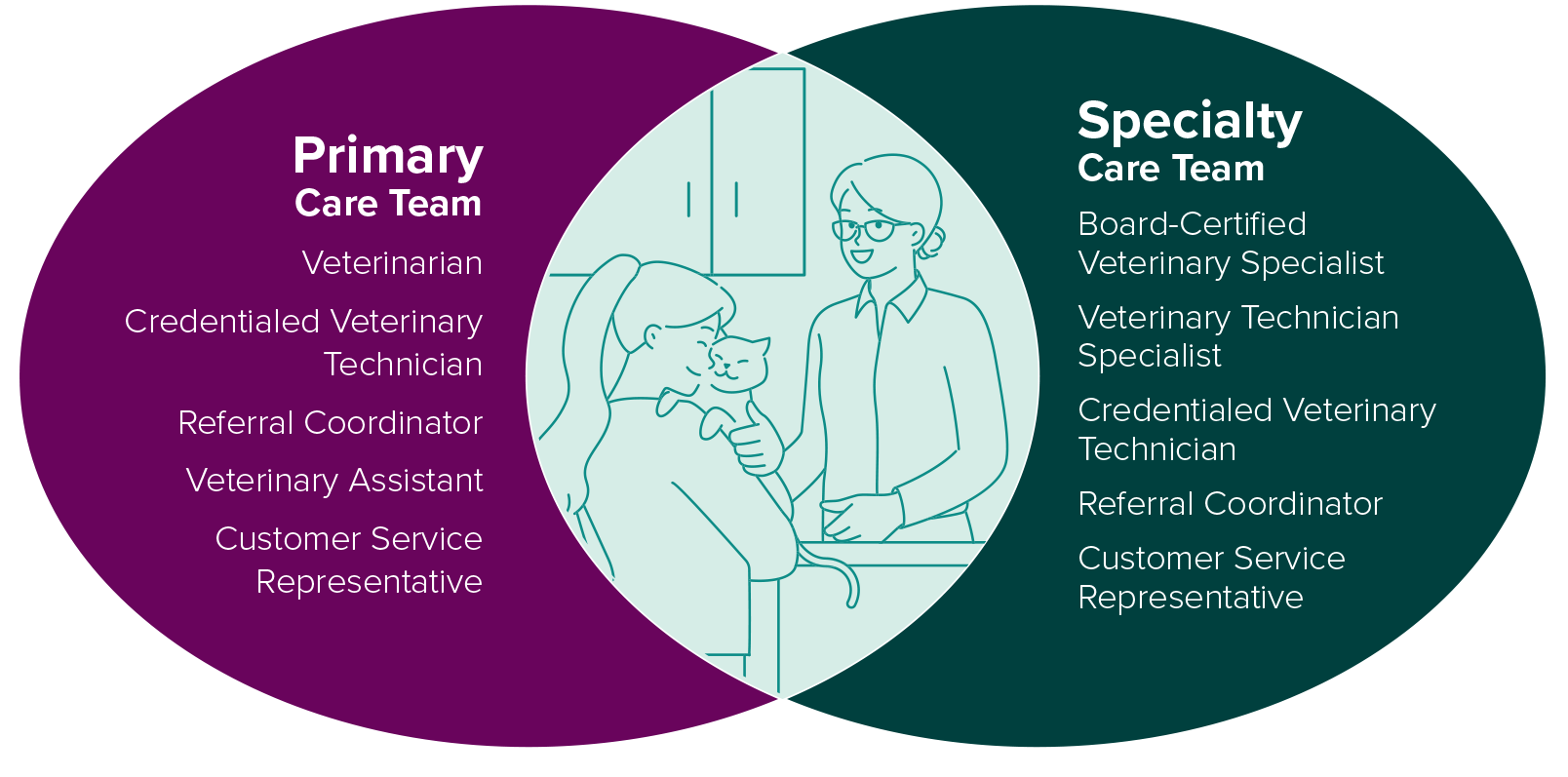
TABLE 1.1: Types of Veterinary Referral Collaborations
| Type of referral | Description of referral | Fee charged? |
|---|---|---|
| General collaborative conversation | Phone, video meeting, or written (e.g., email, text) conversations between two veterinary professionals intended to facilitate collaboration and exchange of general, non-specific information between veterinary professionals at different practices. General collaborative conversations do not address specific patients or cases unless the conversation serves as preamble to initiating a hands-on patient referral with the specialist. | X |
| Professional-to-professional consultation | Phone, video meeting, or written (e.g., email, text) conversations between two veterinary professionals, whereby the general practitioner seeks advice from the veterinary specialist about a patient or case. Consultations enable virtual collaborative care for a patient under the VCPR of the consultee. The veterinary professionals may decide during the consultation that a hands-on referral is the best option for the patient and client. | ✔
Note: Some professional-to-professional consultations may not be fee-based (e.g., consultations with clinical specialists at pharmaceutical companies regarding diagnostic tests or products). |
| Hands-on referral | A hands-on referral is a joint decision between the PCT and the SCT for a patient requiring help with a specific condition. Upon accepting the referral, the SCT establishes a VCPR and assumes the role of directing veterinarian for the patient for a particular health concern. At the end of the referral timeline and process, the PCT resumes the role of directing veterinarian. | ✔ |
PCT, primary care team; SCT, specialty care team; VCPR, veterinary-client-patient relationship
Benefits of Collaborative Care
Many clients embrace referral to a SCT because they take comfort in receiving specialist-directed veterinary care for their pet. The Collaborative Care Coalition published three retrospective studies documenting the importance of collaboration for pet health and client satisfaction with referrals. Findings included increased survival times, improved quality of life for pets, and improved client perceptions when offered early referral for their pets’ conditions.
In a 2023 study, dogs receiving a diagnosis of congestive heart failure due to myxomatous mitral valve disease experienced increased survival times when treated collaboratively by a cardiologist versus by the PCT alone. Median survival time increased from 146 days to 254 days. The PCT also experienced a revenue boost owing to the increased life span of the pets.1
A 2021 study showed dogs experienced longer intervals between bouts of otitis when treated collaboratively with a dermatologist versus when managed by the PCT alone (171 days versus 21 days). Proliferative changes in the ear canals improved in 91% of patients, resulting in improved quality of life.2 This same study also measured client frustration, showing clients would not return to their PCT after three visits or $925 if they did not see significant improvement in their pet’s condition.3
A third study suggested clients perceived an early referral as good value for the cost regardless of a pet caregiver’s financial situation. In the study, 70% of clients across all income brackets agreed that referral resulted in a good outcome, and client perceptions of the PCT were six times more likely to improve after referral. The study also indicated that clients valued the PCT’s involvement and willingness to work with other veterinary professionals.4
Collaborative Care and Family-Centered Practice
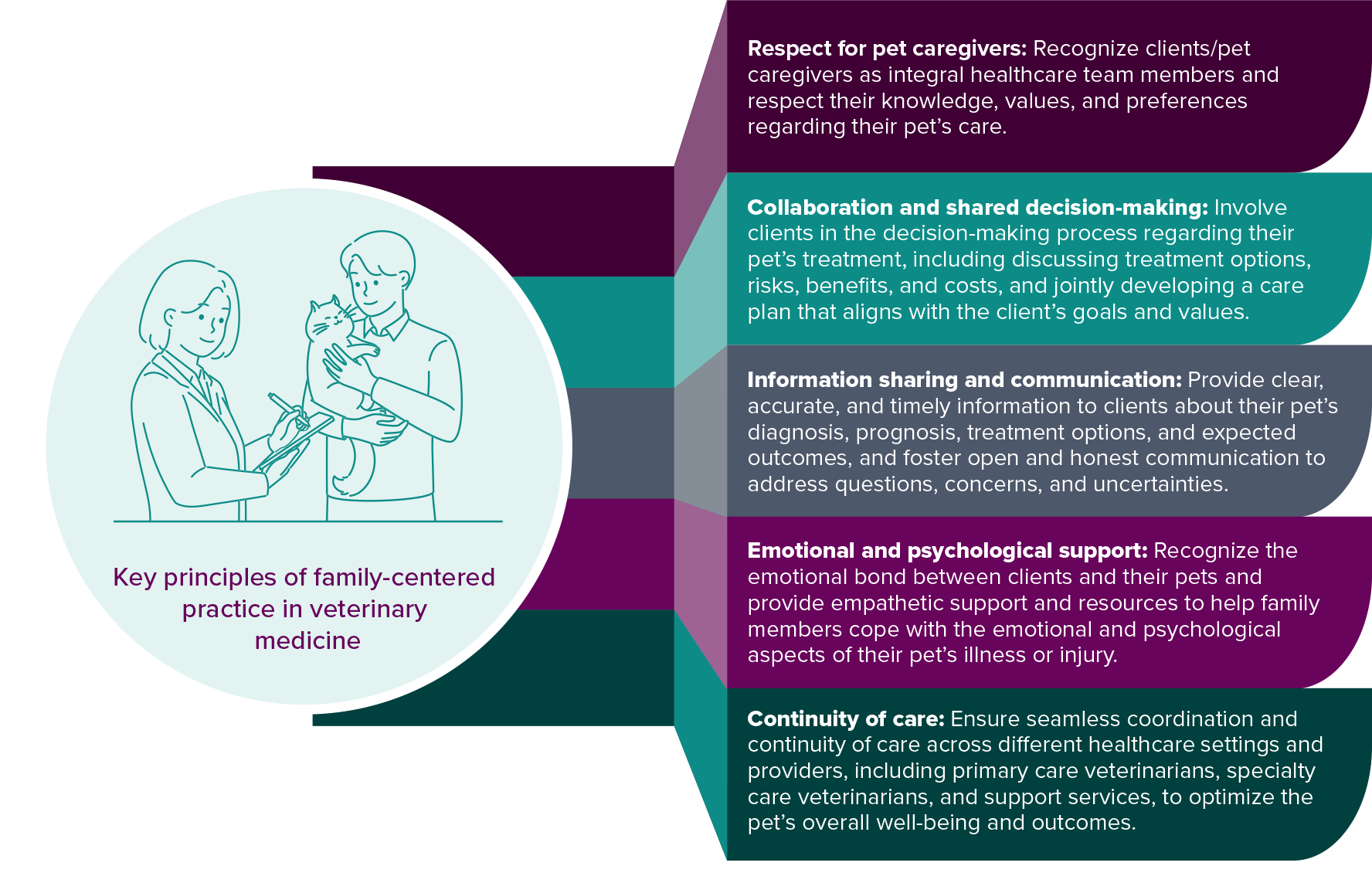
Family-centered practice (Figure 1.2) refers to an approach to health care that focuses on pet caregivers, their pets, and the entire family. Family-centered veterinary practitioners recognize that clients and pets exist in an interconnected system that includes other family members, environmental influences, and other circumstances (e.g., socioeconomic). Practitioners who embrace this approach aim to provide comprehensive, coordinated care that meets the diverse health needs of all family members. By treating the family, practitioners seek to promote overall well-being and improve health outcomes. This approach encompasses decisions that may include more people and nonmedical considerations. Family-centered health care means recognizing and respecting the bond between pets and clients, involving them in decision-making, and addressing emotional and practical needs concerning treatment.5,6
FIGURE 1.2: Key principles of family-centered practice in veterinary medicine
Access to care refers to the availability and affordability of veterinary services. It encompasses geographic location, financial constraints, and cultural beliefs that may affect a client’s ability to obtain veterinary care.7 Enhancing access to care involves incorporating family-centered care principles and addressing the client’s concerns about referral to a veterinary specialist, the complexity of the disease and its treatment, the emotional strain of a pet’s illness, and the cost of care. These factors may contribute to hesitation or reluctance to pursue specialized care.8
The SCT is encouraged to embrace family-centered care during referral consultations because the client likely has no previously established relationship with the specialty practice. By engaging with the client compassionately and collaboratively, the SCT can alleviate anxiety, clarify treatment options, and empower clients to make informed decisions.
See the AAHA Community Care Guidelines for Small Animal Practice at aaha.org/community-care for more information about family-centered veterinary practice.
The 2025 AAHA Referral Guidelines are generously supported by CareCredit.

Citations
- Lefbom BK, Peckens NK. Impact of collaborative care on survival time for dogs with congestive heart failure and revenue for the attending primary care veterinarian. J Am VetMed Assoc 2016;249(1):72–6.
- Logas D, Maxwell EA. Collaborative care improves treatment outcomes for dogs with chronic otitis externa: a Collaborative Care Coalition study. J Anim Hosp Assoc 2021;57(5).
- Logas D, Maxwell EA. Collaborative care improves treatment outcomes for dogs with chronic otitis externa: a Collaborative Care Coalition study. J Anim Hosp Assoc 2021;57(5).
- Morello SL, Maxwell EA, Ness K, et al. Client perceptions improve with collaborative care when managing dogs with cancer: a Collaborative Care Coalition study. J Am Vet Med Assoc 2023;261(7):1037–44.
- Williams D, Jewell J. Family-centered veterinary medicine: learning from human paediatric care. Vet Rec 2012;170(3):79–80.
- Küper AM, Merle R. Being nice is not enough – exploring relationship-centered veterinary care with structural equation modeling. A quantitative study on German pet owners’ perception. Front Vet Sci 2019;6:56.
- Pasteur K, Diana A, Yatcilla JK, et al. Access to veterinary care: evaluating working definitions, barriers, and implications for animal welfare. Front Vet Sci 2014;11:1335410.
- Stoewen DL, Coe JB, MacMartin C, et al. Identification of illness uncertainty in veterinary oncology: implications for service. Front Vet Sci 2019;6:147.