Decoding Dog Symptoms: Let Your Veterinarian Diagnose Your Dog, Not AI
AI tools can help pet parents research symptoms or ask better questions. They can even help your vet take notes during an appointment, but they can not replace your veterinarian. Only your vet has the experience, training, and hands-on knowledge necessary to treat your dog. This guide explains when AI can be helpful (research and follow-up) and why only your vet should be diagnosing your dog.
Advertisement
Artificial Intelligence (AI) is everywhere. And, as a tool, it can be useful for so many things, like organizing schedules, planning events and travel, brainstorming, tracking the weather, and even household tasks like vacuuming, monitoring your home’s energy usage, and making the perfect cup of coffee.
Recently, many pet owners have harnessed the wide-ranging power of AI to research their dogs’ symptoms and health conditions. While AI vet med does have its place, it’s important to understand when AI is appropriate to diagnose a dog and when you need to consult with your veterinarian. This article explores how to use AI to diagnose a dog, when to rely on AI and when to rely on your veterinarian, and why accreditations like AAHA’s are critical to providing your dog with the best healthcare he or she deserves.
Detecting Your Dog’s Symptoms
When something is off with your dog, it can feel scary, especially if you have no idea what’s going on. It’s tempting to turn to AI to try to figure it out. Before you open your favorite AI tool and search “what’s wrong with my dog,” let’s first consider the signs you should be monitoring to know if something is off with your dog.
As your dog’s advocate, there are clear pet health signs you can track so that you spot anomalies as soon as they crop up. These include your dog’s heart rate, temperature, weight, and mood. It should also include a full, hands-on body scan, including a peek into your dog’s ears and teeth.
When checked regularly, you’ll be able to spot changes right away. If you notice a lump or bump on your dog’s body, bad breath or bleeding gums, an elevated temperature, a change in mood or energy level, and so on, you can get your dog into the vet for a checkup.
AD: Keep track of your dog’s development and health with this log book
While you wait for that appointment to come up, this might be a time to check AI for ideas to bring to your vet. AI is a tool that won’t ever replace your vet, but it can help you arrive at your appointment with a list of questions to discuss.
Choose your favorite AI tool and describe your dog’s symptoms, list your concerns, and pose the questions on your mind related to the symptoms. Then, request that it formulate a list of 10 questions to take to your veterinarian. Refine as needed, of course, but you’ll show up to your appointment less afraid because you’ll have guiding questions to assuage your concerns. Your vet will then provide expert advice based on your concerns and their assessment of your pet. .
Your veterinarian is your partner in caring for your dog. Over years of wellness visits, along with any previous testing and bloodwork, your vet has the best picture of your dog’s overall health. Your vet has the historical knowledge of your dog’s medical history and is able to use that information to make informed diagnoses on current conditions. AI tools simply don’t have that kind of access. Even if you were to input your dog’s entire medical history, it would be without the context, the substance, and the nuance of your dog’s overall health.
AD: Improve your dogs joint health with these chews
The Impact of an AI Vet
“Used the right way, AI can actually strengthen the relationship between you, your pet, and your vet,” explained Robin K. Moore, DVM, Owner of East Bay Animal Hospital in Largo, Florida. “It can help you ask better questions, track your pet’s condition and even enhance communication.”
AI is part of our lives, and it’s only increasing in use. Most of us have found ways to utilize this helpful tool in our toolkit. However, there are times when you can lean on AI to help you advocate for your pet at your veterinarian, and there are times when relying on an AI vet can be detrimental to your dog’s health.
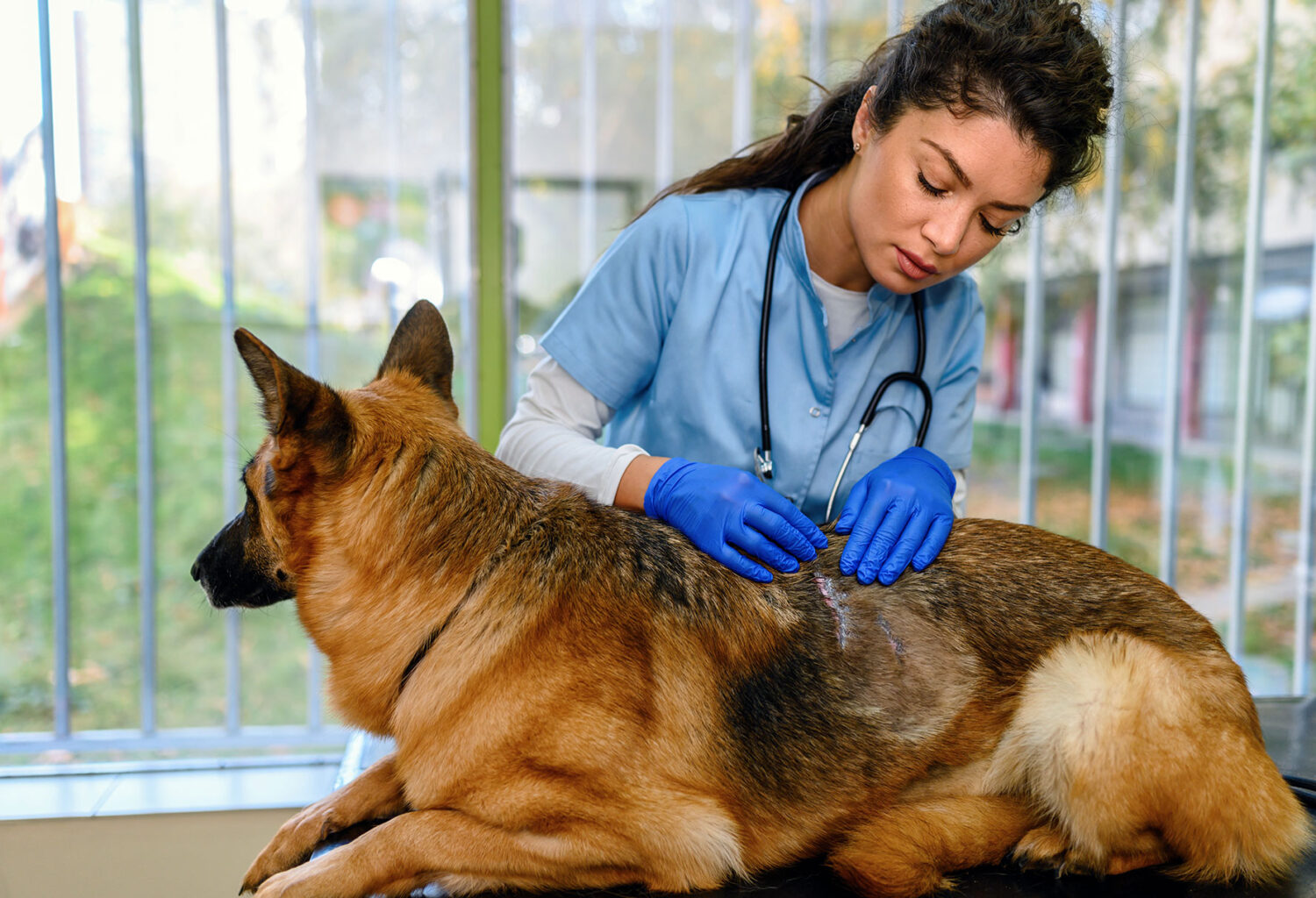
A veterinarian can see the symptoms individually and then put them together as part of the larger picture of your dog’s overall health. An AI tool can’t see or place hands on your dog, nor can your AI tool make objective observational assessments, which are critical to arriving at the correct diagnosis.
“Where AI falls short is in the real-life moments – when a vet places a hand on your dog, senses something subtle, or reads between the lines during a heartfelt conversation with you,” shared Dr. Moore. “Especially if you’ve had the same vet for years, there’s a bond and a depth of understanding that simply can’t be artificially replicated. AI just can’t compete on that playing field – at least not yet!”
In addition to not having the full and complete picture, AI tools can provide false, inaccurate, or incomplete information. This leads dog owners to delay seeking help from a vet, which can be detrimental to the dog.
Veterinarians do appreciate when you come informed, and AI can help you do that initial legwork. While an AI tool like ChatGPT or Gemini can help a dog owner think through what the symptoms they’re observing might be, and the tools can help a dog owner formulate questions to ask a veterinarian, those tools can not reliably diagnose your dog. Your veterinarian can.
AD: Keep track of your dog’s activity with this monitor
AI After the Appointment
Utilizing an AI tool after the appointment can also be helpful. For instance, if you receive a radiology report or a blood test printout, and you’re not sure what the terms are, type them into your favorite AI tool and ask for a layman’s explanation. This can save a lot of time when you meet with your vet face-to-face or speak over the phone.
Also, after your vet determines a diagnosis, use AI to research the condition. Without relying on the information to stand on its own, that additional research will prepare you for all the follow-up visits and treatments your dog will need.
AD: Monitor your pet’s weight with this easy to use scale
Why AAHA Standards Matter
Veterinarians accredited by AAHA adhere to standards that ensure your dog receives the highest level of care. AI tools aggregate and synthesize information on the internet. It is often inaccurate and incomplete, which can lead to misdiagnosis and inappropriate treatment. Your AAHA-accredited veterinarian has been through rigorous training and has years of experience that can help your dog get better faster. These standards matter for your dog’s quality of care. AAHA-accredited veterinarians are a better resource for diagnosing based on symptoms for dog illnesses and ailments than an AI tool like ChatGPT.
Of course, AI tools are already integrated into our daily lives. It makes sense that concerned, caring pet owners would utilize this advanced tech to help care for their beloved dog. AI tools are useful when used appropriately. They’re helpful for research and information, for coming up with questions to ask your vet, and for looking into conditions in-depth.
However, in the case of diagnosing your dog, use AI tools to research questions and concerns prior to a veterinary appointment, but rely on your AAHA-accredited veterinarian to do the diagnosing.