What does a cat’s color tell us?
Cats have a reputation for being mysterious. But many people think a cat’s character is revealed by the color of their coat, the way orange tabbies are ‘agents of chaos’ in social media memes. And studies show that our ideas about color and “catitudes” can influence which cats we choose to share our lives. With the stakes so high for cats, can you really judge them by their color?
Advertisement
“Humans have a psychological drive to categorize things to make the world easier to understand, but we risk losing vital information in the process,” said Dr. Mikel Delgado, a feline behavior expert based in California whose work in the Cat Behavior Department of the San Francisco SPCA inspired her to pursue a doctorate in psychology and additional studies in animal behavior.
Our tendency to categorize cats is nothing new. In one Victorian-era book, the author had high praise for the brown tabby which “possess all pussy’s noblest attributes to perfection. They are docile, honest, and faithful.” The black cat was “fierce when angered, but not naturally quarrelsome,” yet the tortoiseshell was seen as “sinister.” So “tortie-tude” may be a modern term, but tri-color cats have been labeled as divas for a long time.
The Science of Perception
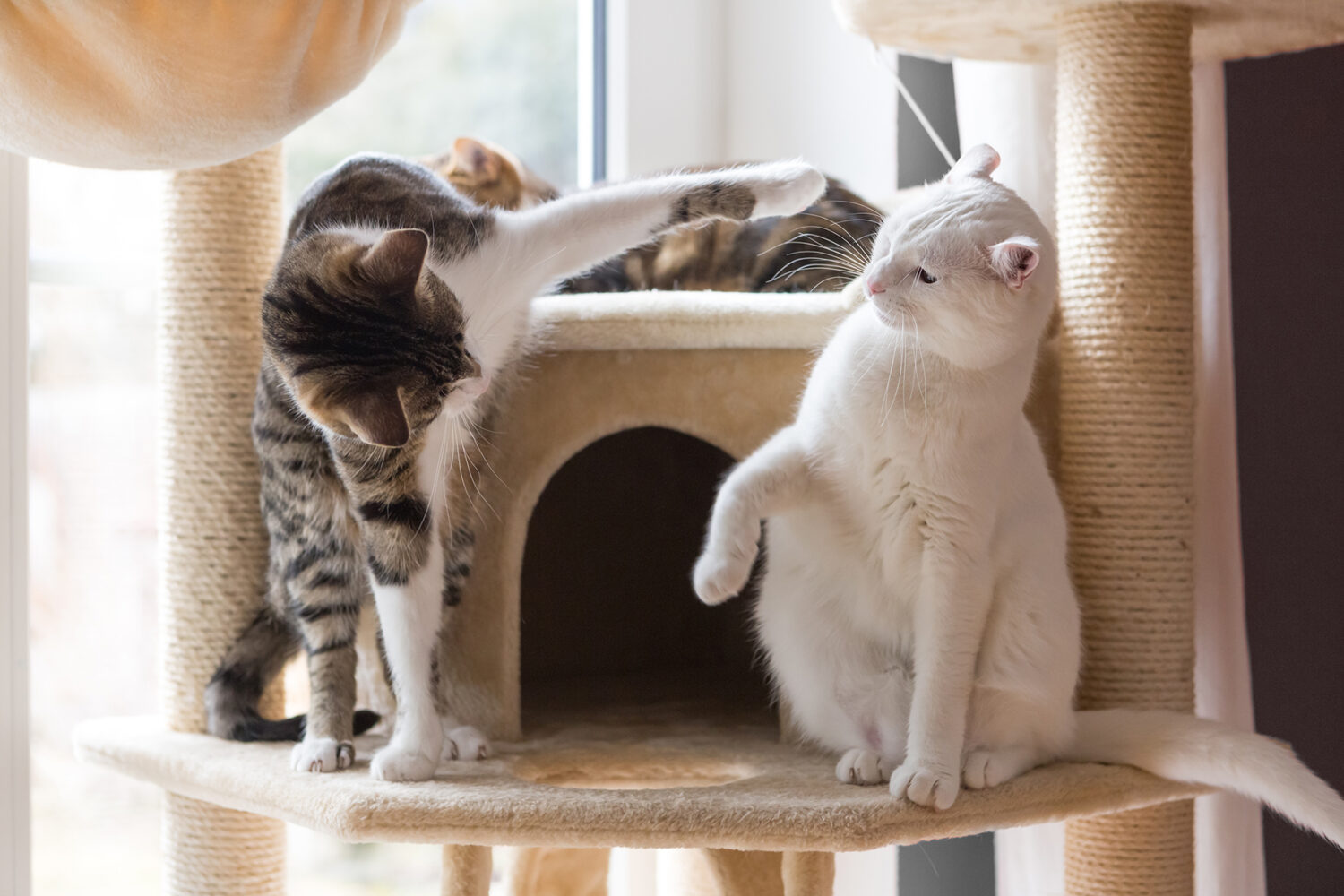
“If you come in [to a shelter] with an idea about a cat that’s not really based in reality, that might change how you interact with them, it might change how they get handled, or who adopts them, or even if they get a chance at adoption,” said Delgado, who shares her life with three tortie siblings. To better understand how people viewed cats of different colors, she surveyed 189 people and found that people consistently label tricolor cats as “intolerant,” orange cats as “friendly,” and white cats as “aloof”.
Torties and calicos didn’t fare much better in a later study. A study by Elizabeth Stelow, DVM, DACVB, chief of the behavior service at the UC Davis Weill School of Veterinary Medicine, found that owners of tortoiseshells, calicos, and black-and-white cats reported more frequent aggressive behaviors during daily handling. Another study found torties were most often labeled stubborn, while bicolor cats were described as tolerant, and gray cats scored higher for being shy and aloof.
Black cats may be affected more by superstition than any personality traits associated with their coat color,-based personality. A study of nearly 8,000 cats in an urban Kentucky shelter found that black cats had lower adoption rates and higher euthanasia rates compared with lighter colored cats. But a good PR campaign might change those views. After a calm, resourceful black cat played the leading role in the animated movie Flow, many animal shelters reported a rise in black cat adoptions.
These surveys showed that people clearly have an opinion about the color of their cats. But Delgado noted that it’s challenging to draw valid conclusions when even temperament-testing tools used by animal professionals can lead to varied results. And the surveys don’t all look at the same set of cat coat colors, or ask the same questions about the cat’s personalities. The other complicating factor is that socialization and environment also influence personality — it’s more than a “paint job.”
Is it in the genes?
The remarkable variety of coat colors in cats arise from only two pigments: black and red (orange). These pigments then get diluted, modified, or mutated by other genes. White coats arise from a “masking” gene, called KIT, that hides the underlying black or red. So far, no one has found that genes that govern coat colors have any influence on behavior. But a few connections seem possible.
In solid white cats with blue eyes, the KIT gene is linked to high rates of deafness. This gene not only blocks the migration of pigment cells to the fur, it also stops them from reaching the developing inner ear cells that need them. So perhaps the “aloofness” attributed to white cats was rooted in hearing loss, not personality.
Last year, scientists discovered that orange cats get their color from a gene (named ARHGAP36) that typically works in the brain. When the gene was found in the fur of orange cats, a specific mutation switched this gene “on” and forced the cells making black pigment to make orange instead. Since ARHGAP36 has been studied for its key role in developing mouse and human brains, it is tempting to think the gene might influence the brains—and behavior—of orange cats, too.
Still curious
While the jury is still out as to whether coat color and personality are truly linked in cats, scientists are still intrigued by the idea.
“Humans like to find patterns even where they don’t exist. If you expect an orange cat to be “dumb,” you’ll notice every time they miss a jump and ignore every time they’re clever,” said Elinor Karlsson, PhD, professor of Bioinformatics and Integrative Biology at the University of Massachusetts Chan Medical School, and director of the Vertebrate Genomics Group at the Broad Institute of MIT and Harvard in Boston. “That said, I’m a scientist and I am willing to test any question.”
Karlsson, a self -described “nutty cat person” with three felines at home, is the co-founder of Darwin’s Cats, an initiative that is part of the non-profit community science called Darwin’s Ark. Her team is two years into building a huge database from analyzing surveys from cat owners and DNA from the fur samples of cats. She hopes to grow the open-source database big enough to help answer health questions for both cats and people. So far, more than 23,000 cats are enrolled, the team has sequenced DNA from 832 cats, and cat people have answered more than a million questionnaires.
“We are asking about behavior, we are asking about color, and we are going to see whether we can see any patterns,” said Karlsson. “It would be really cool if you actually had a coat color gene that was also influencing a behavioral characteristic.”
True to the quirky nature of cats, they defy our human desire to categorize them, yet still keep us curious. But the next time you pick a cat, Delgado said: “It’s much easier to look at the cat in front of you, get to know them, and hang out with them to see if you’re a good fit for each other, instead of trying to pick a cat based on their color.”