Culture and Wellbeing
From the Guidelines: 3 ways to improve technician utilization

Credentialed veterinary technicians are highly trained people who are able to perform a wide variety of tasks in the clinic, but they are also chronically underutilized. Here are three things you can stop doing in order to improve technician utilization in your practice, based on the 2023 AAHA Technician Utilization Guidelines.
Advertisement
Credentialed veterinary technicians (CrVTs) are exceptionally trained individuals capable of performing a variety of tasks in the clinic. However, only 40% of CrVTs who responded to the 2022 NAVTA Demographics Survey felt fully utilized. Consequently, this lack of veterinary technician utilization can negatively impact job satisfaction, which can lead to staff turnover.
In many cases, barriers to veterinary technician utilization include lack of trust and delegation from veterinarians. Lack of knowledge of the CrVT’s scope of practice poses another challenge. The 2023 AAHA Technician Utilization Guidelines provide a comprehensive plan to improve utilization in your practice.
To get you started, here are three things your clinic can stop doing to improve veterinary technician utilization:
1. Stop having veterinarians perform technical tasks and collecting diagnostic samples
Every member of the veterinary team should have a clear list of responsibilities. For optimal efficiency, these tasks should have minimal overlap, allowing each position to operate at its full potential.
For instance, when veterinarians start performing tasks that are the responsibility of other team members, such as drawing blood or taking radiographs, this detracts from time spent directly with patients and clients or working on medical records. Additionally, this can send a message to other team members that they aren’t trusted or valuable to the team.
Tasks for technicnans
Of all the tasks that happen in the clinic, only four must be exclusively performed by veterinarians: diagnose, prognose, perform surgery, and write prescriptions. The rest can—and should—be delegated to other members of the team. This allows veterinarians to focus on their primary duties and prioritize building connections with clients and patients.
Diagnostics
CrVTs should be the go-to team members for most diagnostics ordered by the veterinarian. In many clinics, this includes phlebotomy, collection of urine by cystocentesis, and obtaining radiographs. But CrVTs can perform many additional diagnostic tests, including ophthalmologic tests (i.e. fluorescein stains, obtaining eye pressures, and Schirmer tear tests), dermatological tests (i.e. skin scrapes, skin cytology, and ear cytology), reviewing blood smears, and reading urinalysis.
Emergency care (and more!)
When it comes to administering treatments, CrVTs are capable of doing much more than administering oral and injectable medications. They can monitor anesthesia, place bandages and splints, and perform pain assessments. In an emergency, CrVTs can place urinary catheters to unblock cats, perform a thoracocentesis, and lead CPR efforts.
Exploring the scope of practice for CrVTs in your state’s practice act as well as suggestions in the Technician Utilization Guidelines can help identify what tasks can be delegated to these individuals.
Veterinary clinics should clearly identify the roles and responsibilities of each team member—from veterinarians to client service representatives. Developing this list should consider scope of practice for the position as well as individual experience levels. Having multiple levels of CrVT duties allows room for professional advancement within the clinic. It also ensures that those performing more complex procedures and patient care have the appropriate skillset. The levels and expectations for CrVTs will vary by practice type. Emergency and specialty hospitals will likely have more stratification based on experience and training.
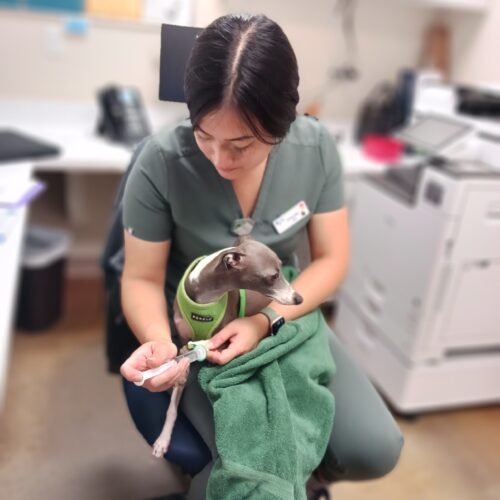
Of all the tasks that happen in the clinic, only four must be exclusively performed by veterinarians: diagnose, prognose, perform surgery, and write prescriptions. The rest can—and should—be delegated to other members of the team.
2. Stop expecting veterinarians to do all client communication
CrVTs are a valuable asset in client communication. Their skills can be used in many different ways, including:
- Discussing costs of care and reviewing treatment plans with clients.
- Informing clients of payment options available in the clinic.
- Providing client education on topics ranging from general husbandry and preventive care to behavior, nutrition, palliative care, and disease management.
- Reviewing discharge instructions and at-home care plans.
- Teaching clients how to administer medications, including injections such as subcutaneous fluids or insulin.
- Communicating diagnostic results after veterinarian review.
- Performing follow-up calls and check-ins with clients after a visit, including helping to monitor patients on specific nutrition or behavior treatment plans.
Having technicians involved in cost-of-care conversations can help to improve outcomes for clients. A 2022 JAVMA study found that when both veterinarians and CrVTs are involved in conversations with clients about diagnostic and treatment options, clients are more engaged in the decision-making process. Additionally, it can be beneficial for veterinarians to focus on making specific recommendations and discussing the pros and cons of different care options while another team member has the more financial side of the conversation and reviews estimates line-by-line.
3. Stop using the word “technician” to describe every team member
When veterinary clinics call all members of the patient care team technicians, regardless of if they were on-the-job trained, have completed schooling, or are credentialed, it can detract from the prestige of the title. Additionally, it can be confusing for clients, who already often have a limited understanding of what these professionals do.
To be considered a technician, an individual must complete a 2- or 4-year veterinary technology program, and pass the national licensing examination, and they must engage in continuing education to maintain their licensure. This hard work and advanced education should be recognized.
Best practice in the clinic is to refer only to CrVTs as “technicians” and all other members of the patient care team as “assistants.” In many states, assistants can perform some of the tasks a CrVT can do, such as phlebotomy, but require a higher level of supervision from the attending veterinarian. Consult your state practice act to determine what tasks each role can perform.
How is your practice doing?
Ultimately, better veterinary technician utilization can improve retention as well as practice income, workflow efficiency, patient care, and client relationships. If you aren’t sure where your clinic stands with team utilization, the AAHA Technician Utilization Guidelines and Toolkit includes team assessments on current utilization, questions for reflection, and goal-setting worksheets to help your clinic move forward with stronger utilization.
Photo credit: Photo by Lois Lantz, Pine Creek Animal Hospital; photo by Natalie Borgardt, Animal Care Clinic San Luis Obispo
Disclaimer: Trends content is meant to inform, educate, and inspire by providing an array of diverse viewpoints. Any content published should not be viewed as an official stance, position, or endorsement by the American Animal Hospital Association (AAHA) or its Board of Directors.
