Culture and People
HAB-py tails: Self-care, kid connections, and more
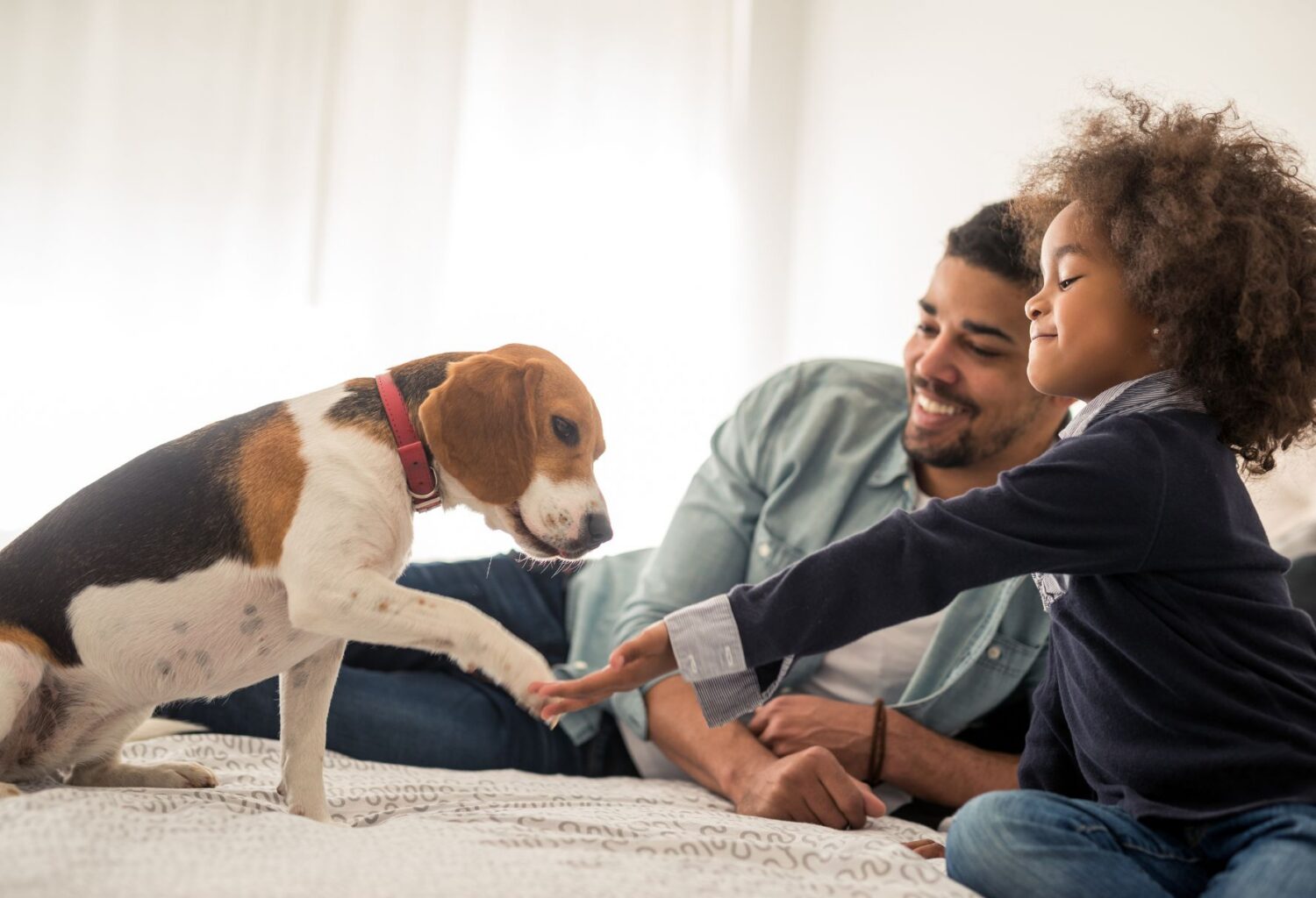
Every month, we curate stories and research that celebrate the special connection between people and their pets. Consider this your monthly reminder that the care you provide goes far beyond the exam room—because when you help an animal thrive, you’re also nurturing the irreplaceable bond they share with the people who love them.
Advertisement
For many of you, the human-animal bond (HAB) is the very reason you chose this path. And the nature of this work places you at the heart of it. Every treatment, every diagnosis, every follow-up call is an opportunity to help pet owners deepen that connection. And by keeping their companions healthy, you help ensure that bond has every chance to flourish.
So, whether you’re coming off a long shift or simply need a moment of perspective, we’ve pulled together the latest research on the human-animal bond to remind you just how meaningful your work truly is.
Pet care as self-care
Do you ever feel a little better after a walk with your dog? Does feeding your cat bring you a sense of calm? This 2025 study looked at the connection between caring for our pets and caring for ourselves and found that the experience of sharing those moments brings a boost to all involved.
Dog and cat parents from 11 countries participated in interviews about their relationships with their pets, and about how those relationships impacted their own wellbeing—specifically with regard to rest and relaxation.
The findings showed that caring for pets provided two important elements of self-care: prioritization and permission. Because pets require certain types of care, pet parents prioritize activities related to that care, whether that’s a walk, a play break, a grooming session, or just a moment of cuddling. And, because it’s necessary for our pets’ wellbeing, it gives people an excuse—or permission—to take time out of their day to be present and enjoy those activities.
Pet-friendly housing increases options for unhoused people
A pilot program by California’s Department of Housing and Community Development, the Pet Assistance and Support Program, launched in 2019 and aimed to create shelters that wouldn’t force unhoused individuals to choose between seeking shelter and remaining with their pets. Between 2020 and 2024, the program distributed $15.75 million to 37 California organizations so they could create pet-friendly environments.
Just last month, The University of Southern California’s Homelessness Policy Research Institute evaluated the program, alongside the pet-inclusive housing and services nonprofit My Dog Is My Home, and deemed the program a success. It allowed over 4,400 individuals experiencing homelessness to enter a shelter while remaining with their pets, and many of those pets received veterinary care. The evaluation also found that 886 people moved on to live in permanent housing along with their pets; that success rate is higher than the statewide average for unhoused populations in California.
Dogs and kids—not so different?
Out of cats, dogs, and toddlers, which of the two groups would you envision having the most in common?
Sure, cats and dogs have the quadruped thing, and also those tails, but according to this study, it’s actually dogs and toddlers (children aged 16-24 months) who share more behaviors.
The study looked at how each group reacted naturally in a “helping” situation, such as a familiar human caregiver appearing distressed, or looking for a hidden object. Researchers found that all three groups paid attention to the caregiver when he or she was distressed or looking for the object; however, the dogs’ spontaneous prosocial behavior was quite similar to the toddlers, whereas the cats’ object-related behaviors were strongly tied to their own self-interest.
Of course, anybody who’s spent time with a toddler (or certain dogs) might argue that all three groups tend to focus largely on what’s in their own interest. However, it’s interesting to note how similar the findings between dogs and kids were. And cats? Well, they are known for being independent.
Pet ownership’s impact on mortality
Can having a pet help you live longer? The Human-Animal Bond Research Institute (HABRI) recently announced a study that will seek to identify an association between pet ownership and all-cause and cause-specific mortality.
The study, which will analyze linked health survey and mortality data, will examine both the direct and indirect effects of pet ownership on mortality based on psychosocial and health behavioral variable changes. In other words, it’ll look at whether pet owners experience less loneliness, get more physical activity, have lower BMI, etc.
This funded project, led by principal investigator Lauren Grant, PhD (Ontario Veterinary College, University of Guelph), will bring together bodies of evidence to identify, formalize, and quantify this data among older adults in Canada.
Photo credit: bernardbodo/ iStock via Getty Images Plus
Disclaimer: Trends content is meant to inform, educate, and inspire by providing an array of diverse viewpoints. Any content published should not be viewed as an official stance, position, or endorsement by the American Animal Hospital Association (AAHA) or its Board of Directors.
