Client Communication
My Pet Ate: DIY home renovation hazards for pets
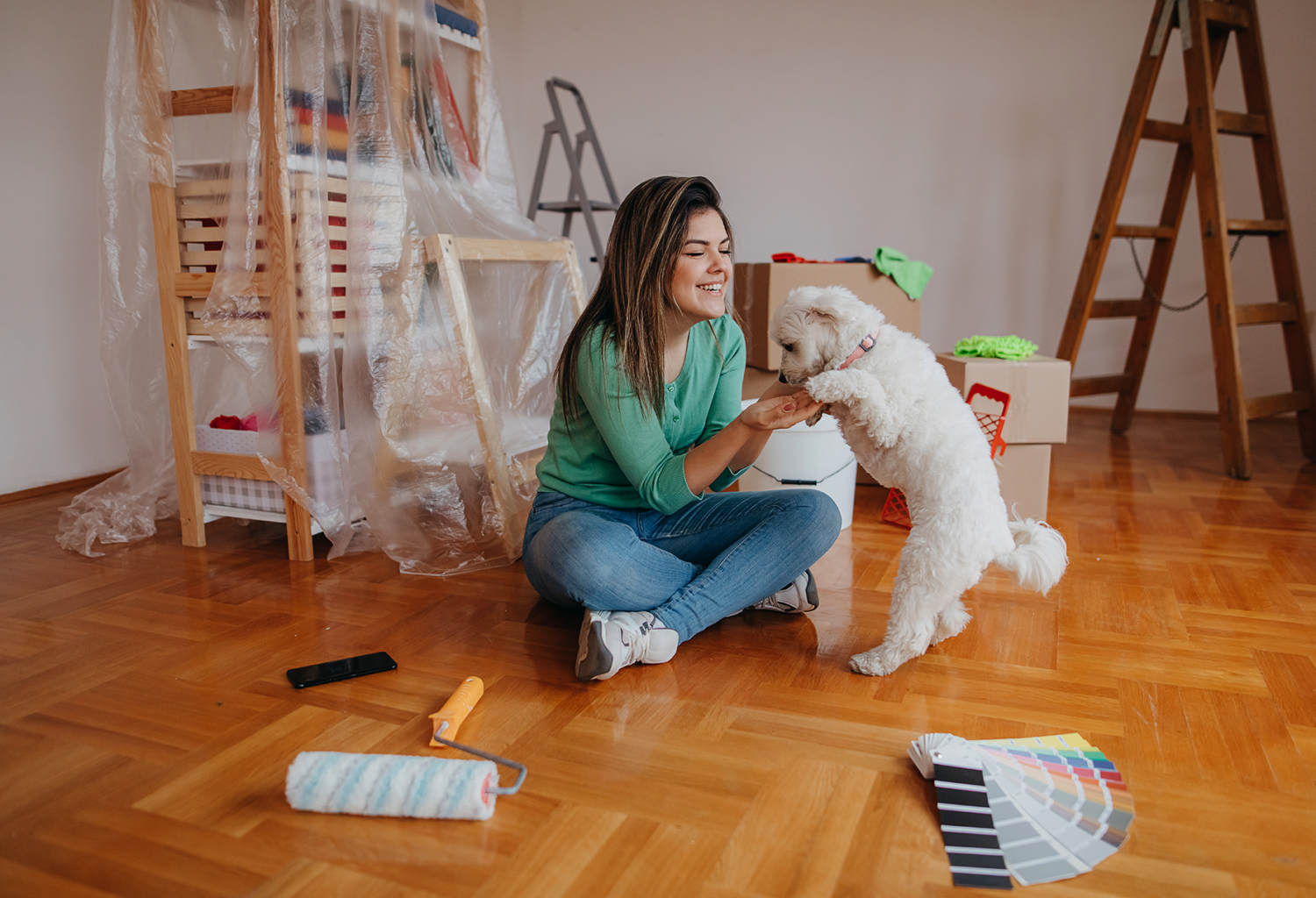
The Pet Poison Helpline gets calls every year about pets getting into all sorts of things – from plants to paints. But when it comes to DIY projects in the home, what should pet owners be aware of before starting?
Advertisement
If your pet ingested a substance and you’re unsure if it’s toxic (e.g. if your pet ate a household plant and you’re unsure of its safety), call your veterinarian or an organization like the Pet Poison Helpline immediately to get your questions answered.
You’re focused on the task ahead while your dog is lying down in the room. You’ve put on all the right personal protective equipment and are ready to go. Sounds like you’re working in veterinary practice, right? Actually, in this story, a pet owner is getting ready to do some work on their home. From painting the walls to fixing up a piece of furniture, in 2024 alone, nearly 75% of homeowners attempted some sort of home “do it yourself” (or DIY) project. But did you know that DIY home renovation projects can pose hazards for pets? Whether its toxic paint or spiky nails, pets can get into plenty of supplies that are bad for their health.
So, if a pet owner is in the middle of a DIY project and they realize their dog or cat just ingested some of the supplies, what should they be worried about?
Foreign body concerns
Right off the bat, there’s one thing Renee Schmid, DVM, DABT, DABVT, the Director of Veterinary Medicine and Senior Veterinary Toxicologist for the Pet Poison Helpline warns about then it comes to DIY home renovation projects: Expansive glues.
“While they’re not a toxic concern, so to speak, they can cause just a large kind of hard mass to form in the stomach,” she notes. “These [pets] end up needing to have surgery to remove [the mass]. Even a very small amount can expand to a large capacity in that stomach.”
Schmid says to keep in mind those polyurethane glues, which can include anything from Loctite® to Gorilla® glue. If it expands and hardens after you’ve laid it, then it’s cause for worry in your pet.
The other big concern Schmid highlights is nails and screws. It’s not uncommon to lay out screws for something as simple as hanging a photo – but it’s important to keep track of them.
“It’s surprising how many animals will ingest nails and screws,” she says. “Again, they’re not going to really be a toxic concern, but obviously there’s significant danger for them having that in their stomach and trying to pass that through.”
Then there’s insulation. Despite all the jokes online about it looking like cotton candy, it’s something for pet owners to be cognizant of. While a pet ingesting a nibble or two shouldn’t cause any serious issues, Schmid notes, a large amount can cause obstruction issues.
“Medium to large-sized dogs that just take a small bite or two, [the insulation] typically is going to pass through without any problems,” she adds.
Paints, stains, and paint thinners
Based on some of the calls the Pet Poison Helpline receives, Schmid notes that it’s important to keep an eye out when there’s an open can of paint, stain, or some sort of paint thinner when you’re tackling a DIY home renovation project with pets nearby. Additionally, it’s important to keep pets out of a room where it’s been recently applied (and not just so they don’t track painted paw prints everywhere!).
“Those can certainly potentially cause some aspiration issues if they were to ingest that, and vomit,” she says. “Same thing with some of the stains.”
In addition to those aspiration issues, Schmid notes that paint thinners can also cause some neurologic issues.
“[The pet] can have some difficulty walking, we can even see seizures occurring,” she adds. “So any of those things we want to really make sure we leave out of the way of a pet.”
The easiest way to prevent your pet from getting into these sorts of materials in the midst of your personal DIY home renovation project? Make sure they are either in a space your pet can’t reach or in a room your pet can’t access.
Our “My Pet Ate” series is done in collaboration with the Pet Poison Helpline. You can learn more about the services they offer on their website or by calling (855) 764-7661.
Photo credit: © PhotoAttractive via E+ / Getty Images Plus
Disclaimer: Trends content is meant to inform, educate, and inspire by providing an array of diverse viewpoints. Any content published should not be viewed as an official stance, position, or endorsement by the American Animal Hospital Association (AAHA) or its Board of Directors.
