Clinical

383 Articles

Referral as a key to family-centered, collaborative care
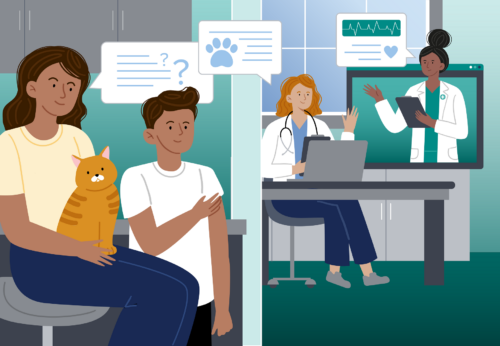
illustration of family with cat, veterinarian, and telehealth consult

Clinical

Referral as a key to family-centered, collaborative care

When do you call a specialist for advice? In the experience of Bret Moore, DVM, PhD, DACVO, general practitioners often wait until a situation is bleak or they’re out of options to seek the help of a specialist—and that approach does a real disservice to the pets and people those doctors are trying to help.

“All the times that we’re not 100% sure on something? There could be a lot to be gained from that as well,” he said. “That’s where I’m taking a stance on collaborative care: That it should be done on a regular basis, not on a once a month dire, terrible case basis. I think our profession and everybody involved would benefit from that.”
Veterinary Voices: Sarah Parsons, LVT
headshot of Sarah Parsons with a pink background next to the Veterinary Voices logo on a teal background

Clinical

Veterinary Voices: Sarah Parsons, LVT

Meet Sarah Parsons, a licensed veterinary technician, mental health advocate, and social media content creator. Her humorous videos about life in veterinary practice bring laughter and connection to both veterinary professionals and pet owners alike.  She has a special interest in advocating for the mental health of veterinary technicians and encouraging them to stay in veterinary medicine and not give up on their goals.

Mobile pet care: From technician appointments to full-service home care
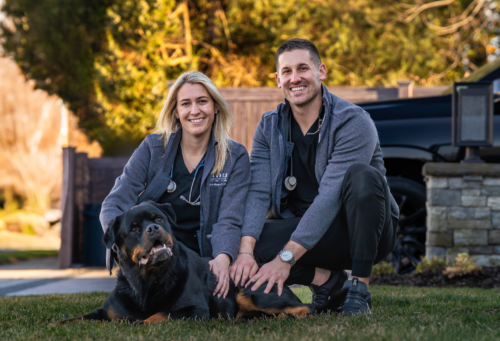
female veterinarian and male technician pose with Rottweiler

Clinical

Mobile pet care: From technician appointments to full-service home care

It began as a veterinary technician meeting the need for home veterinary services like bandage changes or medication administration in Long Island; today, with a veterinary partner on board, this mobile practice has gone full-service. And their clients couldn’t be happier. See how they identified and met their community’s needs.

Public-private partnership helps support pet and human health
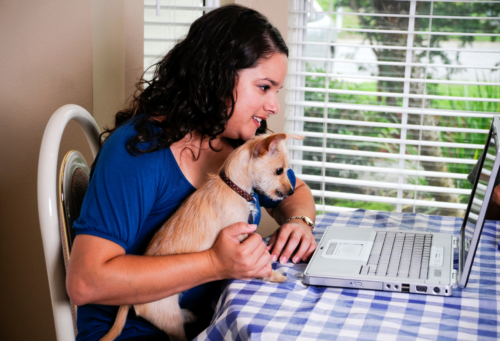
A woman sits at a table looking at her laptop with her dog

Clinical

Public-private partnership helps support pet and human health

Created during the COVID-19 pandemic, the Pet and Public Health Early Warning and Detection System has served as a way to disseminate information about the H5N1 influenza epizootic and the canine infectious respiratory disease outbreak and aims to help identify new threats to animals and human health in the future.

When remote work ends: How pet behavior can change when owners return to the office (and how veterinarians can help)
dog sitting on couch looking out window

Behavior

When remote work ends: How pet behavior can change when owners return to the office (and how veterinarians can help)

As more companies end their work from home policy, requiring many workers to return to the office, at least part time, those with pets might not realize the impact this change might have. Or maybe they are already seeing the impact first-hand with their pet’s behavior changes. Regardless, there’s a role veterinary teams can play in helping prepare pet owners and their pets for the shift.


Feeling ready? Scenario-based planning for HPAI H5N1 in small animal practice
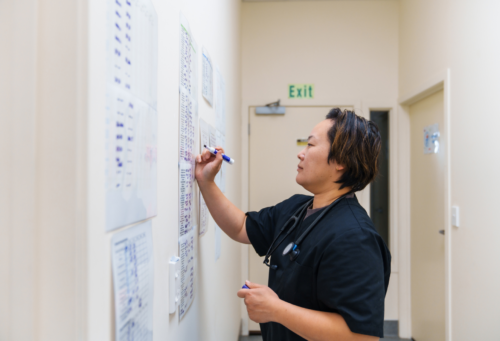
vet at a whiteboard wiritng

Clinical

Feeling ready? Scenario-based planning for HPAI H5N1 in small animal practice

The goal is to ensure your practice is ready for the day ahead and, in this situation, the unexpected feline HPAI H5N1 cases.You’ll need these two forms as well for the scenario:  HPAI H5N1 Planning Scenario and ​​HPAI H5N1 Planning Form.

The power of volunteering abroad for veterinary professionals
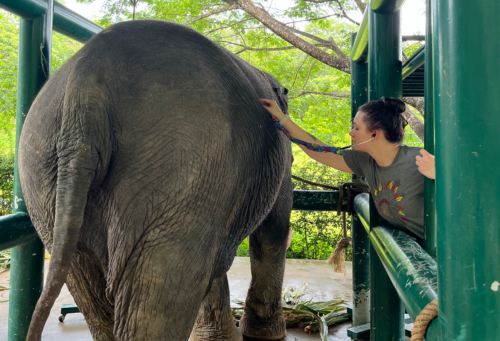
Veterinary technician monitors elephant in Thailand for colic

Clinical

The power of volunteering abroad for veterinary professionals

For veterinarians, veterinary technicians, and students, volunteering abroad is more than a résumé enhancer. It is an immersive way to test clinical instincts, adapt to resource-limited settings, and experience medicine at its most raw and rewarding. From treating parrots in Belize to horses in Guatemala, dogs in India, and wild jaguars in conservation zoos, stepping beyond borders often leads to tremendous professional growth. And these veterinary professionals are proof.

Advertisement

Go to the AAHA Site