2026 AAHA Diabetes Management Guidelines for Cats
Diabetes management in cats requires a different approach from diabetes in dogs. With the availability of SGLT2-inhibitor drugs for cats, treatment strategies continue to diverge between these two species. To help primary care providers better serve their feline patients, the AAHA Diabetes Management Guidelines for Cats provides step-by-step guidance on diagnosis, treatment, and monitoring of diabetes mellitus in cats.


Guidelines at-a-Glance
In these guidelines, veterinary teams will find:
- An overview of diabetes pathophysiology in cats to understand the species-specific aspects of this disease
- How to diagnose diabetes mellitus in cats
- How to recognize and manage at-risk cats
- SGLT2 inhibitor treatment and monitoring
- Insulin treatment and monitoring
- Expert tips on troubleshooting issues and problems
- Treating diabetic ketoacidosis and euglycemic diabetic ketoacidosis
- What tests to use to monitor glycemic status
- How to recognize diabetic remission
- Dietary management tips
- How to talk to clients
- Charts and algorithms that provide step-by-step guidance for:
- Starting SGLT2 inhibitor treatment
- Types of insulin and starting dosages
- Troubleshooting hypoglycemia
- Approach to cats on insulin who have become unregulated
3 Takeaways
- A diabetes diagnosis requires evidence of sustained hyperglycemia, which includes one or more of the following: increased fructosamine or hemoglobin A1C concentration, or hyperglycemia or glucosuria documented on more than one occasion while in a non-stressed or home environment.
- In-hospital blood glucose curves are not recommended for cats.
- Not every cat is a suitable candidate for an SGLT2- inhibitor drug. Careful patient selection is required.
2 Actions
- When diagnosing diabetes in cats, it’s important to identify any comorbidities or conditions that may cause insulin resistance and interfere with a cat’s response to treatment.
- For cats receiving insulin treatment, remember to monitor the cat and not just the numbers. Often resolution of clinical signs and a cat who is feeling well is a good indicator of diabetic regulation.
1 Thing to never forget
- Cats who develop diabetes can live comfortably with their condition for the rest of their lives, and some cats may experience disease remission.
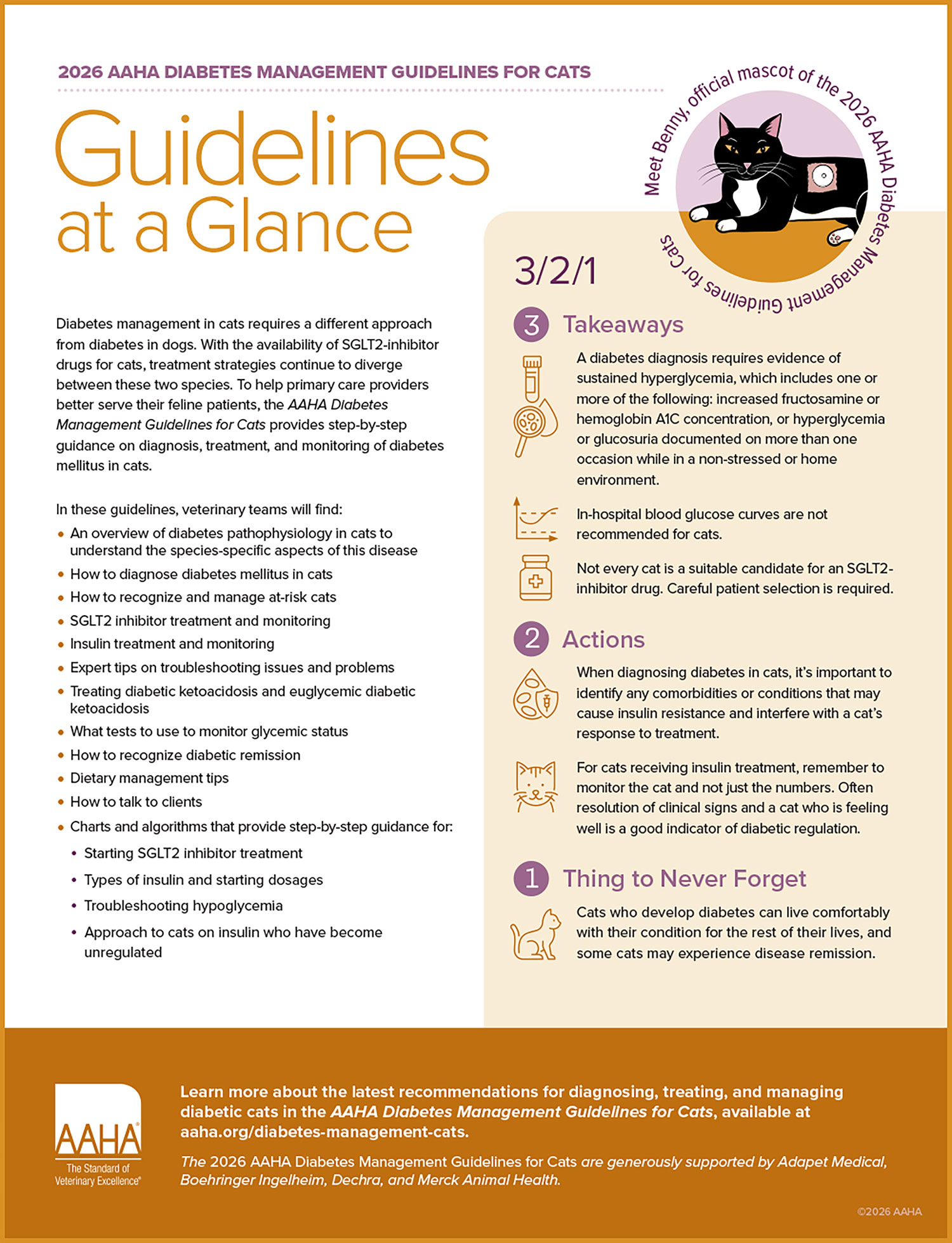
Download the Guidelines at-a-Glance 3-2-1 Sheet
Meet Benny The official mascot of the 2026 AAHA Diabetes Management Guidelines for Cats

The 2026 AAHA Diabetes Management Guidelines for Cats are generously supported by Adapet Medical, Boehringer Ingelheim, Dechra, and Merck Animal Health.