2026 AAHA Diabetes Management Guidelines FAQs – Cats
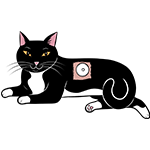
CONTINUOUS GLUCOSE MONITORING (CGM) FAQ
1. What should I do if the CGM falls off?
- Instruct clients to call for further instructions if the CGM falls off.
- If the CGM falls off but has been on for several days, it is likely the available information can be used to direct further treatment decisions. A few days still provide more information than an 8-hour blood glucose curve.
- If the CGM falls off before significant information has been obtained, try to determine why it fell off. Consider the following possible solutions when replacing the sensor:
- Ensure the attachment site is shaved, similar to surgical preparation, and skin oils are removed by wiping the area with alcohol, then allowing it to air dry.
- Use additional and/or different adhesive (e.g., tissue glue, adhesive pads or wipes).
- Protect from pet-induced removal (e.g., jammies, wraps, Thundershirt, waterproof sensor covers, transparent wound dressing films [e.g., Tegaderm]).
- Use an alternative location for attachment.
- Consider training clients to place sensors at home to save them the cost of additional visits just to replace sensors.
- If repeated sensor removal by the patient occurs before adequate glycemic data can be obtained, consider an alternative monitoring strategy.
2. What if my client notices skin irritation from reinforced adhesive/tissue glue use?
- Ensure the body area being prepped for sensor attachment is clipped carefully and atraumatically to avoid clipper-associated skin irritation.
- For sensor removal, use acetone-soaked cotton swabs to wet and lift the adhesive by slowly rolling under the adhesive pad to gently remove it without irritating the skin.
- When subsequent sensors are placed, judiciously use adhesive reinforcement or avoid using additional adhesive altogether. Instead, focus on covering the sensor with waterproof covers, jammies, shirts, or wraps.
- Some animals are sensitive to any adhesive, and if attempts are made with different techniques and there is still excessive irritation, CGM use will not be an option.
- Anecdotally, adhesive wipes (such as Skin Tac) seem to be less irritating than tissue glue following sensor removal.
3. Are there situations in which I shouldn’t place a CGM?
- Don’t place if the patient is having an MRI or CT performed.
- Don’t place if the patient will be swimming (decreases adhesiveness) or recommend no swimming while monitoring with a CGM.
- Placement of a CGM should be prescribed by a veterinarian when medically necessary for a patient’s diabetic management. Placing sensors to simply measure a well-controlled pet’s glucose status is not recommended and often contributes to challenges involving patient care and team communication (e.g., clients altering prescribed therapies or clients obsessing over needing to constantly know their pet’s glucose values- see #7 below).
4. What if the CGM reports low glucose values?
- Remember that current CGMs are not calibrated for use in animals, and the goal is to assess trends in overall glycemic response.
- If the patient is acting normal: Monitor clinical signs. Confirm reading with a veterinary-calibrated glucometer if available. If the patient is confirmed to be hypoglycemic, instruct clients to offer several small bites of their regular food and monitor until they can follow up with their veterinarian and determine whether the next dose of insulin requires adjustment based on the overall clinical picture.
- If the patient is acting hypoglycemic: Confirm with veterinary-calibrated glucometer if available.
- If the patient is only mildly affected, offer 2-3 small meatballs of canned food.
- If the patient is more severely affected, either soak several cotton swabs in a high sugar content syrup (standard, not “lite”). Karo is ideal; do not use honey or pancake syrup as alternatives in cats. Use swabs to rub syrup between the cheek and gums. Alternatively, use a syringe to apply 1 ml of Karo syrup at a time inside the cheek, up to a dose of 0.25 ml/kg. Follow up with a veterinarian or emergency clinic ideally as soon as possible or within 12 hours. If follow up is delayed more than 12 hours, either skip the next insulin dose or give only 25-50% of the normal insulin dose until a veterinary assessment is performed. A patient should not go for more than 24 hours without any insulin being administered due to the risk of ketoacidosis.
5. What if the CGM is reporting high glucose values?
- Remember that most CGMs are not calibrated for use in animals, and the goal is to assess overall trends in glycemic response.
- There are differences in the response to moderate to severe hyperglycemia in cats as compared to people. A blood glucose (BG) of over 300 mg/dL may be of concern in a person, but it is not an emergency in cats.
- First, evaluate how the patient is acting clinically, and remember that most diabetic therapies take a few days to a couple of weeks to stabilize blood glucose at a desired level. The point of this data is to assess and interpret trends over 14-15 days. Avoid hyper-focusing or acting on one-off bad days or high readings.
- If consistently reading high and clinical signs are possibly present, confirm the magnitude of hyperglycemia with a veterinary-calibrated glucometer and conduct a follow-up with the client to discuss dose adjustments if an adequate amount of time has passed on the current insulin dose. Also, consider evaluating the blood or urine for the presence of ketones.
- If the patient is consistently hyperglycemic and displays signs of illness, they should be evaluated by a veterinarian. See also Section 10, Troubleshooting in Diabetic Cats, and Section 12, Diabetic Ketoacidosis in Cats, in the AAHA Diabetes Management Guidelines for Cats.
6. What if there are gaps in reporting, error messages, or early loss of CGM sensor function?
- First, evaluate how the patient is acting clinically. The point of CGM monitoring is to assess glycemic trends over the 14–15-day curve period; therefore, occasional brief gaps in reporting sometimes occur but do not usually impact overall interpretation. Prolonged gaps in reporting, highly erratic readings bouncing from high-to-low BG values, and alerts about repeated quality checks or sensor errors often indicate sensor malfunction and often warrant sensor removal or replacement.
- If the CGM loses sensor function, but it’s been on for a few days, use the available information to make further treatment decisions. Several days of a CGM is still better than an 8-hour blood glucose curve.
- If insufficient information is obtained to guide therapeutic decision making prior to loss of sensor function, sensor replacement will likely be necessary.
7. What if my clients (or veterinary colleagues) begin to develop a dependency on observing the hour-to-hour readings (verging on obsessing over numbers) for their pet’s/patient’s CGM?
- Most patients do not need a CGM placed continuously, nor does the task force recommend this practice. A CGM should only be used to collect glycemic data when medically necessary for the veterinarian to monitor or direct a patient’s care.
- Clients should be educated on the importance of monitoring clinical signs (and body weight) as the primary, and often more accurate, way to assess a patient’s level of diabetic control. Glucose curves or CGM data should be ancillary to clinical information and be used only when needed, such as identifying the underlying problem in a diabetic patient who has relapsed with clinical signs.
- Addressing a need to constantly know a pet’s glucose status or correcting a belief that CGM is the best overall diabetes mellitus (DM) monitoring tool can be some of the most challenging aspects of CGM use in veterinary medicine. Preventing these issues can be aided by setting clear guidelines and expectations with clients prior to using a CGM as part of their pet’s management.
8. How do we use fructosamine measurements now that we have CGMs?
There is no monitoring tool that accurately characterizes a patient’s level of DM control on its own; instead, it is the interpretation of several variables that collectively allow this determination. Fructosamine is just one of many tools available to veterinarians that can be used as a part of a tailored, patient-specific DM monitoring plan. For patients on long-term insulin, a CGM is not needed for those who are not showing clinical signs and otherwise outwardly are stable. Fructosamine measurement can be part of the periodic monitoring minimum database in well-controlled patients, including assessment of clinical signs and body weight, to ensure overall glycemic control. It may be used as part of the assessment of patients suspected of being persistently hypoglycemic or for cats potentially entering diabetic remission. Additionally, it may be used as part of a monitoring plan for uncooperative patients for whom an at-home blood glucose curve or CGM use may not be possible.
GENERAL DIABETES MANAGEMENT QUESTIONS – CATS
1. Why isn’t my client compliant/listening?
- It can be overwhelming to learn that a pet has DM, and clients are often inundated with information at the time of a DM diagnosis. Prioritize what information is needed urgently versus what can be sent home for clients to consider or read later. Offer different types of resources (physical handouts, websites, trusted video sources) and check in often (this can be the veterinarian or team members) to troubleshoot and answer questions that come up as the client adjusts to the diagnosis. Take advantage of subsequent recheck visits as opportunities to continue or reinforce client DM education. Education is empowering, but proper education on all aspects of DM and its management will take time for clients to fully process and comprehend.
- Studies have also shown that while clients with diabetic pets feel the animal’s quality of life is good, the clients’ report their own quality of life is negatively impacted. This is mostly the result of demands on their daily schedule, impacts on their social life or ability to travel, and time spent worrying about various aspects of their pet’s health (e.g., hypoglycemia, concern that they are doing something wrong). Receiving education, support, and good communication from their veterinary care team can promote client satisfaction, which may improve compliance with recommendations.
- For parents of adolescent diabetic children, having the doctor acknowledge the impact of a DM diagnosis on the entire family, avoiding prescriptive or rigid recommendations, allowing for reasonable flexibility or spontaneity in their daily routine, and feeling like they were engaged as partners in their child’s care were reported to improve their perceptions of provided care and compliance. It is reasonable to assume similar benefits would be experienced by diabetic pet owners if treated similarly.
- For more information, see this paper on client perceptions: “Priorities on treatment and monitoring of diabetic cats from the owners’ points of view.”
2. Why does my client keep searching “Dr. Google” instead of listening to me?
A new diagnosis of DM in a pet can be overwhelming. Some clients are content with your expert advice, and some may want to search for more information. Try not to take it personally and become frustrated or insulted if a client wants to understand more about the disease. Instead, direct clients to quality, trusted online resources and remind pet caregivers that there are lots of opinions but only a few hard and fast rules when it comes to managing this disease.
For more information, see this paper on client perceptions: “Priorities on treatment and monitoring of diabetic cats from the owners’ points of view.”
3. What if the cat doesn’t eat while being treated for DM?
- If the cat is on insulin and goes off food and/or water, skip or reduce the insulin dose to avoid hypoglycemia, and instruct the client to contact their veterinarian. Evaluation is necessary if the cat is not feeling well. If inappetance persists, instruct the client to seek veterinary help. Cats should not go more than 24 hours without any insulin and/or if cats are given 2 or more consecutive half doses of insulin due to minimal food intake, they should be evaluated by a veterinarian.
- If the cat is on an SGLT2 inhibitor, there is no risk of hypoglycemia with administering the next dose. However, the cat should be evaluated for the presence of ketones if not feeling well.
4. What do I tell my client to do if the cat vomits after a dose of SGLT2 inhibitor?
- If the cat vomits within 30 minutes of dosing, the drug can be redosed.
- If the cat vomits more than 30 minutes after being dosed, do not redose but continue with the next scheduled dose the following day. The medication is rapidly absorbed, so it is likely the cat received an adequate portion of the provided dose.
5. What do I tell my client if they forgot a dose of SGLT2 inhibitor?
Pick back up the next day on their normal schedule. No need to double dose or try to catch up.
6. What if the cat acts hypoglycemic while being treated for DM?
If the cat is exhibiting signs of hypoglycemia, food should be offered. If the cat is unwilling to eat, Karo syrup (0.25 ml/kg) should be rubbed between the cheek and gums using soaked cotton swabs or a syringe to apply 1 ml at a time. The veterinarian should be contacted immediately, and the patient should be evaluated as soon as possible. Cats tend to be more resistant to showing signs of hypoglycemia than dogs; therefore, if signs are noted, they should be taken very seriously.
7. How do we use CGMs or fructosamine measurements now with cats on SGLT2 inhibitors?
There is really no reason to place a CGM on a cat managed with an SGLT2 inhibitor as doses are not being adjusted/titrated with these therapeutics. Instead, a blood glucose monitoring spot check can be used to see if the cat is responding to the drug; blood glucose in the normal range indicates a good response. If high (>300mg/dL), then it can be helpful to measure fructosamine to assess the cat’s response without the confounding effect of stress hyperglycemia.
8. What instructions should be given for cats on SGLT2 inhibitors undergoing anesthesia?
Clients should be instructed to skip the SGLT2 inhibitor dose on the day of anesthesia, based on recommendations in human medicine. Glucose can be monitored peri-procedurally and controlled with short-acting insulin as needed until patient recovery.
For additional information on anesthetizing diabetic patients, see the AAHA Anesthesia and Monitoring Guidelines at https://www.aaha.org/resources/2020-aaha-anesthesia-and-monitoring-guidelines-for-dogs-and-cats/.
The 2026 AAHA Diabetes Management Guidelines for Cats are generously supported by Adapet Medical, Boehringer Ingelheim, Dechra, and Merck Animal Health.