Conclusions and next steps
Recap the key learnings from AAHA’s Stay, Please retention study and determine what steps your practice can take to reduce turnover.
Conclusions and next steps
Ready to work these findings into a retention plan for your practice? Let’s start with how to give your practice, as a whole, a retention boost.
Reduce practice-wide turnover with a core values refresh
The understanding that addressing the factors at the base of the pillar will make the biggest impact on practice retention as a whole was introduced in Phase 1, and the findings of Phase 2 supported that notion completely. If you are seeking to reduce practice-wide turnover, begin at the bottom and work your way up.
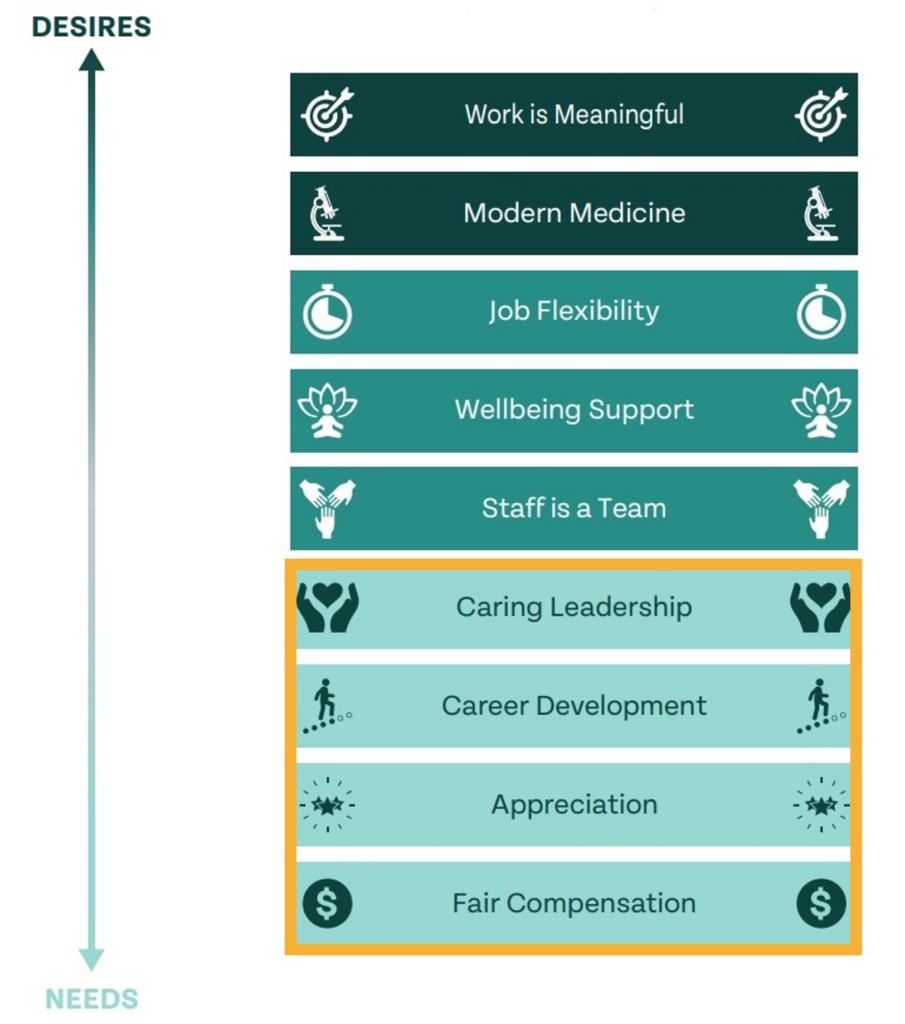
However, even if you’re more concerned about reducing turnover in specific roles—and we’ll get to that in a moment—these key attrition drivers are crucial for all practices to do well.

Sharing commitment through communication
That’s just the beginning, though. Whether you’re working to reduce turnover in general or just want to make sure your current excellent retention rate stays that way, the next step is to weave your commitment to doing these factors well right into your practice culture.
This requires two-way communication with staff; after all, if there’s one thing to take away from this paper, it’s the correlation between distance (on a traditional organizational chart) from the owner role and differences in priorities, definitions, and experiences.
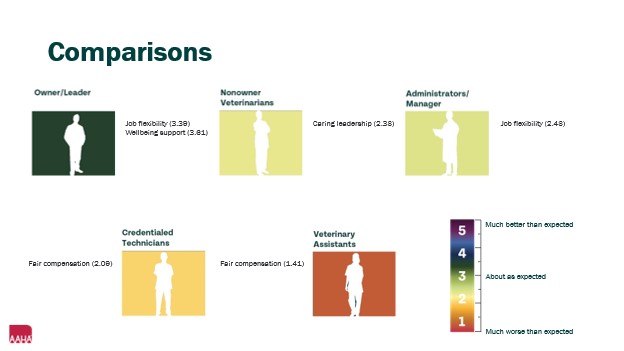
If that wasn’t clear at the outset of this paper, it likely is now.
To tie this into the caring leadership/career development factors: caring leaders make sure their employees understand what steps must be taken to advance their careers, and they’re clear about what support the practice offers for those wanting to take those steps. They also make sure that new hires come in with clear and realistic expectations.
Showing appreciation through fair compensation
As for the appreciation/fair compensation factors, we know that most roles (other than owners) agree that appreciation is best shown in the form of fair compensation, which makes it doubly important to get that right—and to make sure team members understand your approach to this vital retention factor.
Finding the money to pay staff more has been a challenge since business came to be, and while this is far from an exhaustive list, it’s a start. (And AAHA will continue to interview experts about this and share insights via Trends and other publications throughout the year.)
- Technician utilization: Practices where veterinarians rarely perform tasks that credentialed veterinary technicians can do show an average revenue increase of 36%–and, as a bonus, it improves this role’s job satisfaction, too. AAHA’s Technician Utilization Guidelines provide all the information you need to improve technician utilization in your practice.
- Third party evaluations: From wage audits to identifying areas where you can increase profitability in workflows, pricing, inventory management, and more, a fresh set of eyes can make a massive difference in your profit margin. In fact, in one case study, a practice spent $7,000 on software to identify what their services were costing them and learn how to price them more appropriately. That same year, their bottom line increased $165,000.
- Tiered pay and ties to performance. No practice wants to spend more money without seeing some return, so having clear ties between wages and performance—and attendance, if that’s an issue—allows team members a clear view of what’s possible for them, and what they need to do to reach their financial goals. Providing clear paths to increased pay dovetails nicely with career development, and, even better, being transparent about what type of support you offer (such as CE stipends) is an excellent way to show employees they’re valued.
Address role-specific turnover with data-driven details
The role-based findings outlined in this paper give you the framework you need to improve retention in each practice role. And, while this paper called out one specific key factor per role, you know your practice and employees best.
For instance, if you know that your practice is providing technicians with fair compensation (based on their definition), look at how technicians prioritize, define, and experience other factors that, perhaps, you’re not doing as well. Then make adjustments based on those findings, tweaking based on the feedback you solicit from your team as you go.
Role-specific retention requires role-specific approaches, and the more you know about your own practice, the better you can utilize the findings shared here to make major improvements.