Findings: How factors are defined
The factors that ranked stronger as attrition drivers (meaning, when they’re done poorly, the push people away) were less likely to have a single definition that all roles in practice agreed upon than the stronger retention factors. Here’s how each factor was defined, along with which roles chose different definitions than their colleagues.

Findings: Definitions
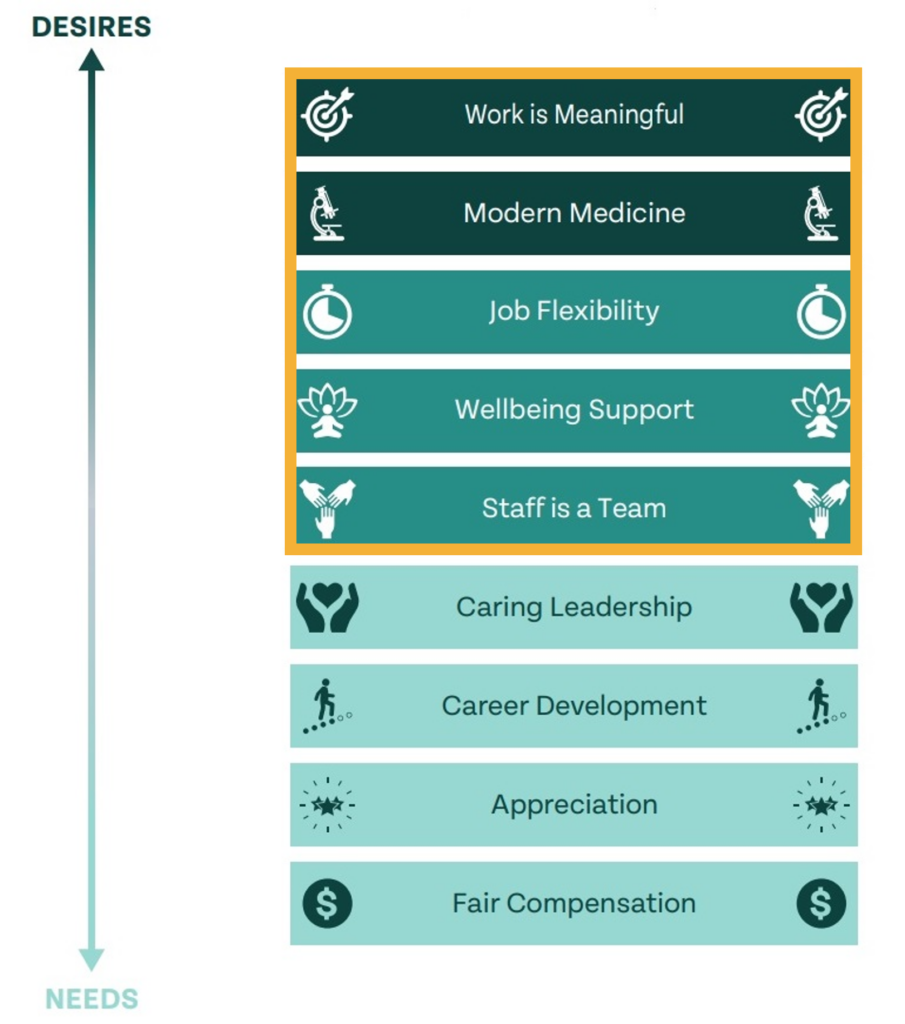
For the definitions near the top of the pillar, a significant percentage of respondents in every role agreed upon a single definition. This is important because, if we can clearly define the factors that make people want to stay, owners and managers can develop a clear path toward excelling in those factors.
The base of the pillar—which is comprised of the attrition factors that, when done poorly, drive people away from their jobs (or from clinical practice entirely)—had less solid agreement.
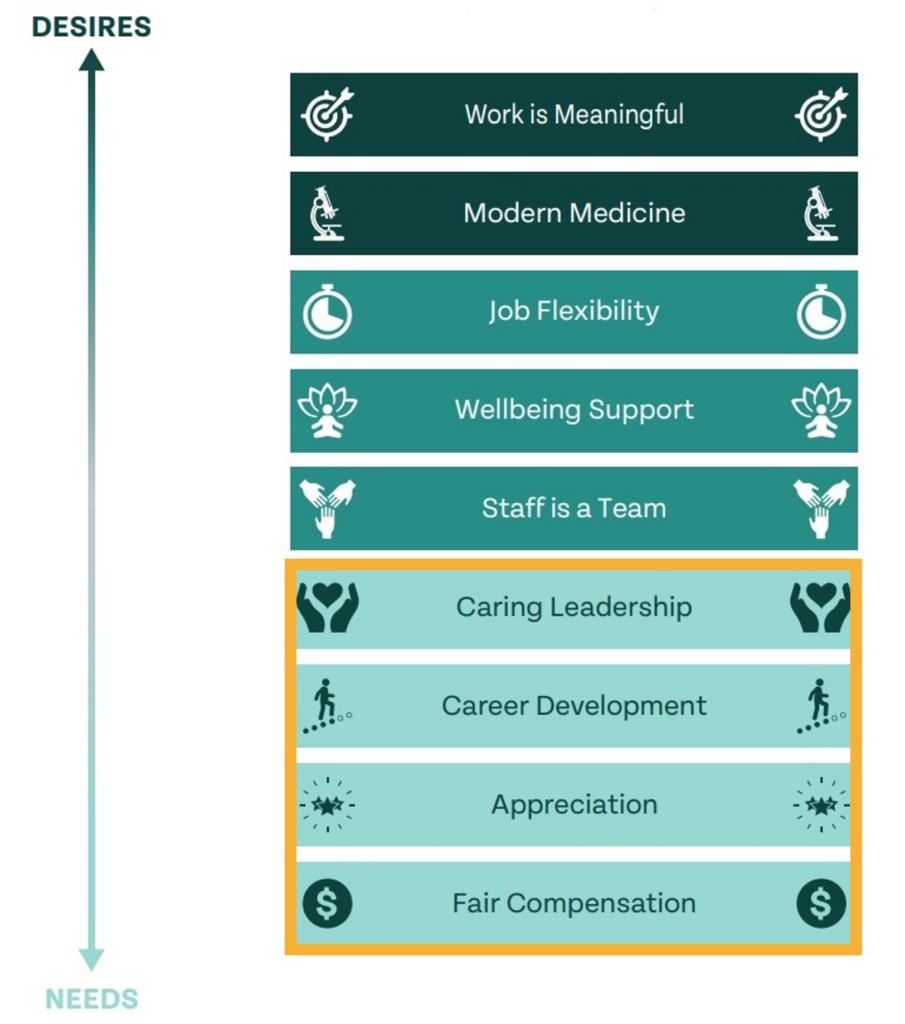
Some factors received high votes from all roles, but for multiple definitions rather than a single one; this indicates some alignment across the team, but a little less specificity on the term’s actual meaning. Other factors showed that different definitions resonated with certain roles, so while the technicians who responded might be in general agreement on how to define, for instance, fair compensation, that definition did not necessarily line up with the definition(s) chosen by practice managers.
Let’s begin by looking at the chosen* definitions, along with the breakdown of which roles selected each definition. We’ll start with the factors for which all roles chose the same definitions.
(*CSRs are not included in this section due to an insufficient number of responses from that role.)

Factors with a single definition
All roles selected the same, single definition for the factors below.

Work is meaningful:
Feeling that one’s work makes a significant difference in the lives of others.
Ability to practice modern and/or sound medicine:
Continuous updating of practices based on the latest research and evidence.
Flexibility in scheduling/job duties:
Flexible working hours that accommodate personal life and family needs.
Support for wellbeing:
Initiatives that promote a healthy work-life balance.
Staff functions as a team:
A culture where collaboration and mutual support are standard.
Factors with multiple definitions
Remember, factors may have more than one definition due to multiple team members agreeing upon more than one definition or because different roles selected different definitions.
Caring/inspiring leadership:
Leaders who prioritize the wellbeing and professional growth of their team members. (All roles)
Decision-making that considers the impacts on staff and the quality of workplace life (all roles except admins)

Opportunities for career development:
Access to ongoing education and training programs to enhance skills. Continuing education stipend provided as a benefit. (All roles)
Clear and structured opportunities for upward mobility within the organization; transparency regarding skills and experience required for upward movement provided.
(Techs and assistants)

Work is appreciated:
Fair compensation and benefits reflecting the value the organization places on staff. (Everyone but owners)

Informal gestures of appreciation, such as thank you notes or small personal acknowledgements, which may include small tokens of appreciation such as gift cards or similar. (Owners)

Fair compensation:
Compensation that reflects one’s qualifications, experience, and workload. (All roles except assistants)

Compensation that allows for financial stability and personal growth outside of work. (Techs and assistants)
Compensation that is periodically reviewed and adjusted based on performance and inflation. (Assistants)
