What we learned in Phase 2
Phase 2 of the Stay, Please study showed striking similarities in how some factors were defined, but the differences in other definitions–as well as how different roles experienced those factors–was perhaps even more noteworthy.
Jump to:
What we learned: An overview
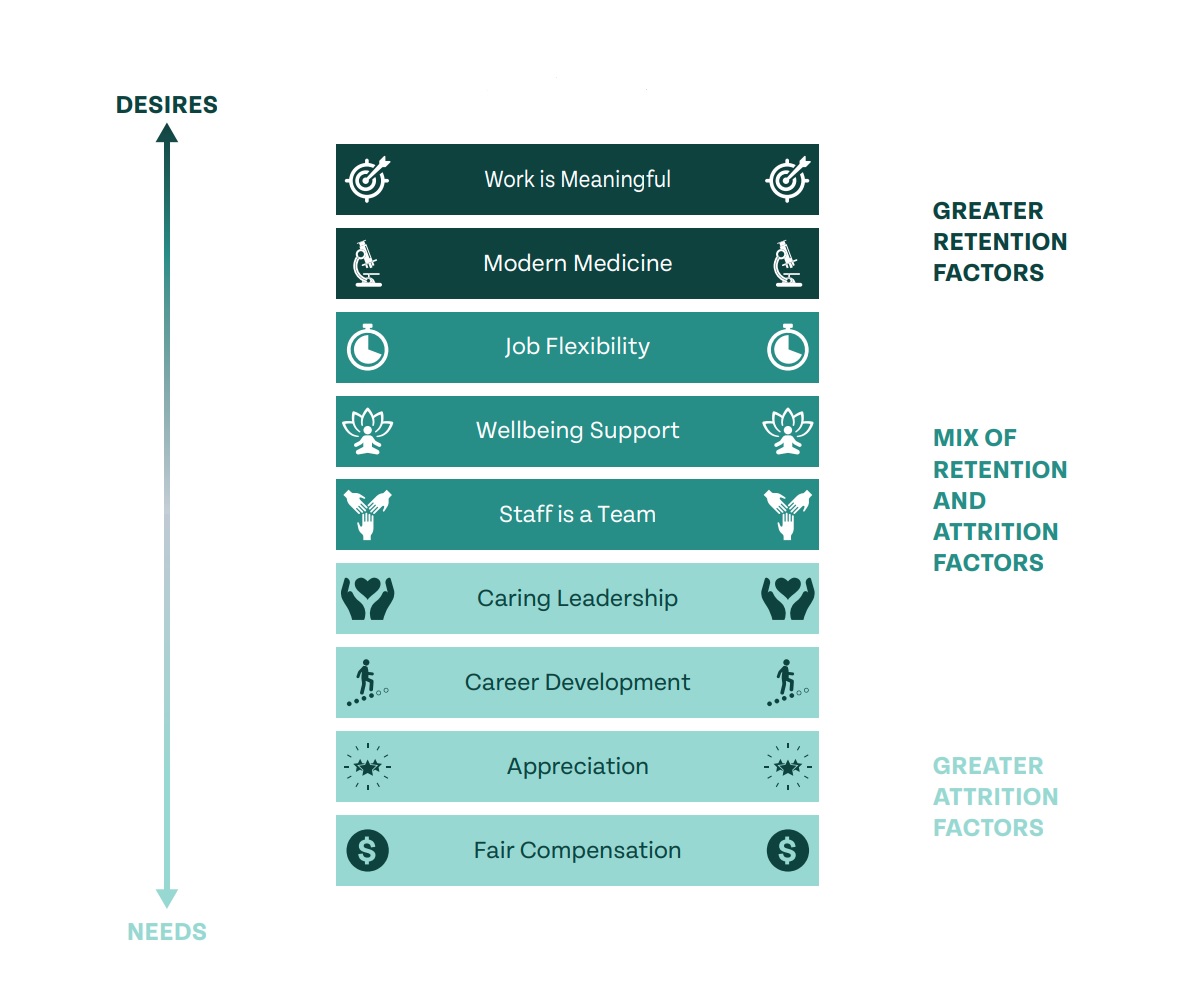
Agreement on how to define the factors was, in general, quite strong—but not without noteworthy exceptions. This agreement was especially apparent for the top portion of the pillar (from Staff is a team on up). The base of the pillar, which is comprised of stronger attrition factors, showed more variation in responses. Those differences in how to define a factor were most notable between roles that were further apart on a traditional organizational hierarchy chart (i.e. owners and assistants were less likely to agree than technicians and assistants).
In fact, overall, the data from both Phase 1 and Phase 2 showed that the further a role is from the owner (or leadership position), the more their priorities, definitions, and experiences are likely to differ. And so, to improve retention, it is the decision-makers (owners, practice leaders, etc.) who must listen to what their staff says they need. When leaders make assumptions about those needs based on what matters most to themselves, they are unlikely to make the changes their staff truly believes is required.
This paper will share how each role in practice defined the nine key retention factors and explore why some roles might choose a different definition than their colleagues.
From there, we will dive into understanding role-based retention by asking three questions:
- What factors matter most (aka are high priority) to that role (based on data from Stay, Please Phase 1) when it comes to influencing attrition?
- Which factors score lowest in expectation vs. reality for that role (based on data from Stay, Please Phase 2)?
- How can we use the definition selected by that role to improve the way they experience the factor(s) with high priority but low expectation vs. reality scores?
By asking these three simple questions regarding your own practice, you can clearly identify where to aim your focus to make the biggest impact on a given role.
